
Bird Photography Workshop NZ: Master Wildlife Photography in 2026

Bird Photography Workshop NZ: Master Wildlife Photography in 2026

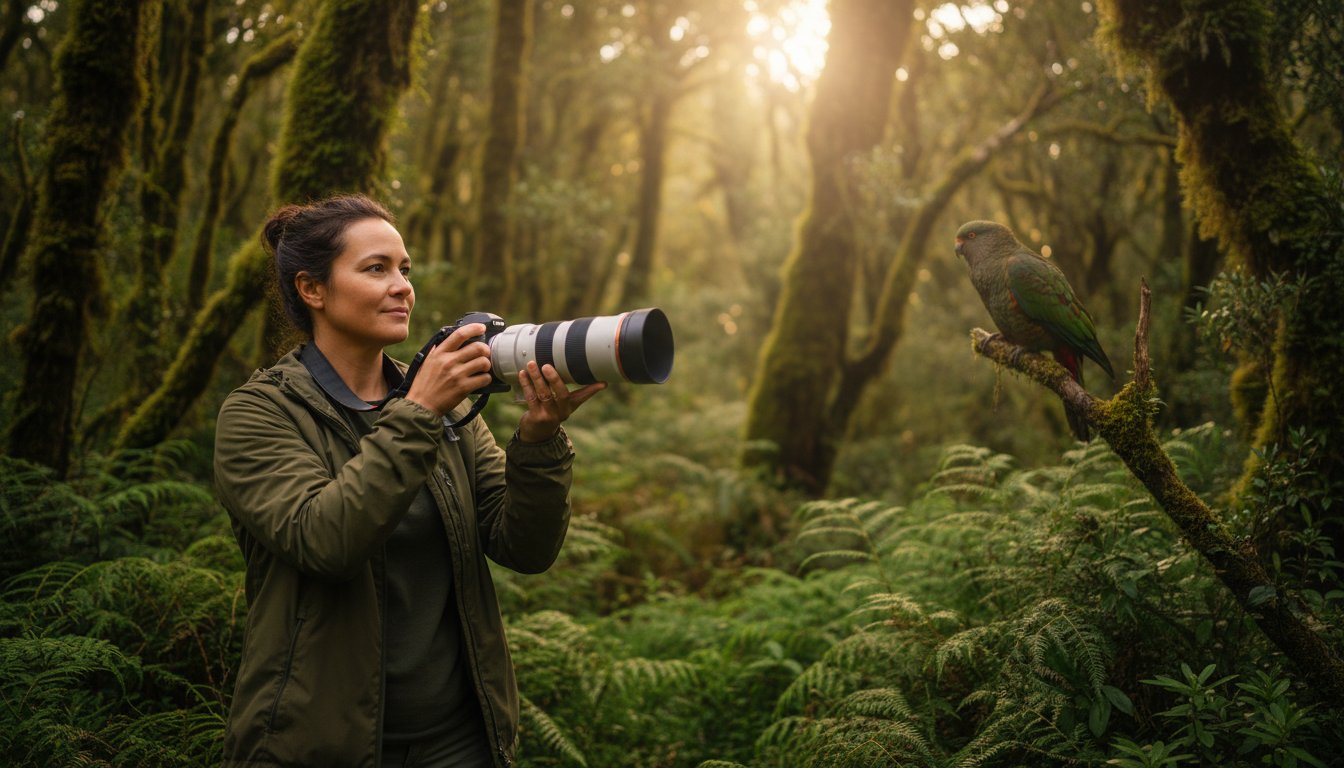
You’ve spent twenty minutes stalking through the damp ferns of a South Island forest, finally spotting a rare Kākā perched on a mossy branch, only to watch it disappear the second you fumbled with your autofocus. It’s a heart-sinking moment that many hobbyists face when trying to capture our fast-moving native species, making them realize it’s time to join a dedicated bird photography workshop nz. We understand how intimidating it feels when your camera settings seem like a foreign language or when traditional photography groups feel a bit too competitive and male-dominated. You shouldn’t have to miss the perfect shot because of a complicated dial or a lack of support.

By joining our expert-led sessions, you’ll transform that technical frustration into pure creative confidence. We promise to help you master those tricky AF-modes and manual settings while you’re immersed in a supportive, nurturing community of like-minded travellers. This guide previews our 2026 workshop lineup, showing you how we blend professional coaching with seamless, personally escorted adventures across Aotearoa’s most stunning landscapes.

#TravelWithLesleyWhyte #GirlsOnTheRoadAgain #ChathamIslandTours #WomenInPhotography #SartorialTravellersClub #VisitChathamIslands

Key Takeaways

  • Explore the unique challenges and rewards of capturing New Zealand’s endemic species across diverse landscapes, from dense native forests to rugged coastlines.
  • Master the technical secrets of wildlife photography, including freezing fast-paced action with high shutter speeds and creating professional, soft backgrounds that make your subjects pop.
  • Learn how to choose the right bird photography workshop nz for your specific goals, whether you need a quick technical refresh or a multi-day immersive tour in a remote habitat.
  • Discover essential fieldcraft and ethical practices for New Zealand’s environment, ensuring you’re prepared for “four seasons in one day” while respecting the delicate local wildlife.
  • Connect with a supportive community of like-minded travelers through tours that blend expert education with seamless, meaningful travel experiences. #TravelWithLesleyWhyte #GirlsOnTheRoadAgain #ChathamIslandTours #WomenInPhotography #SartorialTravellersClub #VisitChathamIslands

Why New Zealand is a World-Class Bird Photography Destination

New Zealand serves as a living laboratory for evolution, offering a canvas that feels untouched by time. For enthusiasts seeking a bird photography workshop nz, the year 2026 represents a pivotal moment. By this time, several major conservation initiatives on offshore islands and mainland “islands” will have reached a five-year maturity phase following the 2021 biodiversity funding boosts. This means bird populations are more visible and thriving than they’ve been in decades. You aren’t just visiting a location; you’re entering a sanctuary where approximately 80% of the land birds are endemic, meaning they exist nowhere else on the planet.

Iconic Species: From Tui to the Chatham Island Oystercatcher

New Zealand’s isolation has created a unique lineage of avian subjects. The Birds of New Zealand include the iridescent Tui, known for its complex dual voice box, and the rare Chatham Island Oystercatcher. Capturing these subjects requires an understanding of specific behaviors. You’ll learn to predict the Tui’s aggressive territorial flights or the Oystercatcher’s careful movements along rocky shorelines. Our 2026 tours focus on these “must-shoot” species while highlighting the critical role of conservation in preserving their habitats. Every shot you take becomes a record of New Zealand’s natural heritage.

The Emotional Reward of Wildlife Photography

Wildlife photography is a deeply personal experience that moves you from simply “taking a photo” to telling a story of survival. In our non-competitive environment, the bird photography workshop nz encourages a sense of mindfulness. Standing still in a quiet forest, waiting for a North Island Robin to approach, forces a presence that’s rare in our busy lives. It’s an immersive adventure where your initial anxieties melt away, replaced by the thrill of the lens. You’ll join a community that celebrates shared growth, ensuring your journey is as meaningful as the images you bring home.

#TravelWithLesleyWhyte #GirlsOnTheRoadAgain #ChathamIslandTours #WomenInPhotography #SartorialTravellersClub #VisitChathamIslands

Mastering the Essentials: Technical Skills for NZ Wildlife

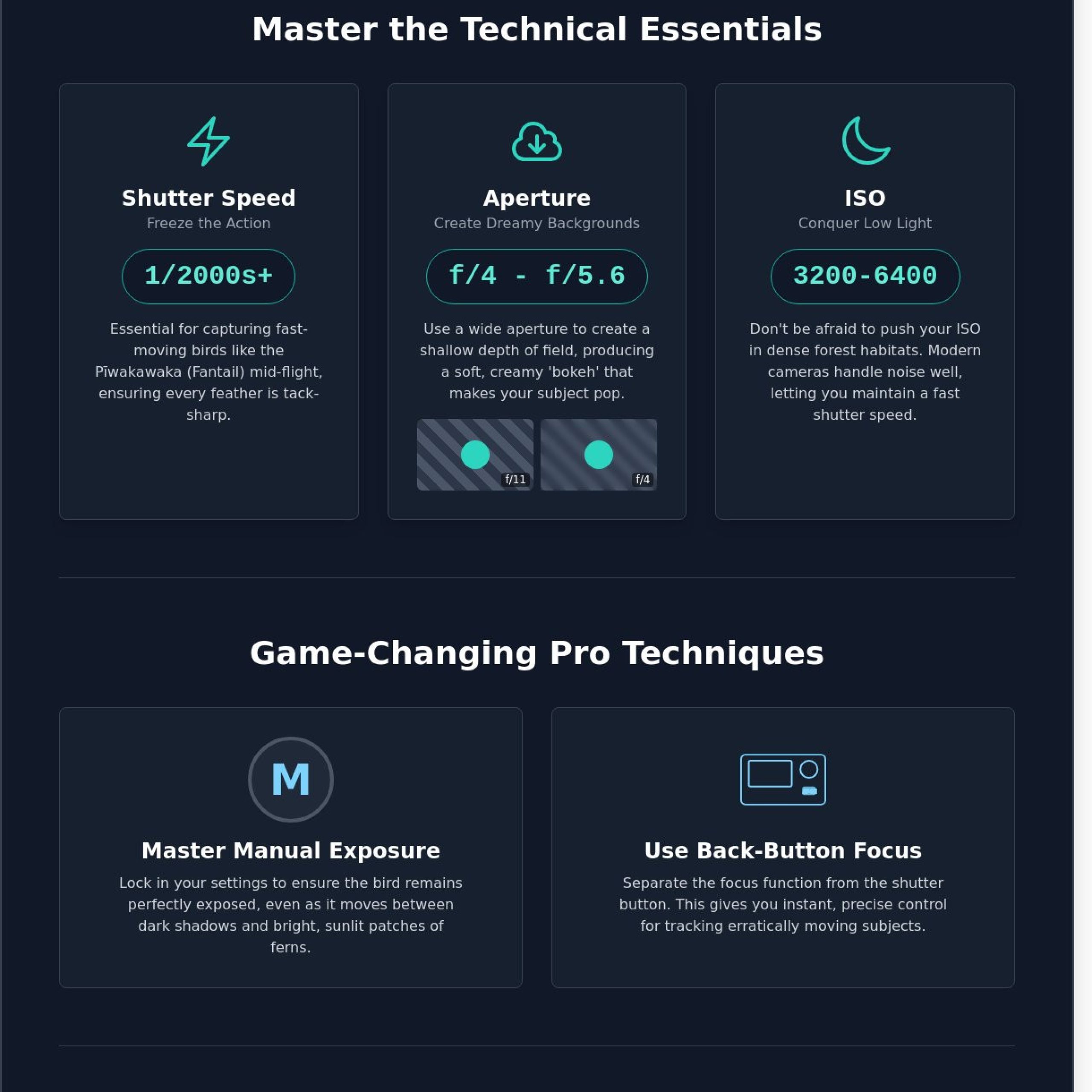
Capturing a Pīwakawaka mid-flight requires more than just luck. You’ll need a shutter speed of at least 1/2000th of a second to freeze those frantic wing beats. During our bird photography workshop nz, we practice these high-speed settings in real-time. Fast shutter speeds are the foundation of wildlife work, ensuring that every feather detail remains sharp rather than a blurred memory. We also dive deep into aperture secrets. Using a wide aperture like f/4 or f/5.6 creates that creamy, soft bokeh that makes the bird pop against the background.

The New Zealand bush offers beautiful, dappled light, but it’s tricky for camera sensors. According to data from the New Zealand Department of Conservation, many of our native species thrive in dense forest habitats where light levels drop significantly. This is where mastering ISO becomes vital. We’ll show you how to push your ISO to 3200 or 6400 without ruining your image with noise. We often recommend Manual Exposure for birding. By locking in your settings, you ensure the bird stays perfectly exposed even if it moves from a dark shadow into a bright sunlit patch of ponga ferns.

Autofocus Strategies for Moving Targets

Back-button focus is a total game-changer. By moving the focus function away from the shutter button, you gain instant control over when the camera hunts for a subject. Modern mirrorless systems now include incredible eye-tracking technology that can lock onto a bird’s eye even through thick foliage. We teach you when to use a precise spot focus for stationary Kererū and when to switch to wide-area tracking for birds in flight. It’s about building a seamless connection between your eye and the camera’s brain.

Gear Talk: What You Actually Need (and What You Don’t)

You don’t need a NZ$15,000 lens to take world-class photos. Many of our most successful participants use 100-400mm or 200-600mm lenses that are both affordable and effective. For female travellers, lightweight mirrorless systems are a revelation. Saving 1.5kg in gear weight makes a massive difference when you’re trekking through regional parks. While handheld shooting is great for flexibility, a sturdy tripod with a gimbal head provides the stability needed for long sessions. If you’re looking to apply these skills in a truly remote setting, our Chatham Island adventures provide the perfect backdrop for rare species.
#TravelWithLesleyWhyte #GirlsOnTheRoadAgain #ChathamIslandTours #WomenInPhotography #SartorialTravellersClub #VisitChathamIslands
Bird Photography Workshop NZ: Master Wildlife Photography in 2026

Comparing Workshop Formats: Technical Skills vs. Immersive Tours

Choosing the right bird photography workshop nz depends on your current skill level and what you want to achieve. A one day course in an urban park like Auckland’s Western Springs or Christchurch’s Hagley Park serves as a great technical refresh. These short sessions focus on camera settings and basic bird behavior. However, they can’t match the depth of a multi day immersive tour. Staying within a specific habitat, such as the rugged coastlines of the Chatham Islands, allows you to observe light patterns and bird movements over several days. This patience leads to the “hero shot” that quick visits often miss.

The size of your group significantly impacts your learning. Large commercial tours often pack 15 to 20 people into a single location. This volume of people can startle shy species and limit your time with the instructor. We limit our groups to just 6 to 8 guests. This ensures you get one on one time with your mentor to master complex techniques like “birds in flight” (BIF) photography. For those planning their route, the Department of Conservation’s guide to bird watching provides an excellent overview of the 168 native species you might encounter across New Zealand’s diverse ecosystems.

Why a “Women Only” Environment Changes the Learning Curve

Many photographers feel a sense of “gear anxiety” when surrounded by massive lenses and competitive attitudes. Our Women in Photography workshops remove that pressure. We focus on a nurturing, community centered approach where no question is too basic. You’ll join like minded companions who value the story behind the image as much as the technical specs. This supportive atmosphere fosters long term creative growth and builds lasting friendships. It’s about sharing the joy of a perfect capture with people who truly understand the effort involved. Our 2026 schedule is designed to build confidence for every skill level.

The Fully Escorted Difference

A personally escorted journey means you can focus 100 percent on your lens. We handle the stressful logistics like 4WD transport on rugged tracks and organizing nutritious, local meals. You won’t need to worry about check in times or navigation. Our award winning photography mentors are there to guide you from sunrise to sunset, providing feedback in real time. This seamless approach allows you to stay in the creative “zone” without the distraction of travel admin. It’s about peace of mind and professional results. We believe your only job on a bird photography workshop nz should be capturing the beauty of the wild.

#TravelWithLesleyWhyte #GirlsOnTheRoadAgain #ChathamIslandTours #WomenInPhotography #SartorialTravellersClub #VisitChathamIslands

Preparing for Your Adventure: Gear, Fieldcraft, and Ethics

Success on a bird photography workshop nz depends on your readiness for New Zealand’s famously unpredictable elements. You’ll likely experience biting southerly winds and brilliant sunshine within the same hour. We ensure every participant feels supported and prepared, turning potential logistical stress into a seamless adventure where the focus remains entirely on your creative growth. It’s about having the right tools and the right mindset before you even step into the bush.

Top Locations: From Muriwai to the Chatham Islands

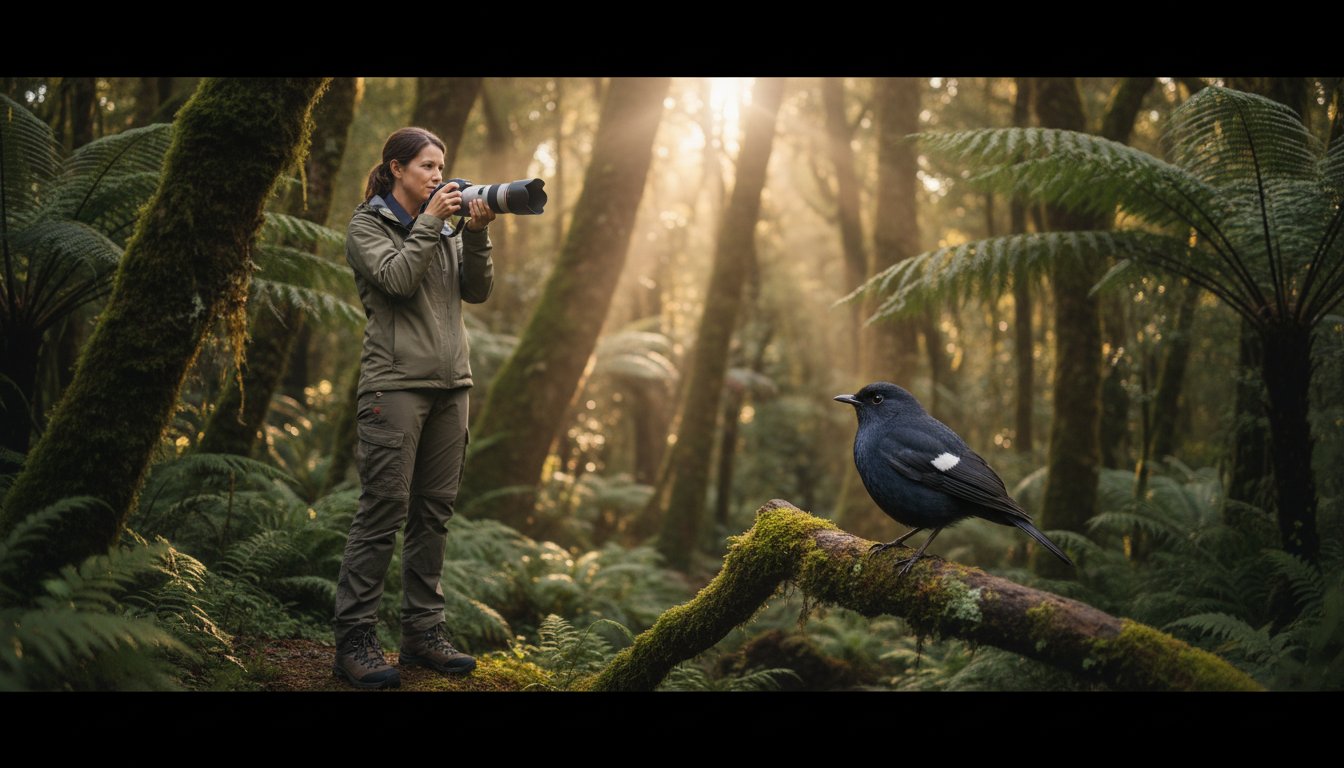
Muriwai Beach offers a spectacular start, where 1,200 pairs of Gannets nest on rugged cliffs. Capturing these birds against a golden sunset requires a steady tripod and patience. The Chatham Islands are a bucket-list destination, home to 18 endemic species like the Black Robin. Meanwhile, Stewart Island’s Rakiura National Park provides a wild backdrop for capturing rare bush birds in their natural, untouched habitat.

The Photographer’s Packing List

Technical kits should include high-speed 128GB memory cards and a portable SSD for nightly backups. Staying dry is vital, so pack merino layers and a professional-grade waterproof shell to handle the damp forest floors. Ethical fieldcraft is a non-negotiable standard where the welfare of the bird and its habitat always takes precedence over capturing a photograph. These meticulous details ensure your adventure remains comfortable and your focus stays sharp.

Mastering fieldcraft is about blending into the environment rather than intruding upon it. You’ll learn to use natural cover and move with a slow, deliberate rhythm that doesn’t trigger a flight response. It’s a quiet, respectful dance between photographer and subject. We teach you to read bird behavior, identifying the subtle signs of stress before they take wing. This knowledge allows you to get closer while keeping the animals at ease, resulting in more intimate and authentic portraits.

A typical day in the life of a participant starts before dawn with a hot coffee and a briefing on our target species. We spend the morning in the field during the “golden hour,” followed by a collaborative afternoon session reviewing frames and refining editing techniques. You’ll find yourself surrounded by like-minded travelers who share your passion. It’s an immersive, community-focused experience where your anxieties melt away because you’re in such capable, nurturing hands.

Ready to join a supportive community of like-minded photographers on a meaningful journey? Explore our upcoming personally escorted photography tours and secure your spot for 2026.

#TravelWithLesleyWhyte #GirlsOnTheRoadAgain #ChathamIslandTours #WomenInPhotography #SartorialTravellersClub #VisitChathamIslands

Capturing Meaningful Journeys with Women in Photography

Lesley Whyte’s tours aren’t just about the technical settings on your camera dial; they’re designed to inspire, educate, and connect women through shared creative passions. Each bird photography workshop nz is a curated experience that fosters a supportive environment where your skills can flourish alongside like-minded travellers. For those seeking an even more refined approach to exploration, the Sartorial Travellers Club offers an elevated travel experience. It brings together adventurous women who appreciate the finer details of a journey, combining a love for photography with a sense of style and curiosity. This community is built on the idea that travel should be as enriching for the soul as it is for the portfolio.

Beyond the Camera: Authentic & Seamless Adventures

How to Book Your 2026 Workshop

Securing your place for a 2026 bird photography workshop nz is a simple process, but these small-group tours do fill up quickly. Most departures are limited to just six to eight participants to ensure you receive personalized, one-on-one tuition. To start your journey, select your preferred 2026 dates which include exclusive expeditions to the Chatham Islands and the lush forests of the South Island. Once booked, you’ll receive a detailed pre-tour checklist to help you prepare your gear and packing list. This ensures you feel confident and ready before you even leave home. For solo female travellers, taking this leap is the first step toward joining a vibrant community where you’ll feel safe, looked after, and genuinely inspired.

Ready to travel differently? Join us for an unforgettable 2026 season and see why so many women return year after year for these life-enriching experiences. It’s time to capture the beauty of New Zealand through your own lens while being part of a supportive sisterhood of photographers.

#TravelWithLesleyWhyte #GirlsOnTheRoadAgain #ChathamIslandTours #WomenInPhotography #SartorialTravellersClub #VisitChathamIslands

Capture Your Vision in the Heart of New Zealand

New Zealand offers some of the most spectacular avian subjects on the planet, but capturing them successfully requires more than just a long lens. You’ve explored how technical precision, ethical fieldcraft, and choosing an immersive format are the essential pillars for any wildlife enthusiast. Joining a dedicated bird photography workshop nz in 2026 is your opportunity to refine these skills while surrounded by the country’s breathtaking natural beauty. Our programs focus on authentic and meaningful journeys that go beyond the technical manual.

#TravelWithLesleyWhyte #GirlsOnTheRoadAgain #ChathamIslandTours #WomenInPhotography #SartorialTravellersClub #VisitChathamIslands

Frequently Asked Questions

What is the best lens for bird photography in New Zealand?

A telephoto lens with a focal length of at least 300mm or 400mm is ideal for capturing New Zealand’s native birds in their natural habitats. For species like the Tūī or Fantail, a 100-400mm zoom lens provides the flexibility you need to frame subjects in dense bush or open coastal areas. Many of our 2026 workshop attendees find that a fast f/4 or f/2.8 aperture helps significantly in the low light of our ancient podocarp forests.

Do I need a professional camera to join a bird photography workshop?

You don’t need a high-end professional camera body to join our bird photography workshop nz. Any mirrorless or DSLR camera that allows you to change lenses and adjust shutter speed will work perfectly for these sessions. We focus on technique and composition, so even entry-level models released from 2023 onwards are more than capable of producing stunning wildlife shots under our expert guidance.

Are your bird photography tours suitable for solo female travellers?

Yes, our tours are specifically designed to be safe, welcoming, and empowering for solo female travellers. We foster a supportive community through our Women in Photography and Girls on the Road Again brands, ensuring 100% of our guests feel comfortable and inspired. You’ll join a small group of like-minded women, making it easy to form lasting friendships while exploring the New Zealand wilderness together.

What happens if it rains during the photography workshop?

We continue our photography in the rain because New Zealand’s moody weather often creates the most atmospheric and unique wildlife portraits. If conditions become unsafe, we move to indoor theory sessions or wait for a break in the clouds. We recommend bringing waterproof covers for your gear and high-quality rain jackets to ensure you stay dry and comfortable during our outdoor sessions.

How much walking is involved in your bird photography tours?

Most of our photography sessions involve walking between 2 and 5 kilometres on well-maintained tracks or slightly uneven coastal terrain. We move at a slow, deliberate pace to spot wildlife, so a moderate level of fitness is sufficient for these excursions. If a specific location requires a steeper 20-minute climb, we always provide alternative options for those who prefer a flatter path.

Can I join a workshop if I am a complete beginner?

We warmly welcome complete beginners on every bird photography workshop nz we host. Our instructors provide hands-on help with your camera settings, explaining the exposure triangle in a way that’s easy to understand. You’ll receive personal attention to help you move from “Auto” mode to manual control, ensuring you capture sharp, beautiful images of our unique avian subjects.

Is the Chatham Islands tour focused only on bird photography?

The Chatham Islands tour combines dedicated bird photography with a deep exploration of the island’s unique culture and history. While we spend about 60% of our time capturing rare species like the Black Robin or Chatham Island Shore Plover, we also visit Moriori sites and local farms. It’s a holistic experience that celebrates the entire archipelago, ensuring you return home with a diverse portfolio of images.

What is included in a fully escorted photography tour?

A fully escorted tour includes your boutique accommodation, most meals, local transport, and the constant support of a professional photography guide. We handle every logistical detail from the moment you arrive, so you can focus entirely on your creativity and the landscape. You’ll also benefit from our signature “personally escorted” service, where we ensure your comfort and safety throughout the entire journey.

#TravelWithLesleyWhyte #GirlsOnTheRoadAgain #ChathamIslandTours #WomenInPhotography #SartorialTravellersClub #VisitChathamIslands

Wildlife Photography Tours New Zealand: A Guide to Capturing Aotearoa’s Rare Species in 2026

Imagine this: you’re standing in the hushed twilight of a remote forest, the air cool and crisp. Your camera is ready, but your initial anxieties have melted away because every detail has been handled for you. This isn’t just a dream; it’s the heart of the best wildlife photography tours new zealand offers. It was the reality for our small group on a recent tour to a remote New Zealand island, just moments before a rare Black Robin landed perfectly in frame.

Once you’ve captured New Zealand’s unique birdlife, the call of other iconic wildlife destinations is hard to ignore. For many photographers, the ultimate adventure is witnessing the “big five” on the African plains. A classic Masai Mara Safari, for example, offers a completely different yet equally rewarding challenge, with vast landscapes and unparalleled opportunities to photograph lions, elephants, and the great migration.

We know you’ve dreamt of capturing Aotearoa’s unique creatures, but the thought of navigating rugged terrain, finding elusive species, or joining an intimidating, fast-paced group can feel overwhelming. It’s a common concern that keeps too many passionate photographers from even trying.

That’s why this 2026 guide is for you. It’s here to show you exactly how to choose a personally escorted tour that makes your adventure seamless, supportive, and unforgettable. We’ll explore what makes these journeys different, helping you connect with a community of like-minded adventurers and return home with the images you’ve always wanted.

#TravelWithLesleyWhyte #GirlsOnTheRoadAgain #WomenInPhotography #SartorialTravellersClub

Key Takeaways

  • Discover how to select the best wildlife photography tours new zealand offers by evaluating crucial factors like group size and trip duration for an immersive experience.
  • Pinpoint the prime locations for capturing Aotearoa’s most elusive species, from the Chatham Islands to the ultimate destination for seeing Kiwi in their natural habitat.
  • Prepare for a successful journey with our guide to essential camera gear and a clear understanding of the DOC rules for ethical wildlife interaction.
  • Learn why a personally escorted tour is the seamless way to gain unparalleled access to rare wildlife, letting you focus entirely on your photography.

Why New Zealand is a Premier Wildlife Photography Destination in 2026

New Zealand isn’t just another location with beautiful landscapes; it’s a living museum of evolution. Separated from other landmasses for over 80 million years, its wildlife developed in almost complete isolation, creating a “biodiversity hotspot” unlike anywhere else on Earth. This ancient history has forged a paradise for photographers seeking truly unique subjects. The year 2026 stands as a particularly meaningful time to visit, as the nation’s ambitious conservation efforts begin to yield remarkable results, transforming the traditional tourist trail into a path of immersive, conservation-led discovery.

The very nature of travel here is changing. Gone are the days of passive “look and see” trips. Today, visitors are seeking deeper connections, and our expert-led wildlife photography tours new zealand are designed for just that: to create unforgettable images while contributing to the protection of the very creatures you’ve come to see. It’s an adventure with purpose, where your lens becomes a tool for both art and advocacy.

The “Land of Birds”: Understanding Aotearoa’s Unique Fauna

Aotearoa is, above all, the land of birds. For millennia, the Fauna of New Zealand evolved without the threat of land-based mammalian predators, allowing flightless birds like the kiwi, takahē, and the extinct moa to thrive. Understanding the difference between “native” and “endemic” is key to appreciating your portfolio’s potential. A native species might be found elsewhere, but an endemic species is found only here. Capturing a critically endangered, endemic takahē is a photographic achievement that tells a powerful story of survival. Predator-free island sanctuaries like Ulva, Stewart, and the remote Chatham Islands are now the epicentres of this story, offering photographers pristine environments with lush, clean backgrounds and a quality of natural light that makes every image sing.

Conservation-Led Photography: A Growing Trend

As we look towards 2026, the progress from New Zealand’s Predator Free 2050 strategy is becoming tangible. This nationwide mission is creating safer habitats, allowing vulnerable species to reclaim their ancestral homes. Your journey directly supports this work. A percentage of all Department of Conservation concession fees paid by tour operators goes directly into funding these critical projects. This means your passion for photography becomes an investment in the future of New Zealand’s wildlife. Photographing endangered species in 2026 carries a profound responsibility, focusing on techniques that cause zero disturbance, such as using long lenses and strictly adhering to approach distances set by DOC rangers.

Ethical wildlife photography in New Zealand means prioritising the animal’s welfare and its habitat’s integrity above capturing the “perfect” shot, ensuring our presence actively supports conservation.

This philosophy is at the heart of every trip we curate. It’s about creating a seamless adventure where you can focus on your craft, confident that your journey is making a positive impact. Joining one of our small-group wildlife photography tours new zealand in 2026 is an invitation to witness and document a nation’s inspiring conservation story as it unfolds.

#TravelWithLesleyWhyte #GirlsOnTheRoadAgain #ChathamIslandTours #WomenInPhotography #SartorialTravellersClub #VisitChathamIslands

Choosing the Right Wildlife Photography Tour in New Zealand

Selecting your ideal adventure from the diverse range of wildlife photography tours new zealand offers can feel overwhelming. The key is to look beyond the itinerary and consider the fundamental structure of the experience. Your decision should hinge on four critical factors: the tour’s duration, the size of your group, the depth of photographic instruction, and the level of logistical support provided. Understanding how these elements align with your personal goals will transform a simple holiday into an unforgettable creative journey.

The industry gold standard for an intimate and effective experience is a small group, typically capped at 8 to 10 photographers. This ensures you receive personalised attention from your guide and can move quietly without disturbing sensitive wildlife. It also means you won’t be jostling for the perfect angle at a critical moment. Equally important is the level of instruction. Some tours cater to seasoned professionals seeking access to unique locations, while others are designed to build skills from the ground up. Always check if the tour leader is an award-winning photographer whose style and teaching philosophy resonate with you.

Day Workshops vs. Fully Escorted Expeditions

Day workshops, often based in accessible sanctuaries like Zealandia in Wellington, are a fantastic introduction. They offer a concentrated burst of learning and guaranteed sightings in a controlled environment. However, their primary limitation is time. You’ll miss the soft, dramatic light of the “golden hours” at dawn and dusk, which is when most wildlife is active and the landscape is at its most beautiful. Multi-day expeditions are designed precisely to capture these moments. An immersive journey allows you to venture into remote habitats where patience is rewarded. To truly connect with and photograph many of New Zealand’s native animals, from the Fiordland crested penguin to the yellow-eyed penguin, you need the time that only a longer tour provides. Furthermore, a personally escorted tour means every detail, from transport to accommodation, is seamlessly managed. This is invaluable when facing New Zealand’s famously changeable “four seasons in one day” weather, as your guide can adapt the schedule instantly to maximise photographic opportunities, leaving you free to focus on your craft.

The Rise of Women-Only Photography Retreats

A growing and wonderfully welcome trend is the emergence of women-only photography tours. These journeys are crafted to provide more than just technical guidance; they create a nurturing and supportive community on the road. Many women find that a collaborative atmosphere, free from any sense of competition, helps their creativity flourish. The focus is on shared discovery and mutual encouragement, creating a safe space to ask questions, experiment with new techniques, and build lasting friendships with like-minded travellers. This dynamic is fundamentally different from a generic tour, offering a unique blend of adventure, education, and connection that inspires confidence and produces incredible creative results. Understanding these differences is key to finding the perfect fit, which is why we specialise in creating personally escorted, immersive experiences for women.

#TravelWithLesleyWhyte #GirlsOnTheRoadAgain #ChathamIslandTours #WomenInPhotography #SartorialTravellersClub #VisitChathamIslands

Beyond the Mainland: The Unique Wildlife of the Chatham and Stewart Islands

While New Zealand’s mainland offers incredible photographic journeys, true adventure awaits on its remote offshore islands. For photographers seeking to capture wildlife that exists nowhere else on earth, the Chatham and Stewart Islands are unparalleled. These isolated archipelagos are not just destinations; they are immersive experiences, promising raw landscapes and encounters with some of the world’s most vulnerable and precious species. It’s a world away from the everyday.

Chatham Island Adventures: Capturing the Rarest of the Rare

Often called the “Galapagos of the South,” the Chatham Islands are a sanctuary for endemic birdlife, forged by isolation and a powerful conservation story. The most famous resident is the Black Robin, a tiny bird that inspires immense hope. In 1980, its entire population was reduced to a single breeding pair. The success of its recovery is a testament to dedicated conservation efforts, a story powerfully echoed by organizations like WWF-New Zealand. Photographing this bird is more than a bucket-list shot; it’s capturing a living miracle. You’ll also have the chance to seek out the Chatham Island Taiko, one of the planet’s rarest seabirds, and the striking Chatham Island Oystercatcher against rugged, windswept coastlines and dramatic basalt columns.

Stewart Island: The Kiwi Photography Capital

Stewart Island (Rakiura) offers what many believe is impossible: the chance to photograph our national icon, the Kiwi, in its natural habitat. The Southern Brown Kiwi (Tokoeka) here are unusually active during daylight and twilight hours. Capturing them requires skill and respect. Our expert guides will teach you low-light techniques, such as using a red-filtered torch to avoid startling the birds, setting your camera to a high ISO (3200-6400), and using a fast prime lens. Just a short ferry ride away is Ulva Island, a predator-free sanctuary where you can photograph inquisitive Weka, vibrant Kākā, and tiny Mohua in a pristine forest setting. As an unforgettable bonus, the island’s minimal light pollution makes it a prime location for capturing the ethereal glow of the Aurora Australis on clear winter nights.

Accessing these fragile environments requires meticulous planning and deep local knowledge. The logistics of securing private charters, understanding weather patterns, and gaining access to protected areas are complex. This is the core value of our personally escorted wildlife photography tours new zealand; we handle every detail, ensuring your journey is seamless, safe, and focused entirely on the creative experience. You’re not just a tourist; you’re an explorer with a camera, welcomed into a community of passionate, like-minded travellers.

#TravelWithLesleyWhyte #GirlsOnTheRoadAgain #ChathamIslandTours #WomenInPhotography #SartorialTravellersClub #VisitChathamIslands

Preparing for Success: Gear, Ethics, and Local Insights

A truly unforgettable image is born long before you press the shutter. It begins with thoughtful preparation, a deep respect for your subject, and an understanding of the environment. Here in New Zealand, where the light can change in an instant and the wildlife is utterly unique, being prepared is the difference between a fleeting snapshot and a cherished portfolio piece. This is where meticulous planning transforms a trip into a seamless, rewarding photographic adventure.

Your camera bag is your toolkit, and for New Zealand’s diverse subjects, you need the right tools. A telephoto lens is non-negotiable. While a 70-200mm lens is versatile, a focal length of at least 300mm is essential for frame-filling shots without disturbing the wildlife. Many of our guests find a 100-400mm or 200-500mm zoom offers the perfect balance of reach and flexibility. For stability, the tripod versus monopod debate depends on the location. A sturdy tripod is crucial for low-light situations like capturing penguins at dusk, while a lightweight monopod provides the mobility needed to track birds through dense native bush. Finally, never underestimate our weather. A high-quality rain sleeve for your camera and lens, along with a fully waterproof camera bag, is mandatory. For our 2026 tours, we recommend packing a proven layering system: a merino wool base layer, a fleece mid-layer, and a reliable waterproof and windproof outer shell to handle the distinct micro-climates from Fiordland to the Bay of Islands.

Technical Tips for New Zealand Wildlife

Shooting in a dense, dark rainforest presents a unique challenge of low light and fast subjects. Don’t be afraid to increase your camera’s ISO to 1600 or even 3200 to achieve a fast enough shutter speed. To freeze the frantic movement of a pīwakawaka (fantail), you’ll need a shutter speed of at least 1/1250s, paired with continuous autofocus (AF-C) to track it effectively. Getting down to your subject’s eye level creates a powerful, intimate connection that transforms a simple snapshot into a compelling portrait.

The Ethical Photographer’s Code

On our wildlife photography tours new zealand, we operate with a deep respect for the natural world, guided by the principles set by the Department of Conservation (DOC). This means we strongly discourage the use of “playback” or bird call apps. While tempting, these can cause significant stress to native birds, disrupting their breeding cycles and wasting precious energy. We always maintain respectful distances, adhering to DOC’s 20-metre guideline for marine mammals and giving nesting birds an even wider berth. Our goal is to tell a story, capturing an animal within its environment, not just creating a “record shot.”

This patient, observant approach is the heart of the “Slow Photography” movement. It’s about understanding animal behaviour, anticipating the moment, and creating an image with intent and meaning. It’s a philosophy that values a single, powerful photograph over hundreds of random bursts. This mindful process not only results in better images but also fosters a deeper connection with the incredible wildlife we are privileged to witness.

If you’re ready to embrace a more thoughtful and rewarding approach to photography, explore our personally escorted tours today.

#TravelWithLesleyWhyte #GirlsOnTheRoadAgain #ChathamIslandTours #WomenInPhotography #SartorialTravellersClub #VisitChathamIslands

The Lesley Whyte Experience: Personally Escorted Tours for Like-Minded Travellers

Travel is more than just seeing new places; it’s about creating unforgettable memories and forging genuine connections. At Travel With Lesley Whyte, our philosophy is built on three pillars: authentic, meaningful, and seamless experiences. We move beyond the typical tourist trail to create immersive journeys where your only focus is capturing the perfect shot. These aren’t just trips; they are personally escorted adventures designed for a small group of individuals who share your passion for photography and discovery.

From the moment you book, you become part of a carefully curated experience. We believe that the best wildlife photography happens when you’re completely present, not when you’re worrying about logistics. That’s what “personally escorted” means to us. It’s the promise that every detail, from internal flights and private transport to comfortable accommodation and gourmet meals, is meticulously planned and managed. This approach allows you to fully immerse yourself in the stunning landscapes and unique wildlife of Aotearoa.

A Seamless Adventure from Start to Finish

We handle all the behind-the-scenes work so you don’t have to. Our team, alongside hand-selected local guides and expert photographers, ensures your journey is smooth and enriching. You’ll be led by professionals who have deep knowledge of the local ecosystems and know the best times and places to capture that once-in-a-lifetime image. As past traveller Sarah K. from Wellington shared in her October 2023 review, “Lesley thinks of everything. I just had to show up with my camera, and the rest was a perfectly orchestrated adventure. I’ve never felt so looked after.”

Joining the Community

What begins as a group of strangers quickly transforms into a community of weekend companions and, often, lifelong friends. Our tours attract photographers who are eager to share knowledge, celebrate each other’s successes, and explore together. This sense of camaraderie continues long after the trip ends through our exclusive Wanderlust Travellers Club, where you can stay connected and be the first to hear about new adventures. Ready to book your spot? Our 2026 wildlife photography tours new zealand are now open for registration, featuring two incredible highlights:

  • Chatham Islands Adventure (2026): An 8-day immersive tour to one of New Zealand’s most remote and captivating archipelagos, focusing on endemic birdlife and dramatic coastal scenery.
  • Women in

    Your Aotearoa Wildlife Adventure Awaits in 2026

    New Zealand in 2026 presents an unparalleled canvas for photographers. From the iconic kiwi to the Chatham Island black robin, the key to capturing these rare species isn’t just about having the right gear; it’s about having the right guide. The best wildlife photography tours new zealand offers are those that combine deep local knowledge with ethical practices, ensuring you get the shot without disturbing these precious taonga (treasures).

    This is where a meticulously planned, small-group experience becomes invaluable. With Travel with Lesley Whyte, you’re not just another tourist. You’re part of a supportive community on an adventure personally escorted by Lesley herself. We specialize in creating these meaningful journeys, whether it’s through our acclaimed Women in Photography workshops or our immersive Chatham Island Adventures.

    If you’re ready to transform your photography and create lasting memories, we invite you to join us. Explore our 2026 Wildlife Photography & Chatham Island Tours and find the seamless adventure that’s waiting for you.

    #TravelWithLesleyWhyte #GirlsOnTheRoadAgain #ChathamIslandTours #WomenInPhotography #SartorialTravellersClub #VisitChathamIslands

    Frequently Asked Questions

    Do I need professional-grade camera gear for a wildlife photography tour in NZ?

    No, professional-grade gear isn’t required, but a camera with manual controls is highly recommended for creative flexibility. A DSLR or mirrorless camera with a telephoto lens, like a 100-400mm, is ideal for capturing distant birds and marine life. We provide a detailed pre-tour gear list to all our guests, ensuring you know exactly what to pack. Our focus is on helping you master the equipment you already own to capture beautiful images.

    What is the best time of year for wildlife photography in New Zealand?

    The best time for wildlife photography in New Zealand is during our spring and summer, from October through to March. This period aligns with the peak breeding seasons for many of our iconic native birds, including the Fiordland Crested Penguin and the Royal Albatross. The days are longer, offering more hours of beautiful golden light for photography. Our tours are meticulously scheduled to coincide with these optimal wildlife viewing and photography opportunities.

    Are these tours suitable for solo female travelers?

    Absolutely. Our tours are specifically designed to be a welcoming and safe space for everyone, and they are especially popular with solo female travelers who make up over 70% of our guests. We cultivate a supportive, small-group atmosphere that feels like traveling with friends. As every trip is personally escorted by Lesley Whyte, you can feel confident and cared for, allowing you to relax and immerse yourself in the adventure and your photography.

    How much walking is required on a typical wildlife photography tour?

    The amount of walking varies, but most daily excursions involve 2 to 5 kilometres on well-formed tracks at a relaxed pace. For example, our Stewart Island tours include coastal tracks that are generally flat with some small inclines, easily manageable for anyone with a moderate level of fitness. We always provide a detailed itinerary before you book that clearly outlines the physical requirements for each day, so you’ll know exactly what to expect.

    What kind of birds can I expect to see on the Chatham Islands?

    The Chatham Islands are a world-class destination for seeing rare and endemic birds. You can expect to photograph unique species like the Chatham Island Shag, the Pitt Island Shag, and the endemic Oystercatcher. A highlight for many is the chance to see the critically endangered Black Robin, a true conservation success story. Our expert local guides give us unparalleled access and knowledge, ensuring the best possible chances of spotting these incredible birds.

    Is photography instruction included in the Travel With Lesley Whyte tours?

    Yes, expert photography instruction is a key part of every tour we offer. Lesley, an award-winning photographer, provides continuous, hands-on guidance tailored to your individual skill level. Whether you’re a beginner learning about exposure or an advanced shooter refining your composition, you’ll receive one-on-one feedback in the field. We also include sessions on post-processing to help you bring your creative vision to life from capture to final print.

    What happens if the weather is bad during our scheduled photography session?

    We always have a robust contingency plan for inclement weather. If a planned outdoor shoot is not possible due to safety or extreme conditions, we pivot to a valuable indoor session. This could be a dedicated workshop on editing your images in Adobe Lightroom, a creative technique seminar, or a review and critique session. Sometimes, dramatic weather creates the most stunning photographic opportunities, and we are always ready to embrace them safely.

    How do I secure a spot on a small-group tour for 2026?

    To secure a spot for 2026, we highly recommend joining the priority waitlist on our website. Our small-group wildlife photography tours new zealand are capped at 8 guests and typically sell out over 18 months in advance due to high demand. By signing up for the waitlist, you will receive an exclusive email notification in early 2025, giving you first access to book before the dates are released to the general public.

    #TravelWithLesleyWhyte #GirlsOnTheRoadAgain #ChathamIslandTours #WomenInPhotography #SartorialTravellersClub #VisitChathamIslands