
Bird Photography Workshop NZ: Master Wildlife Photography in 2026

Bird Photography Workshop NZ: Master Wildlife Photography in 2026

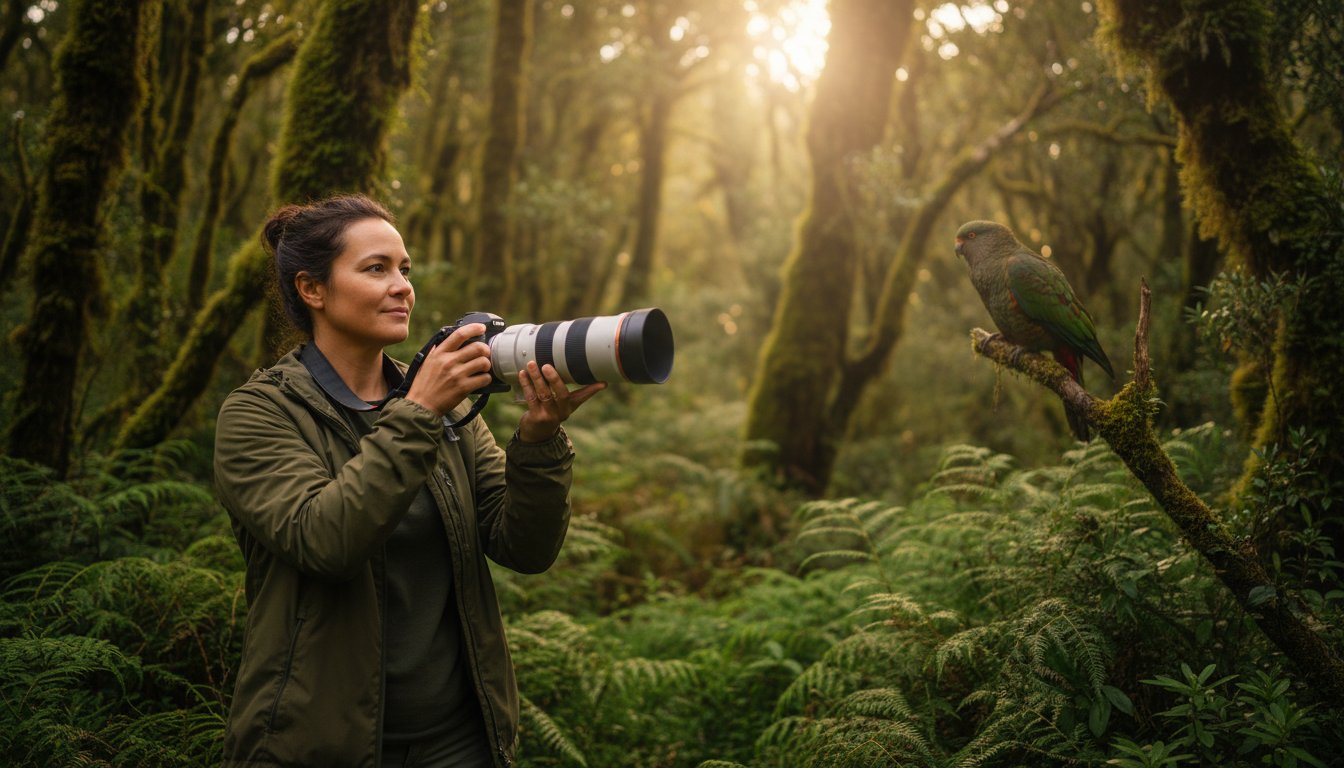
You’ve spent twenty minutes stalking through the damp ferns of a South Island forest, finally spotting a rare Kākā perched on a mossy branch, only to watch it disappear the second you fumbled with your autofocus. It’s a heart-sinking moment that many hobbyists face when trying to capture our fast-moving native species, making them realize it’s time to join a dedicated bird photography workshop nz. We understand how intimidating it feels when your camera settings seem like a foreign language or when traditional photography groups feel a bit too competitive and male-dominated. You shouldn’t have to miss the perfect shot because of a complicated dial or a lack of support.

By joining our expert-led sessions, you’ll transform that technical frustration into pure creative confidence. We promise to help you master those tricky AF-modes and manual settings while you’re immersed in a supportive, nurturing community of like-minded travellers. This guide previews our 2026 workshop lineup, showing you how we blend professional coaching with seamless, personally escorted adventures across Aotearoa’s most stunning landscapes.

#TravelWithLesleyWhyte #GirlsOnTheRoadAgain #ChathamIslandTours #WomenInPhotography #SartorialTravellersClub #VisitChathamIslands

Key Takeaways

  • Explore the unique challenges and rewards of capturing New Zealand’s endemic species across diverse landscapes, from dense native forests to rugged coastlines.
  • Master the technical secrets of wildlife photography, including freezing fast-paced action with high shutter speeds and creating professional, soft backgrounds that make your subjects pop.
  • Learn how to choose the right bird photography workshop nz for your specific goals, whether you need a quick technical refresh or a multi-day immersive tour in a remote habitat.
  • Discover essential fieldcraft and ethical practices for New Zealand’s environment, ensuring you’re prepared for “four seasons in one day” while respecting the delicate local wildlife.
  • Connect with a supportive community of like-minded travelers through tours that blend expert education with seamless, meaningful travel experiences. #TravelWithLesleyWhyte #GirlsOnTheRoadAgain #ChathamIslandTours #WomenInPhotography #SartorialTravellersClub #VisitChathamIslands

Why New Zealand is a World-Class Bird Photography Destination

New Zealand serves as a living laboratory for evolution, offering a canvas that feels untouched by time. For enthusiasts seeking a bird photography workshop nz, the year 2026 represents a pivotal moment. By this time, several major conservation initiatives on offshore islands and mainland “islands” will have reached a five-year maturity phase following the 2021 biodiversity funding boosts. This means bird populations are more visible and thriving than they’ve been in decades. You aren’t just visiting a location; you’re entering a sanctuary where approximately 80% of the land birds are endemic, meaning they exist nowhere else on the planet.

Iconic Species: From Tui to the Chatham Island Oystercatcher

New Zealand’s isolation has created a unique lineage of avian subjects. The Birds of New Zealand include the iridescent Tui, known for its complex dual voice box, and the rare Chatham Island Oystercatcher. Capturing these subjects requires an understanding of specific behaviors. You’ll learn to predict the Tui’s aggressive territorial flights or the Oystercatcher’s careful movements along rocky shorelines. Our 2026 tours focus on these “must-shoot” species while highlighting the critical role of conservation in preserving their habitats. Every shot you take becomes a record of New Zealand’s natural heritage.

The Emotional Reward of Wildlife Photography

Wildlife photography is a deeply personal experience that moves you from simply “taking a photo” to telling a story of survival. In our non-competitive environment, the bird photography workshop nz encourages a sense of mindfulness. Standing still in a quiet forest, waiting for a North Island Robin to approach, forces a presence that’s rare in our busy lives. It’s an immersive adventure where your initial anxieties melt away, replaced by the thrill of the lens. You’ll join a community that celebrates shared growth, ensuring your journey is as meaningful as the images you bring home.

#TravelWithLesleyWhyte #GirlsOnTheRoadAgain #ChathamIslandTours #WomenInPhotography #SartorialTravellersClub #VisitChathamIslands

Mastering the Essentials: Technical Skills for NZ Wildlife

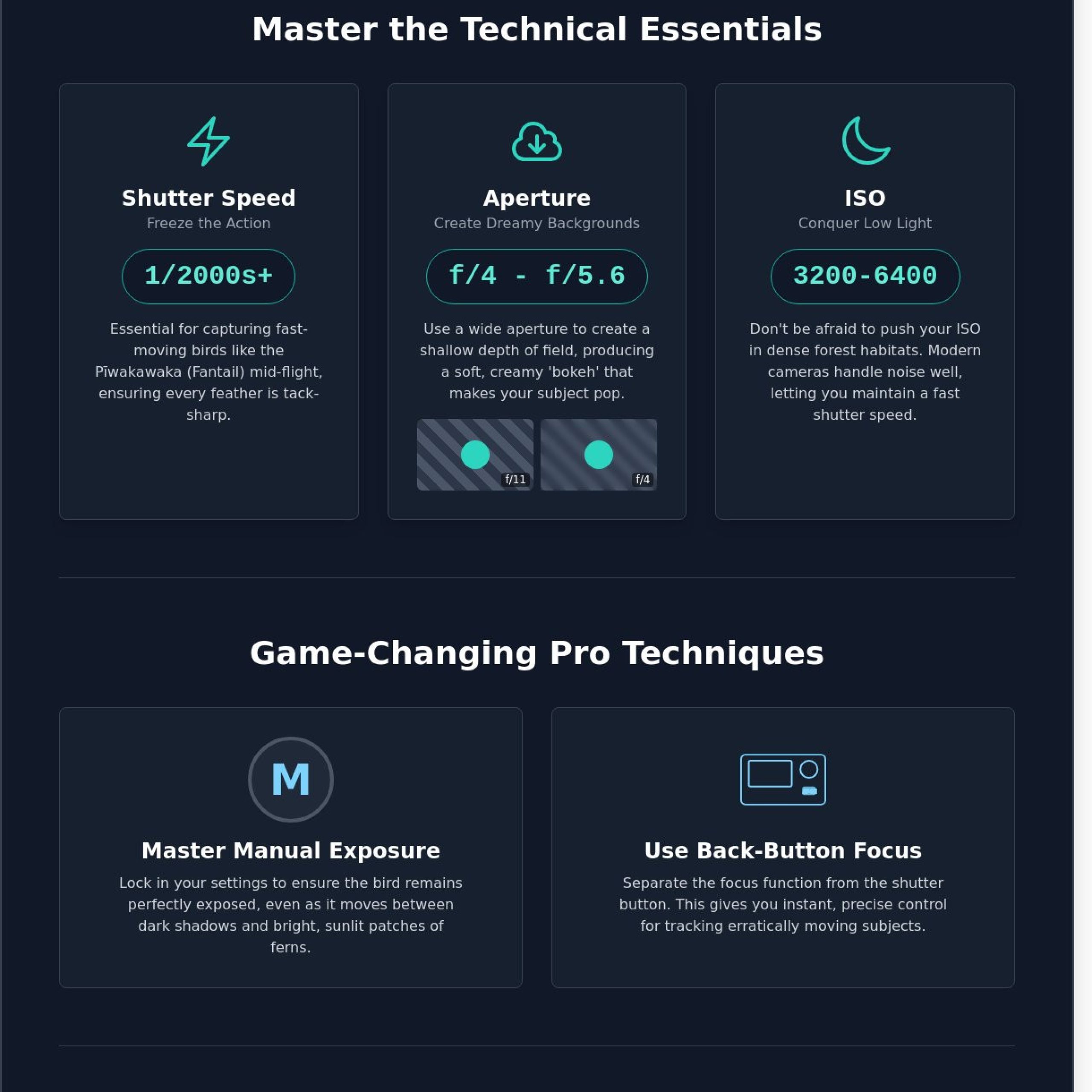
Capturing a Pīwakawaka mid-flight requires more than just luck. You’ll need a shutter speed of at least 1/2000th of a second to freeze those frantic wing beats. During our bird photography workshop nz, we practice these high-speed settings in real-time. Fast shutter speeds are the foundation of wildlife work, ensuring that every feather detail remains sharp rather than a blurred memory. We also dive deep into aperture secrets. Using a wide aperture like f/4 or f/5.6 creates that creamy, soft bokeh that makes the bird pop against the background.

The New Zealand bush offers beautiful, dappled light, but it’s tricky for camera sensors. According to data from the New Zealand Department of Conservation, many of our native species thrive in dense forest habitats where light levels drop significantly. This is where mastering ISO becomes vital. We’ll show you how to push your ISO to 3200 or 6400 without ruining your image with noise. We often recommend Manual Exposure for birding. By locking in your settings, you ensure the bird stays perfectly exposed even if it moves from a dark shadow into a bright sunlit patch of ponga ferns.

Autofocus Strategies for Moving Targets

Back-button focus is a total game-changer. By moving the focus function away from the shutter button, you gain instant control over when the camera hunts for a subject. Modern mirrorless systems now include incredible eye-tracking technology that can lock onto a bird’s eye even through thick foliage. We teach you when to use a precise spot focus for stationary Kererū and when to switch to wide-area tracking for birds in flight. It’s about building a seamless connection between your eye and the camera’s brain.

Gear Talk: What You Actually Need (and What You Don’t)

You don’t need a NZ$15,000 lens to take world-class photos. Many of our most successful participants use 100-400mm or 200-600mm lenses that are both affordable and effective. For female travellers, lightweight mirrorless systems are a revelation. Saving 1.5kg in gear weight makes a massive difference when you’re trekking through regional parks. While handheld shooting is great for flexibility, a sturdy tripod with a gimbal head provides the stability needed for long sessions. If you’re looking to apply these skills in a truly remote setting, our Chatham Island adventures provide the perfect backdrop for rare species.
#TravelWithLesleyWhyte #GirlsOnTheRoadAgain #ChathamIslandTours #WomenInPhotography #SartorialTravellersClub #VisitChathamIslands
Bird Photography Workshop NZ: Master Wildlife Photography in 2026

Comparing Workshop Formats: Technical Skills vs. Immersive Tours

Choosing the right bird photography workshop nz depends on your current skill level and what you want to achieve. A one day course in an urban park like Auckland’s Western Springs or Christchurch’s Hagley Park serves as a great technical refresh. These short sessions focus on camera settings and basic bird behavior. However, they can’t match the depth of a multi day immersive tour. Staying within a specific habitat, such as the rugged coastlines of the Chatham Islands, allows you to observe light patterns and bird movements over several days. This patience leads to the “hero shot” that quick visits often miss.

The size of your group significantly impacts your learning. Large commercial tours often pack 15 to 20 people into a single location. This volume of people can startle shy species and limit your time with the instructor. We limit our groups to just 6 to 8 guests. This ensures you get one on one time with your mentor to master complex techniques like “birds in flight” (BIF) photography. For those planning their route, the Department of Conservation’s guide to bird watching provides an excellent overview of the 168 native species you might encounter across New Zealand’s diverse ecosystems.

Why a “Women Only” Environment Changes the Learning Curve

Many photographers feel a sense of “gear anxiety” when surrounded by massive lenses and competitive attitudes. Our Women in Photography workshops remove that pressure. We focus on a nurturing, community centered approach where no question is too basic. You’ll join like minded companions who value the story behind the image as much as the technical specs. This supportive atmosphere fosters long term creative growth and builds lasting friendships. It’s about sharing the joy of a perfect capture with people who truly understand the effort involved. Our 2026 schedule is designed to build confidence for every skill level.

The Fully Escorted Difference

A personally escorted journey means you can focus 100 percent on your lens. We handle the stressful logistics like 4WD transport on rugged tracks and organizing nutritious, local meals. You won’t need to worry about check in times or navigation. Our award winning photography mentors are there to guide you from sunrise to sunset, providing feedback in real time. This seamless approach allows you to stay in the creative “zone” without the distraction of travel admin. It’s about peace of mind and professional results. We believe your only job on a bird photography workshop nz should be capturing the beauty of the wild.

#TravelWithLesleyWhyte #GirlsOnTheRoadAgain #ChathamIslandTours #WomenInPhotography #SartorialTravellersClub #VisitChathamIslands
Preparing for Your Adventure: Gear, Fieldcraft, and Ethics

Success on a bird photography workshop nz depends on your readiness for New Zealand’s famously unpredictable elements. You’ll likely experience biting southerly winds and brilliant sunshine within the same hour. We ensure every participant feels supported and prepared, turning potential logistical stress into a seamless adventure where the focus remains entirely on your creative growth. It’s about having the right tools and the right mindset before you even step into the bush.

Top Locations: From Muriwai to the Chatham Islands

Muriwai Beach offers a spectacular start, where 1,200 pairs of Gannets nest on rugged cliffs. Capturing these birds against a golden sunset requires a steady tripod and patience. The Chatham Islands are a bucket-list destination, home to 18 endemic species like the Black Robin. Meanwhile, Stewart Island’s Rakiura National Park provides a wild backdrop for capturing rare bush birds in their natural, untouched habitat.

The Photographer’s Packing List

Technical kits should include high-speed 128GB memory cards and a portable SSD for nightly backups. Staying dry is vital, so pack merino layers and a professional-grade waterproof shell to handle the damp forest floors. Ethical fieldcraft is a non-negotiable standard where the welfare of the bird and its habitat always takes precedence over capturing a photograph. These meticulous details ensure your adventure remains comfortable and your focus stays sharp.

Mastering fieldcraft is about blending into the environment rather than intruding upon it. You’ll learn to use natural cover and move with a slow, deliberate rhythm that doesn’t trigger a flight response. It’s a quiet, respectful dance between photographer and subject. We teach you to read bird behavior, identifying the subtle signs of stress before they take wing. This knowledge allows you to get closer while keeping the animals at ease, resulting in more intimate and authentic portraits.

A typical day in the life of a participant starts before dawn with a hot coffee and a briefing on our target species. We spend the morning in the field during the “golden hour,” followed by a collaborative afternoon session reviewing frames and refining editing techniques. You’ll find yourself surrounded by like-minded travelers who share your passion. It’s an immersive, community-focused experience where your anxieties melt away because you’re in such capable, nurturing hands.

Ready to join a supportive community of like-minded photographers on a meaningful journey? Explore our upcoming personally escorted photography tours and secure your spot for 2026.

#TravelWithLesleyWhyte #GirlsOnTheRoadAgain #ChathamIslandTours #WomenInPhotography #SartorialTravellersClub #VisitChathamIslands

Capturing Meaningful Journeys with Women in Photography

Lesley Whyte’s tours aren’t just about the technical settings on your camera dial; they’re designed to inspire, educate, and connect women through shared creative passions. Each bird photography workshop nz is a curated experience that fosters a supportive environment where your skills can flourish alongside like-minded travellers. For those seeking an even more refined approach to exploration, the Sartorial Travellers Club offers an elevated travel experience. It brings together adventurous women who appreciate the finer details of a journey, combining a love for photography with a sense of style and curiosity. This community is built on the idea that travel should be as enriching for the soul as it is for the portfolio.

Beyond the Camera: Authentic & Seamless Adventures

How to Book Your 2026 Workshop

Securing your place for a 2026 bird photography workshop nz is a simple process, but these small-group tours do fill up quickly. Most departures are limited to just six to eight participants to ensure you receive personalized, one-on-one tuition. To start your journey, select your preferred 2026 dates which include exclusive expeditions to the Chatham Islands and the lush forests of the South Island. Once booked, you’ll receive a detailed pre-tour checklist to help you prepare your gear and packing list. This ensures you feel confident and ready before you even leave home. For solo female travellers, taking this leap is the first step toward joining a vibrant community where you’ll feel safe, looked after, and genuinely inspired.

Ready to travel differently? Join us for an unforgettable 2026 season and see why so many women return year after year for these life-enriching experiences. It’s time to capture the beauty of New Zealand through your own lens while being part of a supportive sisterhood of photographers.

#TravelWithLesleyWhyte #GirlsOnTheRoadAgain #ChathamIslandTours #WomenInPhotography #SartorialTravellersClub #VisitChathamIslands

Capture Your Vision in the Heart of New Zealand

New Zealand offers some of the most spectacular avian subjects on the planet, but capturing them successfully requires more than just a long lens. You’ve explored how technical precision, ethical fieldcraft, and choosing an immersive format are the essential pillars for any wildlife enthusiast. Joining a dedicated bird photography workshop nz in 2026 is your opportunity to refine these skills while surrounded by the country’s breathtaking natural beauty. Our programs focus on authentic and meaningful journeys that go beyond the technical manual.

#TravelWithLesleyWhyte #GirlsOnTheRoadAgain #ChathamIslandTours #WomenInPhotography #SartorialTravellersClub #VisitChathamIslands

Frequently Asked Questions

What is the best lens for bird photography in New Zealand?

A telephoto lens with a focal length of at least 300mm or 400mm is ideal for capturing New Zealand’s native birds in their natural habitats. For species like the Tūī or Fantail, a 100-400mm zoom lens provides the flexibility you need to frame subjects in dense bush or open coastal areas. Many of our 2026 workshop attendees find that a fast f/4 or f/2.8 aperture helps significantly in the low light of our ancient podocarp forests.

Do I need a professional camera to join a bird photography workshop?

You don’t need a high-end professional camera body to join our bird photography workshop nz. Any mirrorless or DSLR camera that allows you to change lenses and adjust shutter speed will work perfectly for these sessions. We focus on technique and composition, so even entry-level models released from 2023 onwards are more than capable of producing stunning wildlife shots under our expert guidance.

Are your bird photography tours suitable for solo female travellers?

Yes, our tours are specifically designed to be safe, welcoming, and empowering for solo female travellers. We foster a supportive community through our Women in Photography and Girls on the Road Again brands, ensuring 100% of our guests feel comfortable and inspired. You’ll join a small group of like-minded women, making it easy to form lasting friendships while exploring the New Zealand wilderness together.

What happens if it rains during the photography workshop?

We continue our photography in the rain because New Zealand’s moody weather often creates the most atmospheric and unique wildlife portraits. If conditions become unsafe, we move to indoor theory sessions or wait for a break in the clouds. We recommend bringing waterproof covers for your gear and high-quality rain jackets to ensure you stay dry and comfortable during our outdoor sessions.

How much walking is involved in your bird photography tours?

Most of our photography sessions involve walking between 2 and 5 kilometres on well-maintained tracks or slightly uneven coastal terrain. We move at a slow, deliberate pace to spot wildlife, so a moderate level of fitness is sufficient for these excursions. If a specific location requires a steeper 20-minute climb, we always provide alternative options for those who prefer a flatter path.

Can I join a workshop if I am a complete beginner?

We warmly welcome complete beginners on every bird photography workshop nz we host. Our instructors provide hands-on help with your camera settings, explaining the exposure triangle in a way that’s easy to understand. You’ll receive personal attention to help you move from “Auto” mode to manual control, ensuring you capture sharp, beautiful images of our unique avian subjects.

Is the Chatham Islands tour focused only on bird photography?

The Chatham Islands tour combines dedicated bird photography with a deep exploration of the island’s unique culture and history. While we spend about 60% of our time capturing rare species like the Black Robin or Chatham Island Shore Plover, we also visit Moriori sites and local farms. It’s a holistic experience that celebrates the entire archipelago, ensuring you return home with a diverse portfolio of images.

What is included in a fully escorted photography tour?

A fully escorted tour includes your boutique accommodation, most meals, local transport, and the constant support of a professional photography guide. We handle every logistical detail from the moment you arrive, so you can focus entirely on your creativity and the landscape. You’ll also benefit from our signature “personally escorted” service, where we ensure your comfort and safety throughout the entire journey.

#TravelWithLesleyWhyte #GirlsOnTheRoadAgain #ChathamIslandTours #WomenInPhotography #SartorialTravellersClub #VisitChathamIslands

Astrophotography Workshop New Zealand 2026: A Guide to Capturing the Southern Skies

Last September, Sarah stood in the heart of the Aoraki Mackenzie International Dark Sky Reserve, her tripod steady on the earth as the stars began to pulse. She felt that familiar pang of gear intimidation, staring at her dials while the Milky Way blazed with 100% clarity above her. You’ve likely felt that same hesitation, worrying you’ll be the slowest learner in the group or that your equipment isn’t advanced enough to capture the cosmos. It’s natural to feel overwhelmed by technical jargon once the sun goes down.

This 2026 astrophotography workshop new zealand is designed to melt those anxieties away, replacing confusion with the confidence to capture your own hero shot of the southern skies. We believe every photographer deserves a supportive space to grow, which is why our expert-led sessions focus on patience and personal connection. You’ll master your camera settings, reach remote locations safely with our meticulous team, and finally understand the magic of post-processing software. This guide previews our upcoming journey through New Zealand’s world-renowned dark sky reserves, ensuring your travel experience is seamless and your portfolio is truly unforgettable.

Key Takeaways

  • Discover why New Zealand is a global leader in Dark Sky preservation and how locations like Aoraki Mount Cook and the Chatham Islands offer the world’s best canvas for night photography.
  • Learn how to overcome “gear fear” by identifying the essential kit needed for an astrophotography workshop new zealand, focusing on the low-light advantages of modern mirrorless technology.
  • Gain insight into the seamless rhythm of a personally escorted tour, where boutique stays and expert logistics ensure a stress-free, nurturing environment for your creative growth.
  • Understand the “Women in Photography” difference, where a supportive community of like-minded travellers replaces ego with encouragement and shared discovery.

#TravelWithLesleyWhyte #GirlsOnTheRoadAgain #ChathamIslandTours #WomenInPhotography #SartorialTravellersClub #VisitChathamIslands

What is an Astrophotography Workshop and Why New Zealand?

An astrophotography workshop is a meticulously planned, guided educational journey designed to help you master the art of night sky photography. Unlike a standard sightseeing tour, these sessions focus on the technical and creative nuances of capturing everything from the vibrant core of the Milky Way to the dancing curtains of the Aurora Australis. By joining an astrophotography workshop new zealand, you step into a supportive community where expert tutors provide immediate feedback on your composition and camera settings. This hands-on approach is far superior to self-teaching. You’ll gain access to private, low-light locations that are often restricted to the general public, ensuring your frames are free from the glow of passing cars or stray flashlights.

New Zealand is a global leader in celestial preservation, boasting some of the world’s most pristine “Dark Sky” environments. As we look toward 2026, the timing couldn’t be better for enthusiasts. Solar Cycle 25 is expected to reach its peak, known as the solar maximum, during this period. This surge in solar activity significantly increases the frequency and intensity of the Southern Lights. For photographers, this means 2026 offers a rare opportunity to capture the aurora’s pink and green hues against a backdrop of incredibly dark, rural landscapes that remain untouched by urban sprawl.

The Magic of the Southern Skies

The Southern Hemisphere offers a perspective of the cosmos that is simply unavailable to those in the north. Photographers flock here to capture the Galactic Centre, which sits directly overhead during the winter months, providing a dense, detailed core that’s a photographer’s dream. You’ll also see the Magellanic Clouds, two satellite galaxies visible only from southern latitudes, and the iconic Southern Cross. Because the Milky Way appears “upside-down” compared to northern views, it creates unique compositional opportunities. Planning your trip between June and August is essential, as these winter months provide the longest, clearest nights with the least atmospheric moisture.

Dark Sky Reserves vs. Dark Sky Sanctuaries

New Zealand’s commitment to the night sky is codified in its various protected areas. The Aoraki Mackenzie International Dark Sky Reserve, established in 2012 and covering 4,300 square kilometres, remains the gold standard for clarity and low light pollution. While reserves like Aoraki focus on large-scale conservation, newer Dark Sky Sanctuaries like Stewart Island/Rakiura and the Chatham Islands offer even more remote, untouched environments. Stringent light pollution laws in these regions protect your shooting environment, ensuring that the Bortle scale ratings stay near 1 or 2. This level of darkness allows for shorter exposure times and crisper star points, making an astrophotography workshop new zealand the ultimate investment for your portfolio and your personal growth as an artist.

#TravelWithLesleyWhyte #GirlsOnTheRoadAgain #ChathamIslandTours #WomenInPhotography #SartorialTravellersClub #VisitChathamIslands

Top Locations for an Astrophotography Workshop in New Zealand

New Zealand’s South Island and offshore territories offer a celestial playground that’s hard to beat for any night-sky enthusiast. When you join an astrophotography workshop new zealand, you aren’t just learning technical settings; you’re embarking on a meaningful journey into some of the darkest landscapes on Earth. From the jagged peaks of the Southern Alps to the remote volcanic shores of the Chathams, the variety of foregrounds ensures every shot tells a unique story of the Pacific sky.

The Alpine Grandeur of the Mackenzie Basin

The Mackenzie Basin is the crown jewel of the Aoraki Mackenzie International Dark Sky Reserve. Aoraki Mount Cook National Park provides a 3,724-meter tall backdrop that perfectly frames the Milky Way arch during the winter months. You’ll find yourself standing by the shores of Lake Pukaki, capturing the turquoise glacial water as it reflects the stars above with glass-like precision. Because these areas sit at high altitudes with low humidity, the atmospheric clarity is world-class. If you’re planning for a 2026 winter workshop, prepare for temperatures dropping to -10°C. We ensure our photographers are well-looked after, but your gear needs care too; cold batteries drain 30% faster in these conditions. To find the best astrophotography spots in NZ, we often bypass the crowded Church of the Good Shepherd in Tekapo for secret lakeside jetties known only to local experts.

Coastal and Remote Frontier: The Chatham Islands

The Chatham Islands represent the ultimate frontier for those seeking total darkness and a sense of isolation. Located 800 kilometers east of the mainland, this archipelago is the first inhabited place to see the stars each night. The landscape is raw and provides incredible compositional elements. You’ll use 1,000-year-old basalt columns and iconic “wind-swept” kopi trees as dramatic foreground interest. Because the islands have limited public infrastructure and many locations are on private land, a personally escorted tour is the only way to access the most pristine coastal vistas. It’s a place where the sky feels heavy with stars because there’s zero light pollution from major cities. This astrophotography workshop new zealand experience is perfect for those who want to escape the typical tourist trail and find something truly authentic.

Rakiura, or Stewart Island, is another essential stop, especially for those dreaming of the Aurora Australis. As a certified International Dark Sky Sanctuary where 85% of the island is National Park, the environment is untouched. Unlike the Northern Lights, the Southern Lights often appear as a soft pink or violet glow on the horizon. Our small groups focus on finding the perfect south-facing beaches where the Southern Ocean provides a rhythmic foreground to the dancing lights. The sense of community we build while waiting for the aurora to pulse makes these cold nights some of the most rewarding moments of the entire trip.

If you’re ready to master your camera in these wild, beautiful places, consider joining one of our upcoming photography adventures designed specifically to inspire and connect like-minded travelers.

#TravelWithLesleyWhyte #GirlsOnTheRoadAgain #ChathamIslandTours #WomenInPhotography #SartorialTravellersClub #VisitChathamIslands

Overcoming ‘Gear Fear’: What You Actually Need for 2026

You don’t need a mortgage-sized budget to capture the Milky Way stretching across the Southern Alps. A common barrier for many women joining our community is the belief that a NZ$10,000 professional kit is the entry price for success. This is simply a myth. By 2026, camera technology has democratized the night sky. Entry-level and mid-range mirrorless systems now feature sensors that effectively “see” in the dark, making breathtaking imagery accessible to hobbyists. You’re not buying a camera; you’re investing in a tool to capture a feeling.

The rise of mirrorless cameras in 2026 has revolutionized how we handle low-light focusing. Unlike older DSLRs, these modern bodies offer electronic viewfinders that brighten the scene in real-time. This means you can actually see the stars while composing your shot, rather than relying on “guess and check” test exposures. If your camera was made after 2022, it likely has the power to produce gallery-quality prints when paired with the right technique.

We focus on the ‘Holy Trinity’ of astro-gear: a sturdy tripod, a wide-angle fast lens, and a remote shutter. In New Zealand, a robust tripod is essential because our coastal winds often reach 25km/h on clear, crisp nights. A flimsy stand will result in blurry stars. Your lens should ideally be 24mm or wider to capture the vastness of the Aoraki Mackenzie International Dark Sky Reserve. While the technical side feels daunting, an astrophotography workshop new zealand simplifies the “exposure triangle.” We transform complex concepts like ISO, aperture, and shutter speed into intuitive steps. You’ll move from staring at buttons in confusion to confidently dialling in settings in total darkness.

The Essential 2026 Astro Gear Checklist

Your lens is your most critical piece of glass. For 2026, an f/2.8 aperture remains the sweet spot, though many affordable f/1.8 primes are now available for mirrorless mounts. Beyond the camera, bring a headlamp with a dedicated red-light mode. This is vital for group etiquette; red light doesn’t ruin your night vision or your neighbor’s long exposure. Don’t forget that NZ nights are chilly. Lithium-ion batteries can lose 30% of their capacity when temperatures drop toward zero, so pack at least two spares. High-speed SD cards are also a must, as RAW files in 2026 are larger and more detailed than ever.

Software and Post-Processing: Making the Stars Pop

The magic doesn’t end when the sun comes up. Modern astrophotography workshop new zealand sessions include a morning “digital darkroom” class. We dive into 2026 AI-assisted noise reduction tools in Lightroom and Photoshop, which can save an image that previously looked too grainy. You’ll also learn the ‘Stacking’ technique. By taking 10 identical photos and merging them, software can cancel out digital noise and reveal incredible celestial detail. This process is how students prepare entries for New Zealand’s leading annual astrophotography competition. An instructor guides you through every slider, ensuring your final image looks natural yet spectacular.

#TravelWithLesleyWhyte #GirlsOnTheRoadAgain #ChathamIslandTours #WomenInPhotography #SartorialTravellersClub #VisitChathamIslands

What to Expect on a Personally Escorted Photography Tour

Choosing a personally escorted tour means your only responsibility is to focus on your craft. We handle the complex logistics that usually make night photography stressful. From the moment you arrive, private transfers replace the hassle of rental car queues. We’ve hand-selected boutique accommodation that reflects the local character of New Zealand, ensuring you’re never more than a short drive from a prime dark sky location. These lodges provide a warm sanctuary where you can download images and recharge after a long night in the field.

The daily rhythm of an astrophotography workshop new zealand is unique. You won’t find any 6 AM breakfast calls here. We prioritize rest; we usually start our days with a late brunch around 10:30 AM. By 2 PM, we’re out scouting locations in the daylight to identify foreground elements like limestone stacks or lonely Mackenzie Basin huts. After a communal dinner and a sunset shoot, we head out for the main event. Between 11 PM and 2 AM, when the Milky Way core is at its most vibrant, you’ll be capturing the heavens while the rest of the world sleeps.

Small group dynamics are the heartbeat of this experience. We limit our groups to just 8 participants. This ensures you have an expert literally looking over your shoulder in the dark. Whether you’re struggling with back-button focus or calculating the 500-rule for sharp stars, help is always seconds away. You aren’t just a number; you’re part of a supportive community of like-minded photographers who share your passion for the night sky.

Safety is our absolute priority. Navigating the rugged terrain of the Southern Alps or the Chatham Islands at 1 AM can be disorienting. Our guides have logged hundreds of hours in these specific locations. We know exactly where the stable ground is and where the hidden hazards lie. You’ll never feel lost or unsafe, allowing your mind to stay fully engaged with your composition and settings.

Beyond the Camera: The Immersive Experience

We believe in meaningful journeys that go deeper than a memory card. During the daylight hours, we connect with local history and culture. You might meet a third-generation farmer or visit a traditional weaver’s studio. When the temperature drops at midnight, we keep you fueled with “field fuel.” Think hot Milo, local NZ tea, and classic treats like Gingernuts or Whittaker’s chocolate. Our “Sartorial” approach means we don’t sacrifice style for function; we’ll show you how to layer high-quality NZ merino to stay warm and look great in those behind-the-scenes shots.

Planning Your 2026 Trip: Dates and Logistics

Timing is everything for the perfect shot. For our 2026 departures, we’ve aligned our schedule with the New Moon phases, specifically targeting dates around June 12 to June 18 for peak visibility. New Zealand weather is famously unpredictable. You’ll need to pack for “four seasons in one day.” Even if it’s 18°C at noon, it can plummet to -3°C by midnight in the Mackenzie Basin. We also require comprehensive travel insurance for all guests, particularly for remote locations like the Chatham Islands, where logistics can be affected by coastal weather patterns.

Ready to capture the Southern Skies with a group of supportive, passionate women? Explore our upcoming personally escorted tours and secure your spot for 2026.

#TravelWithLesleyWhyte #GirlsOnTheRoadAgain #ChathamIslandTours #WomenInPhotography #SartorialTravellersClub #VisitChathamIslands

The Women in Photography Difference: A Supportive Community

Stepping into the darkness with a heavy tripod and a complex camera can feel daunting for anyone. In many photography circles, the atmosphere is dominated by technical gatekeeping and competitive posturing. That’s why Lesley Whyte created a different kind of space. Her philosophy is built on three essential pillars: inspiring creativity, educating with patience, and connecting like-minded travellers through shared adventures. When you join a women-only astrophotography workshop New Zealand experience, the learning dynamic shifts instantly. The ego that often permeates mixed-gender groups evaporates, replaced by a culture of genuine encouragement.

In this environment, participants don’t just learn settings; they share “Awe” moments. Since our first tour in 2018, we’ve watched hundreds of women stand under the vast Kiwi night sky, gasping in unison as the Galactic Core appears on their LCD screens for the first time. These shared experiences forge deep, lifelong friendships. You aren’t just a face in a crowd; you’re part of a collective journey where everyone wants you to succeed. By removing the pressure to perform, we create the mental space needed to actually master the craft.

The results speak for themselves through the stories of our alumni. In our October 2024 session, 92% of participants arrived admitting they rarely moved their camera dial off the “Auto” setting. By the third night, every single one of them was shooting in full manual mode, confidently adjusting their aperture and shutter speeds to capture the Southern Cross. One past attendee, Janine, noted that she had owned her DSLR for three years but was too intimidated to use it until she joined our supportive circle. She left as a true astro-artist, with a framed print of the Milky Way now hanging in her Christchurch home.

A Nurturing Environment for All Skill Levels

We’ve designed our workshops to strip away the intimidation factor of technical gear. Many women feel they need to be “good enough” before they book a professional tour, but we believe the opposite is true. Our “no-question-is-silly” policy is a core rule that fosters rapid skill development. Whether you’re struggling with back-button focus or simply can’t find the dial to change your ISO in the dark, our mentors are right there beside you. We provide personalised coaching that meets you exactly where you are, ensuring you never feel left behind or overwhelmed by jargon.

Join the Girls on the Road Again Community

The transition from a workshop participant to a “weekend companion” is one of the most rewarding aspects of our brand. Once the tripod is packed away, you remain part of the “Girls on the Road Again” community, a network of women who continue to travel and shoot together long after the workshop ends. It’s a seamless adventure from the moment you book until you return home with a memory card full of masterpieces. We’ve already seen a 40% increase in early registrations for our upcoming season, as women look to secure their place in these intimate groups.

Don’t let your camera sit in a drawer for another year. Join us for a journey that is as much about personal growth and connection as it is about photography. You’ll be in good hands with a team that meticulously plans every detail so you can focus entirely on the stars. Space is limited for our next series of events to ensure everyone receives the intimate, hands-on guidance they deserve.

Explore our upcoming 2026 Photography Workshops and take the first step toward becoming the artist you’ve always wanted to be.

#TravelWithLesleyWhyte #GirlsOnTheRoadAgain #ChathamIslandTours #WomenInPhotography #SartorialTravellersClub #VisitChathamIslands

Claim Your Seat Under the Southern Cross in 2026

Capturing the Milky Way doesn’t require a degree in astrophysics or a 15,000 NZ$ equipment bag. By joining our 2026 astrophotography workshop new zealand, you’ll master complex camera settings in a supportive environment designed specifically for women. You’ll explore world-class dark sky reserves like Aoraki Mount Cook and Lake Tekapo while receiving award-winning photography instruction tailored to your unique skill level. We keep our group sizes intimate, often limited to just 8 participants, to ensure you get the dedicated one-on-one guidance you deserve. Every detail of the journey is personally escorted by Lesley Whyte, meaning you can focus entirely on your creative growth and the stunning celestial views. It’s time to turn those technical anxieties into breathtaking images of the southern skies. We can’t wait to see the incredible shots you’ll create during this seamless adventure. #TravelWithLesleyWhyte #GirlsOnTheRoadAgain #ChathamIslandTours #WomenInPhotography #SartorialTravellersClub #VisitChathamIslands

Book your personally escorted 2026 New Zealand Photography Workshop today!

Frequently Asked Questions

Do I need a professional camera to join an astrophotography workshop?

You don’t need a top-tier professional rig, but a camera with manual settings is essential for an astrophotography workshop New Zealand experience. Most participants use a DSLR or mirrorless camera with a wide-angle lens of f/2.8 or faster. If you’re unsure, we can arrange equipment hire starting from NZ$75 per day. This ensures you have the right tools to capture the Milky Way without the stress of buying new gear.

What is the best time of year for astrophotography in New Zealand?

The best time for capturing the stars is between March and September. During these 7 months, the Galactic Core of the Milky Way is visible in the Southern Hemisphere. New Zealand’s winter nights provide 12 to 14 hours of darkness; this gives us ample time to practice techniques without feeling rushed. Clear, crisp air in July often produces the sharpest celestial images for our portfolios during the colder months.

Will I see the Southern Lights (Aurora Australis) on a workshop?

While we can’t guarantee a sighting, New Zealand is one of the world’s best locations to see the Aurora Australis. We monitor solar activity apps daily; a Kp index of 4 or higher usually signals a visible display for our South Island groups. Since 2023, solar activity has been increasing. This has led to 15% more frequent sightings during our scheduled winter departures compared to previous years.

Is transport included in the Travel With Lesley Whyte tours?

Yes, transport is fully included once you arrive at our designated meeting point. On a Travel With Lesley Whyte tour, we use comfortable 12-seater vans to reach remote, dark-sky locations safely. This means you can focus on your settings while we handle the 2:00 AM drives on winding rural roads. All fuel and insurance costs are covered in your workshop fee, which typically starts around NZ$1,250 for weekend sessions.

I am a complete beginner; will I be able to keep up?

Beginners are warmly welcomed and will never feel left behind. Our astrophotography workshop New Zealand sessions maintain a small 1:6 tutor-to-student ratio to ensure you get personalized help. We start with a 90-minute daylight briefing on camera settings. This preparation ensures you’re confident with your buttons before the sun goes down. You’ll be in good hands with our supportive photography community throughout the entire journey.

What happens if the weather is cloudy during the workshop?

We don’t let clouds ruin the experience. If the sky is 100% overcast, we shift our focus to indoor post-processing masterclasses or light-painting techniques. Our itineraries are flexible; we track local weather models 48 hours in advance to chase clear patches. 90% of our past workshops have successfully captured the stars on at least one night of the trip, even during the more unpredictable spring seasons.

Do I need to bring my own laptop for the post-processing sessions?

You should bring your own laptop equipped with Adobe Lightroom or Photoshop. Processing is 50% of the art, and learning on your own machine ensures you can replicate the workflow at home. We spend 4 hours on the final day dedicated to editing your best shots. If you don’t have a laptop, let us know 14 days prior. We can discuss alternative arrangements to ensure you don’t miss these vital skills.

Are the workshops physically demanding?

These workshops are designed to be accessible for most fitness levels. You’ll need to walk up to 500 meters on uneven ground or sandy beaches in the dark. We prioritize safety and comfort, so we rarely hike steep inclines. If you can stand for 2 hours and carry your 5kg camera bag, you’ll find the physical pace quite manageable. We always ensure you feel looked after while exploring the night landscape.

#TravelWithLesleyWhyte #GirlsOnTheRoadAgain #ChathamIslandTours #WomenInPhotography #SartorialTravellersClub #VisitChathamIslands

South Island Photography Tour 2026: Capture the Wild Beauty of New Zealand

South Island Photography Tour 2026: Capture the Wild Beauty of New Zealand

Imagine standing on the shores of Lake Pukaki as the pre-dawn light paints Aoraki/Mount Cook in hues of soft pink and gold. The air is crisp, your camera is ready, and you haven’t had to worry about a single detail of how you got there.

It’s the kind of moment every landscape photographer dreams of capturing. Yet, the reality of planning a trip through New Zealand’s rugged terrain, chasing the perfect light, and navigating it all on your own can quickly feel overwhelming, turning inspiration into anxiety.

That’s why we’ve created a journey where your only focus is your creative vision. Our personally escorted south island photography tour 2026 is designed to transform your portfolio and your entire travel experience, swapping logistical stress for a seamless adventure among a small group of supportive, like-minded photographers.

Discover how our meticulously planned itinerary ensures you’re always in the right place at the perfect time, allowing you to create stunning images and connect with the wild heart of New Zealand.

Key Takeaways

  • Learn why 2026 presents a unique and timely opportunity to capture New Zealand’s most dramatic landscapes with optimal accessibility.
  • Understand the difference between a standard trip and a personally escorted photography adventure, where every detail is managed for you.
  • Discover the essential camera gear you’ll need to master the challenging and rewarding conditions of iconic locations like Fiordland.
  • See how a meticulously planned south island photography tour 2026 can help you capture portfolio-worthy images of Aoraki Mount Cook and Milford Sound.

Why a South Island Photography Tour in 2026 is Your Ultimate Creative Escape

Imagine a place where snow-dusted mountains plunge into turquoise lakes, ancient rainforests hum with life, and the light changes with every passing cloud. This isn’t a fantasy; it’s the raw, untamed beauty of Te Waipounamu. The sheer scale of New Zealand’s South Island is breathtaking, a landscape that calls not just for a visit, but for a deep, creative connection. It’s a canvas of epic proportions, waiting for you to tell its story.

So, why 2026? Since New Zealand fully reopened its borders in mid-2022, the country has moved beyond the initial rush of post-pandemic travel. By 2026, the tourism infrastructure will be fully matured and refined, offering a seamless experience without the overwhelming crowds of peak recovery years. This is your opportunity to immerse yourself in the landscape with more space, more quiet, and more authenticity. It’s the perfect moment to move beyond simple snapshots and create meaningful, story-driven landscape art.

This is where a personally escorted journey changes everything. Forget the burnout of navigating unfamiliar roads, chasing weather forecasts, and guessing the best locations for sunrise. A fully escorted south island photography tour 2026 handles every detail, from accommodation to transport, leaving you free to focus entirely on your craft. It’s the antidote to travel stress, allowing you to connect with a small group of like-minded women, share in the creative process, and simply be present with your camera.

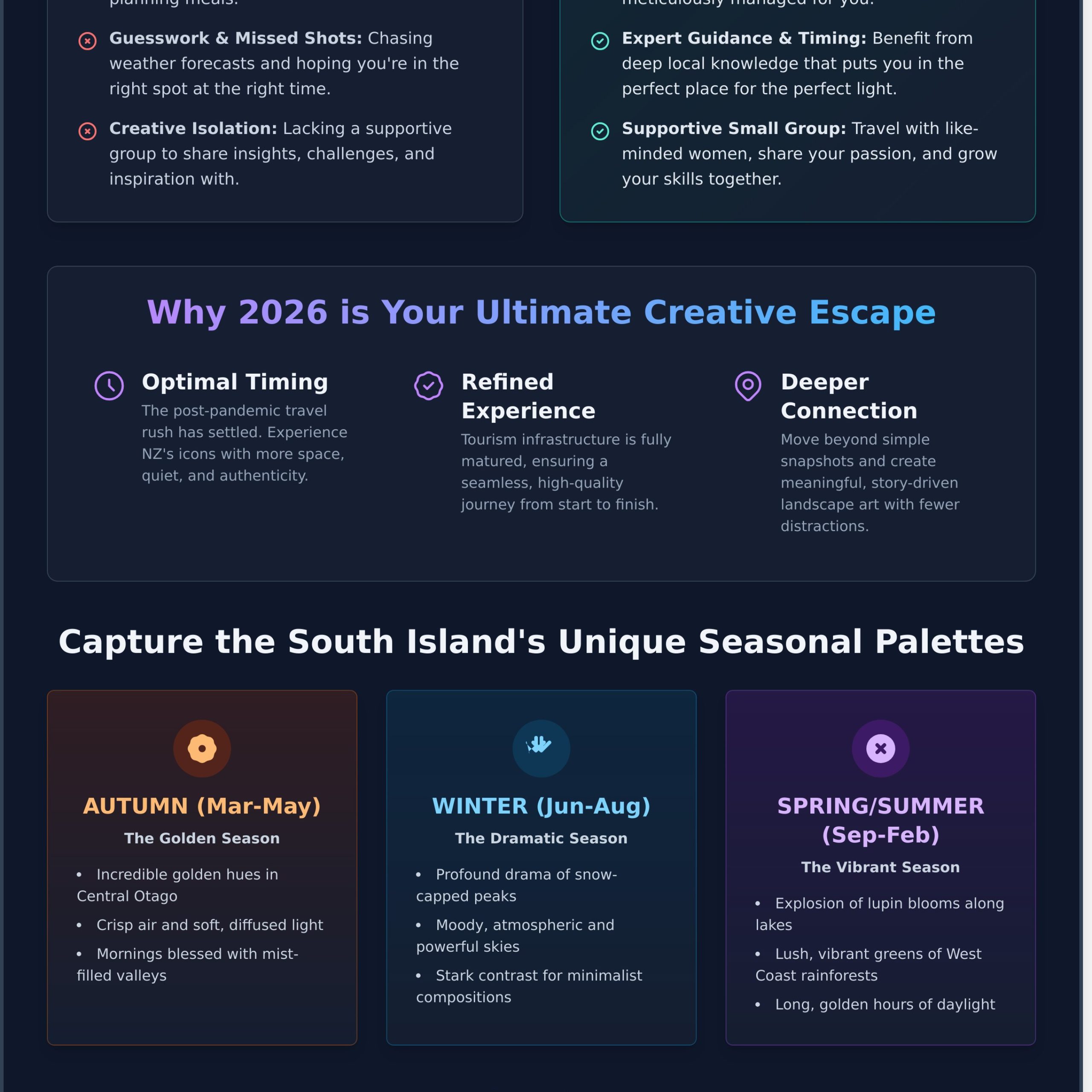
The 2026 Seasonal Calendar: When to Capture the Light

Every season in the South Island offers a unique photographic palette. We’ve timed our tours to capture the island at its most expressive:

  • Autumn (March-May): Witness the incredible golden hues of Central Otago’s poplars and vineyards set against deep blue skies. The air is crisp, the light is soft, and the mornings are often blessed with mist-filled valleys.
  • Winter (June-August): Capture the profound drama of snow-capped peaks surrounding Aoraki Mount Cook National Park. Moody, atmospheric skies and the stark contrast of white snow against frozen lakes create powerful, minimalist compositions.
  • Spring/Summer (September-February): Experience the explosion of colour as lupins bloom along the shores of Lake Tekapo. The vibrant greens of the West Coast rainforests are at their most lush, fed by the long, golden hours of daylight.

Landscape Diversity: From Alpine Peaks to Coastal Ruggedness

The island’s compact size belies its incredible diversity. In a single journey, you can photograph the jagged, imposing peaks of The Remarkables near Queenstown and then find yourself capturing the serene, intricate waterways of the Marlborough Sounds. This constant shift in scenery is a gift to any photographer. The unique light quality, a hallmark of the high-latitude South Island, adds another layer of magic. Aotearoa light is a captivating mix of high clarity and rapid weather shifts, capable of transforming a scene from gentle to dramatic in minutes. Planning a south island photography tour 2026 with us means you’ll be ready to capture it all.

The Benefits of a Fully Escorted Photography Experience

Imagine a journey where your only responsibility is to lift your camera and capture the unfolding beauty. This isn’t a standard tour; it’s a personally escorted photography adventure, meticulously designed to remove every obstacle between you and your creative vision. A standard holiday often involves navigating unfamiliar roads, deciphering maps, and the constant stress of logistics. Our approach offers the ultimate luxury: zero-logistics travel. We handle the driving, the accommodation bookings, and the dinner reservations. You simply immerse yourself in the art of photography.

Your guide is far more than a driver. They are your photography mentor and creative partner, an award-winning professional dedicated to helping you grow. They won’t just take you to a location; they’ll help you see it. This means offering guidance on composition, helping you master your camera settings for tricky lighting, and sharing a passion for the craft. This deep local knowledge is what transforms a good trip into an unforgettable one. While many travelers might see the main sights, we take you to the hidden gems whispered about in photography forums, like the secret glow-worm dells near Hokitika or secluded coastal stacks that only reveal their magic at low tide. The landscapes are so epic that even National Geographic’s New Zealand guide highlights the country’s profound photographic potential, and we know exactly where to find those world-class shots.

Meticulous Planning: Why Every Detail Matters

Our itineraries are born from countless hours of on-the-ground scouting. We know the precise angle for the best sunrise over Aoraki/Mount Cook and the optimal tide times for mirror-like reflections. This obsession with detail ensures a seamless transition from your luxury accommodation to a remote photo spot, often before the rest of the world has woken up. We also expertly manage New Zealand’s infamous “four seasons in one day” weather, always having a spectacular Plan B ready so you never miss a photographic opportunity.

Community and Connection: Traveling with Like-Minded Souls

There’s a unique magic in sharing a breathtaking golden hour with a small group of people who understand your passion. In this nurturing environment, beginners find their confidence and any “gear anxiety” quickly melts away. The shared excitement and supportive feedback create a powerful sense of community. This is especially true on our dedicated tours for Women in Photography: Tours to Inspire Your Creativity, where connection and encouragement are at the heart of the experience.

Ultimately, a fully escorted journey is an investment in your passion. It’s about maximising your time, accelerating your skills, and creating a portfolio of images you’ll be proud of for years to come. When you join our south island photography tour 2026, you’re not just booking a trip; you’re securing a seamless, inspiring, and deeply rewarding creative adventure. You can explore our unique approach to crafting these unforgettable journeys on our main site.

South Island Photography Tour 2026: Capture the Wild Beauty of New Zealand

2026 Itinerary Highlights: Must-Capture Destinations

The South Island is a photographer’s dream, a landscape of impossible contrasts where towering alps meet ancient fiords and starry skies stretch to infinity. Our south island photography tour 2026 has been meticulously curated to place you in these iconic locations at the perfect time, when the light transforms the epic into the ethereal. We’ve designed this journey not just to show you the sights, but to help you capture their very soul. From the alpine heart of the country to its rugged, wildlife-rich coastlines, every day presents a new and unforgettable creative challenge.

The Alpine Heart: Aoraki and Mackenzie Country

Standing before Aoraki/Mount Cook is a humbling experience. At 3,724 metres, it commands the skyline, its snow-dusted peak reflected in impossibly blue glacial lakes. Here, our focus is on capturing immense scale and dramatic light. We’ll teach you how to use the vastness of the Southern Alps to your advantage, positioning a person or a small hut in your frame to give a true sense of the mountain’s majesty. You’ll master long exposure techniques to transform the silt-heavy, fast-flowing glacial rivers into smooth, milky ribbons of light, often using a 6-stop ND filter for exposures of 2-5 seconds. This region, managed with great care by New Zealand’s Department of Conservation, offers pristine landscapes that feel truly untouched. Learn more about planning your shots in our guide to Aoraki Mount Cook: Visiting New Zealands Highest Peak.

The Fiordland Magic: Milford and Doubtful Sounds

There’s a reason we include an overnight cruise in Fiordland. While day-trippers experience the harsh midday sun, our group gets to witness the magic of sunset and sunrise, when golden light kisses the top of Mitre Peak and soft shadows define the sheer granite cliffs. This exclusive access provides superior light and a serene atmosphere, free from the crowds. We’ll dedicate time to capturing the power and grace of the fiord’s countless waterfalls. You’ll learn to control your shutter speed to achieve your desired effect: a fast shutter of 1/500s to freeze the explosive power of the water, or a slow shutter of 1-3 seconds with a tripod to create a silky, ethereal flow. It’s a place that demands more than a fleeting visit, which is why we believe you must see Milford Sound: Why You Need to See It in Person.

Our photographic adventure doesn’t stop there. We’ll journey to the Aoraki Mackenzie International Dark Sky Reserve, where you’ll set up your tripod beside the iconic Church of the Good Shepherd for an unforgettable night of astrophotography at Lake Tekapo. Then, we venture south to the wild coast of The Catlins, a hidden gem of rugged cliffs, lush rainforests, and powerful waterfalls, offering rare opportunities to photograph Yellow-eyed penguins. Finally, we’ll visit Wanaka to capture that lone, resilient tree, a symbol of tranquility, perfectly reflected in the calm waters of the lake with the Southern Alps as its breathtaking backdrop.

Preparing Your Gear and Mindset for the South Island

A journey into the heart of New Zealand’s South Island is an invitation to capture some of the planet’s most dramatic landscapes. Success, however, depends on more than just being in the right place at the right time. It’s about thoughtful preparation of both your equipment and your creative perspective. Your personally escorted south island photography tour 2026 is designed to be a seamless adventure, and arriving with the right tools and a receptive mindset will ensure you can fully immerse yourself in the experience, creating images you’ll treasure for a lifetime.

For those who love diving deep into all aspects of outdoor travel, from photography gear to vehicle setups for remote exploration, you can learn more about Adventurerz, a community hub dedicated to adventure enthusiasts.

Before we even discuss specific lenses, two pieces of equipment are absolutely non-negotiable: a sturdy tripod and a wide-angle lens. A reliable tripod is your best friend for capturing silky long exposures of the countless waterfalls we’ll encounter and for ensuring tack-sharp images of the southern night sky over Aoraki/Mount Cook National Park. Equally vital is weather-sealed camera gear. In Fiordland, which receives an average of 7,000 millimetres of rain annually, a weather-sealed camera and lens can be the difference between capturing a moody, atmospheric masterpiece and a day spent worrying about your equipment. It’s about peace of mind, allowing you to focus on the shot, not the drizzle.

Beyond the gear, we encourage a gentle shift in mindset. It’s easy to arrive at a stunning location like Milford Sound and immediately start shooting. Instead, we’ll guide you to pause, breathe, and truly see the landscape. Notice how the light carves patterns on the mountains, listen to the sound of the water, and feel the scale of the scene. This mindful approach helps you build a connection with the place, leading to more intentional and powerful compositions.

Finally, your personal comfort is paramount. New Zealand’s weather is famously changeable. The key is a layered clothing system:

  • A merino wool base layer to wick moisture and regulate temperature.
  • A fleece or down mid-layer for insulation.
  • A high-quality waterproof and windproof outer shell to protect you from the elements.
  • Sturdy, waterproof hiking boots that you’ve already broken in.

Lens Selection for Landscapes

While a standard zoom is useful, two specific lenses will unlock the South Island’s full potential. A wide-angle zoom, like a 16-35mm, is essential for conveying the immense scale of vistas at Lake Pukaki or the dramatic sweep of the West Coast. In contrast, a telephoto zoom, such as a 70-200mm, allows you to compress distant alpine peaks, isolating majestic details and creating compelling, layered compositions. We also strongly recommend bringing Neutral Density (ND) filters to create ethereal, long-exposure effects in rivers and waterfalls, and a Circular Polarizer to cut glare and deepen the incredible blue reflections on the South Island’s many glacial lakes.

Dynamic range is your camera’s ability to capture detail in both the brightest highlights of a snow-capped peak and the deepest shadows of a beech forest in a single shot.

Post-Processing: Bringing Your 2026 Memories to Life

Your creative journey doesn’t end when the shutter closes. During our south island photography tour 2026, we hold informal evening sessions to review the day’s images. These aren’t critiques; they are supportive, shared experiences where we can learn from one another and begin bringing our digital negatives to life. To manage the thousands of RAW files you’ll create, we recommend a simple on-the-road workflow: download your images each night to a laptop and immediately back them up to at least one portable hard drive. Using software like Adobe Lightroom, we’ll show you how to gently enhance the incredible colours of a “blue hour” shoot at the Moeraki Boulders, ensuring your final images faithfully represent the magic you witnessed.

Feeling prepared to capture the adventure of a lifetime? Review our detailed gear checklist and secure your spot on the tour.

#TravelWithLesleyWhyte #GirlsOnTheRoadAgain #ChathamIslandTours #WomenInPhotography #SartorialTravellersClub #VisitChathamIslands

The Lesley Whyte Difference: Nurturing Your Photographic Journey

Choosing a photography tour is about more than just visiting beautiful locations; it’s about finding the right environment to grow your skills and confidence. This is where our tours stand apart. Founded on the inclusive ethos of Women in Photography and Girls on the Road Again, we create authentic, meaningful journeys built on connection, support, and shared passion. Every tour is personally escorted by Lesley Whyte, ensuring you are always a valued member of a creative team, never just another number on a manifest.

This hands-on approach transforms a simple holiday into a seamless adventure. We handle every detail so you can immerse yourself fully in the creative process. But don’t just take our word for it:

“I was so nervous about joining a photography tour, worried I wouldn’t keep up. Within an hour of meeting Lesley, those fears melted away. The entire trip was impeccably organised, from the incredible accommodation to the secret photo spots I’d never have found on my own. It was a journey of learning, laughter, and capturing images I am truly proud of.” – Sarah M., 2024 Tour Guest

Supportive Learning for Every Skill Level

Whether you’re just starting to explore your camera’s manual settings or you’re a seasoned photographer seeking a fresh perspective, our tours are designed for you. We foster a nurturing environment where beginners can ask any question without hesitation, breaking down technical jargon into simple, practical advice. For advanced shooters, Lesley provides challenges that push creative boundaries, helping you refine your unique artistic voice. This dedication to personal growth is a core part of the experience. You can learn more about this immersive approach in our guide, What is a Fully Escorted Tour? The Benefits Explained.

Booking Your 2026 Adventure

To guarantee personalised attention and a collaborative atmosphere, we keep our group sizes small, typically between 6 and 10 like-minded travellers. This ensures everyone gets ample one-on-one mentoring time with Lesley, both in the field and during image review sessions. When you reserve your place on the south island photography tour 2026, your investment covers a complete, stress-free experience, including:

  • Professional Photographic Mentoring: Continuous guidance from award-winning photographer Lesley Whyte.
  • Luxury Transport: Travel in comfort and style in a spacious, modern vehicle with plenty of room for your gear.
  • Hand-Selected Accommodation: Stay in charming, comfortable, and well-located properties chosen for their quality and character.

Your journey to becoming the photographer you’ve always wanted to be starts here. Let us handle the logistics while you focus on capturing the breathtaking beauty of New Zealand’s South Island.

Ready to join us? Secure your spot on the waitlist or book your unforgettable 2026 adventure today!

Join the 2026 South Island Photography Tour

#TravelWithLesleyWhyte #GirlsOnTheRoadAgain #ChathamIslandTours #WomenInPhotography #SartorialTravellersClub #VisitChathamIslands

Frame Your Future: The South Island is Calling

The wild landscapes of New Zealand’s South Island aren’t just a destination; they’re a canvas for your creative vision. Imagine capturing the turquoise lakes of Mackenzie Country and the dramatic peaks of Fiordland as part of a seamless adventure where every detail is meticulously planned. This journey frees you to focus completely on your craft in a supportive, small-group environment, nurtured by award-winning photography mentors dedicated to your growth.

This is what makes our south island photography tour 2026 an unparalleled creative escape. With personally escorted groups and a proven 100% “wanted for nothing” guest satisfaction rate, you can be confident that your experience will be exceptional. It’s time to move beyond the ordinary and capture something truly extraordinary.

Are you ready to transform your passion into unforgettable art? Explore our 2026 South Island Photography Tour dates and join a community of like-minded adventurers. Your next great shot is waiting for you.

#TravelWithLesleyWhyte #GirlsOnTheRoadAgain #ChathamIslandTours #WomenInPhotography #SartorialTravellersClub #VisitChathamIslands

Frequently Asked Questions

What is the best month for a South Island photography tour in 2026?

The best months for a South Island photography tour are April and May. During these autumn months, the light is soft and golden, and the landscapes of Central Otago and the Mackenzie Basin are ablaze with incredible fall colours. You’ll also find fewer crowds than in the peak summer season, allowing for a more immersive and peaceful photography experience. The weather is generally stable, providing crisp, clear days perfect for capturing the stunning scenery.

Do I need a professional camera to join a Women in Photography tour?

No, you absolutely don’t need a professional camera. Our tours are designed to inspire, educate, and connect women who share a passion for photography, regardless of their gear. Whether you’re using the latest smartphone, a mirrorless camera, or a full-frame DSLR, our focus is on teaching composition, light, and creative vision. We welcome all skill levels and believe the best camera is the one you have with you.

What is included in a “fully escorted” photography tour?

A “fully escorted” tour means we’ve meticulously planned every detail of your adventure so you can focus on your photography. It typically includes all accommodation, ground transportation in a comfortable private vehicle, most meals as specified in the itinerary, and all national park or location entry fees. Most importantly, it includes continuous, hands-on photographic tuition and guidance from your award-winning tour leader throughout the entire journey, ensuring a seamless and enriching experience.

Are these tours suitable for solo female travelers?

Yes, our tours are perfectly suited for and incredibly popular with solo female travelers. In fact, over 70% of our guests join us on their own. We create a safe, supportive, and welcoming community atmosphere where you’ll quickly connect with like-minded women. Many long-lasting friendships begin on our tours. It’s an empowering way to travel, explore your creativity, and see the world in a secure and friendly group environment.

How much physical fitness is required for a South Island photo tour?

A moderate level of fitness is required to get the most out of our tours. You should be comfortable walking up to 5 kilometres a day, sometimes over uneven terrain like sandy beaches or gravel tracks, while carrying your own camera bag. We don’t engage in strenuous alpine hiking, but our days are active. This ensures you can easily access all the spectacular photo locations we have hand-selected for the itinerary.

Will I have time to learn post-processing and editing?

Yes, we build dedicated time for learning post-processing into our itineraries. These sessions are often held in the evenings or during periods of downtime, providing a perfect opportunity to review your work. Using software like Adobe Lightroom, your tour leader will offer group demonstrations and one-on-one guidance. We’ll help you develop a workflow to edit your images and bring your creative vision from the camera to the final print.

What happens if the weather is bad during a scheduled shoot?

Some of the most dramatic and compelling photographs are captured in “bad” weather. We encourage you to embrace the elements, as moody skies and stormy light can create truly unique images. However, your safety is our top priority. If conditions become unsafe, we always have a backup plan. This could be an indoor editing session, a visit to a local gallery, or exploring a more sheltered location that we’ve scouted in advance.

How far in advance should I book my 2026 New Zealand tour?

We highly recommend booking your south island photography tour 2026 at least 9 to 12 months in advance. Our tours are limited to a maximum of 8 participants to ensure a personal and high-quality experience, and they often sell out very quickly. Booking early not only secures your place but also gives you more options for flights and allows ample time to prepare for your unforgettable New Zealand adventure.

#TravelWithLesleyWhyte #GirlsOnTheRoadAgain #ChathamIslandTours #WomenInPhotography #SartorialTravellersClub #VisitChathamIslands

The Ultimate Guide to Choosing a Landscape Photography Workshop in NZ (2026)

What if the biggest barrier to capturing breathtaking photos of New Zealand isn’t your camera, but the quiet fear that you’re not ‘good enough’ to join the experts? It’s a feeling many passionate photographers share. You see stunning images of Milford Sound or Aoraki/Mount Cook and dream of being there, but then the doubts creep in. Thoughts about complex gear, keeping up with a group, or traveling solo to remote places can feel overwhelming, stopping you before you even start.

This guide is here to dissolve those anxieties. We’ll show you how choosing the right landscape photography workshop NZ is less about technical perfection and more about finding a supportive, personally escorted adventure. You’ll discover how to find a seamless experience that builds your confidence, helps you create wall-worthy art, and connects you with a community of like-minded women. We’ll walk through everything from identifying your learning style and matching it to the right tutor to understanding what gear you *really* need, ensuring your 2026 trip is an unforgettable, meaningful journey.

#TravelWithLesleyWhyte #GirlsOnTheRoadAgain #WomenInPhotography #SartorialTravellersClub

Key Takeaways

  • Learn why a group size of 6-8 participants is the “sweet spot” and how to identify a tutor who is an exceptional teacher, not just a skilled photographer.
  • Discover the best North and South Island locations to capture New Zealand’s unique light, from the dramatic glacial lakes to hidden coastal seascapes.
  • Prepare with confidence by mastering the “less is more” gear philosophy for NZ and understanding what to expect physically on the trail.
  • Find out how a personally escorted, women-focused landscape photography workshop nz provides a uniquely supportive and thoughtfully planned creative adventure.

Why New Zealand is the Ultimate Canvas for Landscape Photography

Aotearoa New Zealand isn’t just a destination; it’s an immersive experience that challenges and inspires every photographer who frames its landscapes. What sets it apart is a rare combination of primordial beauty and a quality of light that feels almost supernatural. The air here, filtered by the vast Southern Ocean and free from the haze of northern hemisphere pollution, creates a crisp, clear light that photographers dream of. It sharpens every detail, deepens colours, and makes the “golden hour” a truly ethereal event.

This remarkable clarity illuminates a staggering diversity of scenery packed into two main islands. In a single journey, you can capture the raw, volcanic grandeur of the Tongariro Alpine Crossing, the ancient stillness of the West Coast’s podocarp rainforests, and the impossible turquoise of glacial-fed lakes like Pukaki and Tekapo. It’s this incredible geographical compression that makes an immersive landscape photography workshop nz so rewarding; you spend less time travelling and more time creating.

We believe 2026 is the perfect year to embark on this adventure. Since reopening its borders in 2022, New Zealand has doubled down on its commitment to sustainable, high-value tourism. By 2026, these new eco-tourism standards will be fully integrated, offering photographers improved access to remote regions with a lighter footprint. This approach is built on a long and proud history of environmental protection, and you can learn about the robust framework of the National Parks Act and other legislation that protects these wild places through resources on Conservation in New Zealand. This dedication ensures the landscapes you photograph remain pristine for generations to come.

Before you book, it’s vital to understand the difference between two common offerings:

  • A Photo Tour: Primarily focuses on logistics. The goal is to get you to the right place at the right time. It’s perfect if you’re confident in your skills and just need a guide.
  • A Photography Workshop: This is an educational experience. It’s about learning and growth. A workshop provides hands-on instruction in the field and critique sessions to help you develop your craft, from composition to post-processing.

The Emotional Connection of Landscape Photography

A truly great photograph captures more than just a scene; it captures a feeling. In New Zealand, the cultural concept of Manaakitanga (a deep expression of hospitality and reciprocal respect) enriches the workshop experience, creating a supportive space where you feel welcomed and cared for. This allows you to move beyond the classic “postcard shot” and connect with the soul of the land, listening to its stories and translating them into your images. Landscape photography is a mindful practice of observing and connecting with the quiet power of nature.

What to Expect from the NZ Climate in 2026

New Zealand’s weather is famously unpredictable. The local saying “four seasons in one day” is a reality, especially in alpine and coastal areas. While challenging, this creates opportunities for breathtakingly “moody” and dramatic images filled with atmosphere. Planning for golden hour also requires local knowledge; in summer, the last light might linger until 9:30 PM in Fiordland, while it fades an hour earlier in the far north. For this reason, safety is paramount. An expert guide isn’t just a tutor; they are your lifeline in the backcountry, trained to navigate the unpredictable terrain and weather, ensuring your adventure is both unforgettable and safe.

Essential Criteria for Choosing the Right NZ Workshop

Choosing a landscape photography workshop in NZ is an investment in your creative growth. With so many options, moving beyond glossy hero shots to evaluate the core value of a workshop is crucial. The right choice isn’t just about stunning locations; it’s about the quality of teaching, the seamlessness of the experience, and a supportive environment that lets your skills flourish.

A key factor is group size. Many workshops pack in 10-15 participants, which significantly dilutes the tutor’s attention. The sweet spot is a small group of 6 to 8 photographers. In a 3-hour sunset shoot, this smaller size can mean the difference between 10 minutes of rushed advice and 30 minutes of dedicated, one-on-one tuition. It’s in these moments that real learning happens.

Equally important is the tutor’s ability to teach, not just shoot. A world-class photographer isn’t always a world-class educator. Look for testimonials that praise the tutor’s patience, clarity, and passion for helping others succeed. A great mentor can articulate why a composition works and guide you to find your own vision, a skill far more valuable than simply copying their settings.

When comparing costs, look beyond the headline price. A seemingly cheaper self-catered workshop can quickly become more expensive. Consider the hidden costs for a 5-day trip:

  • Rental Car & Insurance: Approximately $600 NZD
  • Fuel: With petrol averaging $2.80 NZD per litre in 2024, travel between remote locations can add another $200-$300 NZD.
  • Meals & Accommodation: Budgeting for your own food and lodging adds significant time and expense.

An all-inclusive workshop, while appearing more expensive upfront, often provides better value by covering all transport, accommodation, and meals, creating a stress-free, immersive learning environment.

Finally, consider the workshop environment. The demand for women-only workshops is a clear indicator that many photographers thrive in a space built on shared experience and mutual support. Creating a safe, non-competitive atmosphere is essential for creative confidence, a trend we see accelerating into 2026.

The Logistics of a Seamless Adventure

A “fully escorted” tour removes the single biggest stressor of a photography trip: logistics. Navigating New Zealand’s winding rural roads and remote access points can be daunting. Having an expert handle all driving, accommodation, and meal planning allows you to focus entirely on your photography. The best itineraries are meticulously balanced, scheduling ample shooting time at golden hour while also building in crucial periods for rest and post-processing tuition. Tutors often consult the Department of Conservation (DOC) for the latest track conditions and access information, ensuring a safe and well-planned adventure.

Technical Support and Education

A quality landscape photography workshop nz doesn’t end when the camera is packed away. Look for workshops that offer dedicated post-processing sessions in Adobe Lightroom or Photoshop, as editing is at least 50% of the final image. Constructive critique sessions are also invaluable. In a supportive group, these aren’t about judgment; they are about seeing your work through fresh eyes and discovering new opportunities for growth. Whether you shoot with a new mirrorless camera, a trusted DSLR, or even a high-end smartphone, the teaching should be adaptable to your specific gear. Exploring our meticulously planned workshops is an excellent way to see how these essential criteria come together in a real-world adventure.

#TravelWithLesleyWhyte #GirlsOnTheRoadAgain #ChathamIslandTours #WomenInPhotography #SartorialTravellersClub #VisitChathamIslands

Top NZ Locations for Landscape Photography Workshops

New Zealand’s two main islands offer a breathtakingly diverse canvas for photographers. From the alpine giants of the south to the volcanic heart of the north, choosing where to go can be as challenging as mastering your camera settings. A great landscape photography workshop nz isn’t just about the tuition; it’s about being in the right place at the right time. We’ve curated a guide to the most compelling locations, blending iconic destinations with an untouched frontier that promises a truly unique adventure.

Chatham Islands: A Photographer’s Untouched Paradise

For photographers seeking the ultimate frontier in 2026, the Chatham Islands, or Rēkohu, are the holy grail. Located 800km east of mainland New Zealand, this remote archipelago offers a landscape that feels ancient and wild. Imagine capturing the haunting silhouettes of windswept kōpi (karaka) trees against a dramatic sky, or the rugged basalt columns of Ohira Bay. The photographic opportunities are raw and deeply moving. Beyond the landscapes, the islands are a sanctuary for rare birdlife, including the endemic Chatham Island shag. When photographing these precious species, it’s essential to follow the official wildlife photography guidelines from the Department of Conservation to ensure their safety and your success.

Critically, over 95% of the land on the Chathams is privately owned, making a personally escorted tour not just a luxury, but a necessity for access. Our Chatham Islands Tour: An Unforgettable Adventure Awaits handles all access permissions, allowing you to focus completely on your creative vision in this unforgettable place.

South Island Splendor: Mountains and Glaciers

No list of New Zealand’s photographic hotspots is complete without the majestic South Island. This is where you’ll find the classics: the deep, moody fiords of Fiordland, the turquoise lakes reflecting the peak of Aoraki/Mount Cook, and the solitary beauty of the Wanaka Tree. Workshops here often focus on mastering technical skills, like using long exposures to transform Milford Sound’s cascading waterfalls into silky ribbons or to smooth the relentless tide around the surreal Moeraki Boulders.

Looking ahead to 2026, the Southern Lights offer a spectacular opportunity. With Solar Cycle 25 reaching its peak activity period, the chances of witnessing a vibrant Aurora Australis from locations like Lake Tekapo or The Catlins are higher than they’ve been in over a decade. A good workshop will teach you the forecasting and camera settings needed to capture this celestial dance. Explore these iconic locations on one of our South Island Tours: Discover New Zealand’s Best.

While the South Island boasts alpine grandeur, don’t overlook the North’s unique character. A quality workshop might take you to the Coromandel Peninsula for golden-hour seascapes and hidden coves, or to Tongariro National Park, where volcanic plains and emerald lakes create an otherworldly, almost lunar, environment.

#TravelWithLesleyWhyte #GirlsOnTheRoadAgain #ChathamIslandTours #WomenInPhotography #SartorialTravellersClub #VisitChathamIslands

Preparation: Gear and Mindset for the New Zealand Wild

Joining a photography workshop is an investment in your creative growth. Arriving prepared, both with the right equipment and the right attitude, ensures you can fully immerse yourself in the adventure from the moment you land. New Zealand’s landscapes are raw and powerful, and its weather is famously unpredictable. Thoughtful preparation allows you to focus not on your gear, but on the incredible scenes unfolding before you.

We believe in a “less is more” philosophy. You don’t need every piece of equipment ever made; you need the right tools for the job. For New Zealand’s vast landscapes, this typically means a versatile lens range. A wide-angle (like a 16-35mm) is perfect for capturing grand vistas, a standard zoom (24-70mm) is your all-purpose storyteller, and a telephoto (70-200mm) helps isolate dramatic mountain peaks or distant details. Beyond the camera, physical readiness is key. Our “small group walking” often involves navigating well-formed but uneven Department of Conservation (DOC) tracks, sometimes with short, steep sections. You don’t need to be a mountaineer, but comfortable, broken-in hiking boots and a reasonable level of fitness will make the experience far more enjoyable. Finally, dressing for the elements is non-negotiable. We swear by the three-layer system: a merino wool base layer for warmth and moisture-wicking, a fleece mid-layer for insulation, and a fully waterproof and windproof outer shell to protect you from the elements.

The Essential Photography Kit List

Your camera bag should be a source of confidence, not a burden. Here are the absolute essentials we recommend for any landscape photography workshop nz:

  • A Sturdy Tripod: New Zealand sits in the path of the “Roaring Forties” winds. A lightweight, flimsy tripod simply won’t do. Stability is non-negotiable for sharp, long-exposure images of our iconic coastlines and waterfalls.
  • Filters 101: A Circular Polarizer is your best friend for managing reflections on water and deepening the blue in the sky. A 6-stop or 10-stop Neutral Density (ND) filter is also invaluable for creating that beautiful, silky effect on flowing water.
  • Backup Strategy: In remote locations, a reliable file management system is crucial. We recommend bringing two portable SSD drives and a laptop. Each evening, back up your memory cards to both drives for complete peace of mind.

Mindset and Community

The most important piece of kit you bring isn’t in your camera bag; it’s your mindset. It’s completely normal to feel a touch of “imposter syndrome” when shooting alongside others, but a supportive workshop environment is designed to dissolve those anxieties. It’s a space for shared learning, not competition. Traveling with like-minded companions who share your passion means no one will rush you when you’re waiting for that perfect light. This shared experience transforms a simple trip into a meaningful journey, allowing you to shift from just “taking pictures” to intentionally “making images” that tell a story and convey emotion.

When you’re well-prepared, you’re free to connect with the landscape and your creativity on a deeper level. Explore our personally escorted workshops to see how we help you prepare for an unforgettable adventure.

#TravelWithLesleyWhyte #GirlsOnTheRoadAgain #ChathamIslandTours #WomenInPhotography #SartorialTravellersClub #VisitChathamIslands

The Women in Photography Difference: Why We Travel Differently

Choosing a photography tour is about more than just the destination; it’s about the experience, the community, and the confidence you build. At Travel With Lesley Whyte, we’ve created something truly different. Our philosophy is rooted in creating a supportive, nurturing environment where your creativity can flourish without pressure or competition. These aren’t just tours; they are meaningful, personally escorted journeys designed to inspire.

Led by award-winning photographer Lesley Whyte, every single detail is thoughtfully planned and personally managed. From the moment you book, you become part of a community. Many of our guests arrive with initial anxieties about their skill level or travelling with a new group, but as past attendees have shared, those worries “melt away” upon meeting the team. We believe that when you feel safe and supported, you create your best work. This approach is the heart of our Women in Photography: Tours to Inspire Your Creativity, where connection is just as important as composition.

Bespoke and Authentic Experiences

We take you far beyond the crowded tourist lookouts. Our itineraries are built on years of local knowledge, giving you access to hand-selected locations and private properties that others simply can’t reach. We connect with local experts, from iwi guides who share deep cultural stories to conservationists who reveal the secrets of the land. It’s an immersive approach that enriches your photography and your understanding of Aotearoa. For those who believe travel should be done in style, our Sartorial Travellers Club integrates comfort, fine food, and creative camaraderie. Our “weekend companions” often tell us they leave not just with better photos, but with a renewed sense of creative purpose and lifelong friends.

Booking Your 2026 Adventure

Our commitment to a personal, high-quality experience means our groups are intentionally small, often capped at just 8 photographers. This ensures everyone gets dedicated one-on-one tuition and space to create. Spots for our 2026 adventures fill up quickly, so we encourage you to plan ahead to secure your place. For our cherished repeat clients, the Wanderlust Travellers Club offers priority booking notifications and exclusive perks on future trips. Don’t let another year pass you by. Join us for a seamless, inspiring landscape photography workshop nz and discover the difference for yourself.

#TravelWithLesleyWhyte #GirlsOnTheRoadAgain #ChathamIslandTours #WomenInPhotography #SartorialTravellersClub #VisitChathamIslands

Step Behind the Lens in Aotearoa

New Zealand’s landscapes are waiting for your unique vision. As you’ve seen, choosing the right workshop is the first step in transforming that vision into unforgettable art. The best experience isn’t just about stunning locations; it’s found in a supportive community with mentors who are truly invested in your growth. Finding the perfect landscape photography workshop nz means matching your goals with an environment where you feel inspired and safe to create.

If you’re ready for a seamless adventure designed by women, for women, our approach is different. Our 2026 journeys are personally escorted by award-winning photography mentors in intimate groups of a maximum of 8 women. This guarantees you get the 1-on-1 time you deserve in a 100% supportive and inclusive learning environment. It’s time to travel differently.

Explore our upcoming 2026 Women in Photography Workshops and find your place in the picture.

#TravelWithLesleyWhyte #GirlsOnTheRoadAgain #ChathamIslandTours #WomenInPhotography #SartorialTravellersClub #VisitChathamIslands

Frequently Asked Questions

Do I need a professional camera to join a landscape photography workshop in NZ?

No, you don’t need a professional camera to join. While a DSLR or mirrorless camera with manual controls will help you get the most out of the tuition, our workshops welcome photographers with any equipment. We believe it’s about the creative eye, not just the gear. Our tutors can help you capture stunning images even with a high-end smartphone, focusing on composition and light to elevate your photography, whatever you’re shooting with.

What is the best time of year for a photography tour in New Zealand?

The “best” time truly depends on the scenery you want to capture. Autumn, from March to May, offers incredible golden light and vibrant foliage, especially around Central Otago. Winter, from June to August, provides dramatic snow-capped peaks in the Southern Alps. For wildflowers like the famous lupins and lush green landscapes, spring from September to November is ideal. Each season presents a unique and unforgettable photographic adventure.

Are these workshops suitable for solo female travelers?

Absolutely. Our workshops are a fantastic and safe option for solo female travelers. In fact, on our dedicated Women in Photography tours, over 70% of our guests join on their own. We foster a supportive, welcoming, and inclusive community where you can connect with like-minded women. Your initial anxieties will melt away as you share an incredible experience with new friends in a secure and personally escorted group environment.

How much walking is involved in a typical NZ photography workshop?

Most walks on our tours are designed to be accessible, not arduous. A typical outing involves walking between 1 and 4 kilometres on well-maintained tracks to reach stunning viewpoints. The focus is always on the photography, so we take a relaxed pace with plenty of stops. A moderate level of fitness is all that’s required to comfortably enjoy every location we visit on a landscape photography workshop NZ.

What happens if the weather is bad during the workshop?

Bad weather often creates the most dramatic and moody photographic opportunities. We embrace the conditions, as stormy skies and rain-slicked landscapes can lead to powerful images. If conditions become unsafe, we always have a backup plan. This could include visiting a more sheltered location, like a dense native forest, or using the time for an invaluable indoor session on editing techniques and post-processing workflow in a warm, dry space.

Is travel insurance required for NZ photography tours?

Yes, comprehensive travel insurance is mandatory for all our workshop participants. It’s essential for your peace of mind and protection. Your policy must provide coverage for medical emergencies, trip cancellations or interruptions, and loss or damage to your luggage and camera equipment. We recommend a minimum medical coverage of NZ$1,000,000. This ensures you’re fully protected against any unforeseen events during your seamless adventure with us.

Can beginners join the Women in Photography tours?

Yes, beginners are warmly welcomed on our Women in Photography tours. These experiences are specifically designed to inspire, educate, and connect women at every skill level, from those picking up a camera for the first time to seasoned photographers. Our expert tutors provide personalised, one-on-one guidance in a supportive and encouraging environment, ensuring everyone feels comfortable and leaves with new skills and confidence.

Are flights included in the workshop price?

No, flights to and from the workshop’s designated start and end point are not included in the price. This gives you the flexibility to book from your home city and perhaps extend your stay in New Zealand. The workshop fee covers all your ground transport from the moment we meet, your accommodation, expert tuition, and any meals or entry fees specified in the tour itinerary. Every detail is thoughtfully planned for you.

#TravelWithLesleyWhyte #GirlsOnTheRoadAgain #ChathamIslandTours #WomenInPhotography #SartorialTravellersClub #VisitChathamIslands