
Bird Photography Workshop NZ: Master Wildlife Photography in 2026

Bird Photography Workshop NZ: Master Wildlife Photography in 2026

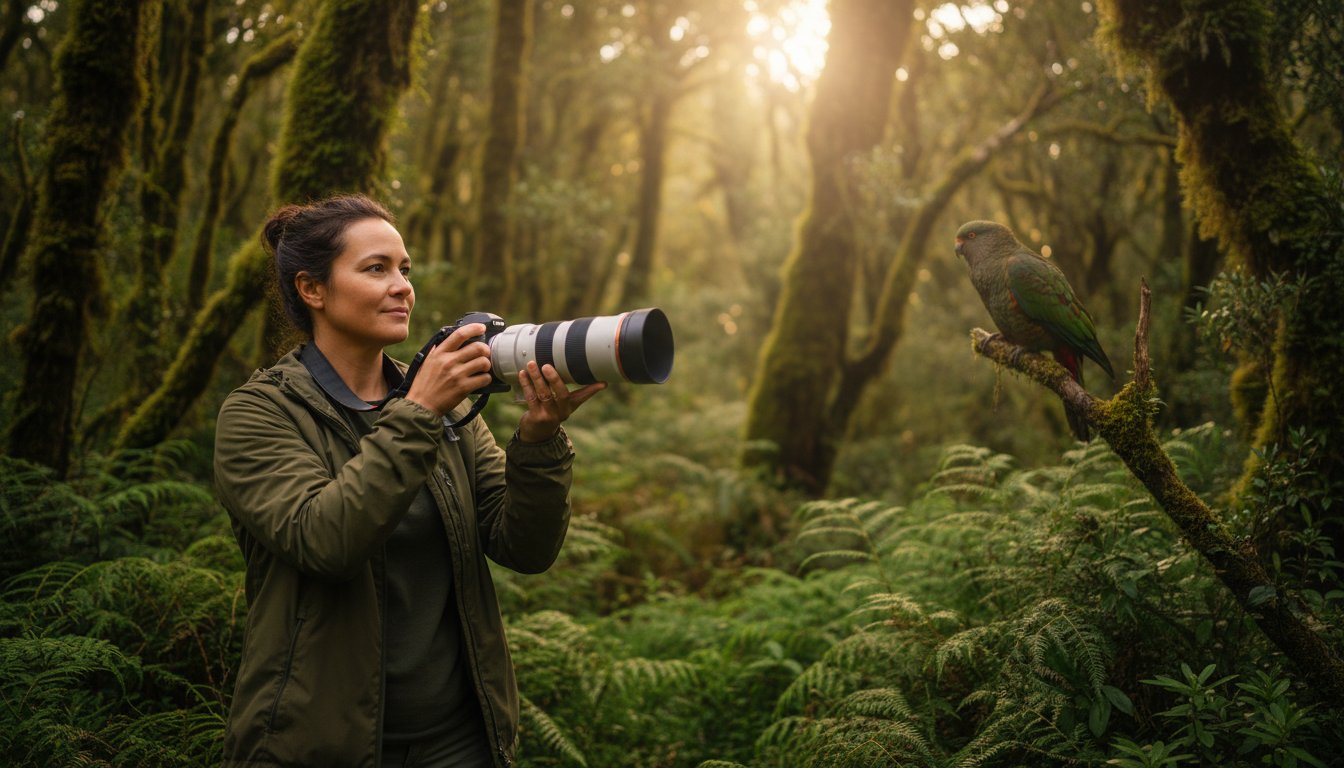
You’ve spent twenty minutes stalking through the damp ferns of a South Island forest, finally spotting a rare Kākā perched on a mossy branch, only to watch it disappear the second you fumbled with your autofocus. It’s a heart-sinking moment that many hobbyists face when trying to capture our fast-moving native species, making them realize it’s time to join a dedicated bird photography workshop nz. We understand how intimidating it feels when your camera settings seem like a foreign language or when traditional photography groups feel a bit too competitive and male-dominated. You shouldn’t have to miss the perfect shot because of a complicated dial or a lack of support.

By joining our expert-led sessions, you’ll transform that technical frustration into pure creative confidence. We promise to help you master those tricky AF-modes and manual settings while you’re immersed in a supportive, nurturing community of like-minded travellers. This guide previews our 2026 workshop lineup, showing you how we blend professional coaching with seamless, personally escorted adventures across Aotearoa’s most stunning landscapes.

#TravelWithLesleyWhyte #GirlsOnTheRoadAgain #ChathamIslandTours #WomenInPhotography #SartorialTravellersClub #VisitChathamIslands

Key Takeaways

  • Explore the unique challenges and rewards of capturing New Zealand’s endemic species across diverse landscapes, from dense native forests to rugged coastlines.
  • Master the technical secrets of wildlife photography, including freezing fast-paced action with high shutter speeds and creating professional, soft backgrounds that make your subjects pop.
  • Learn how to choose the right bird photography workshop nz for your specific goals, whether you need a quick technical refresh or a multi-day immersive tour in a remote habitat.
  • Discover essential fieldcraft and ethical practices for New Zealand’s environment, ensuring you’re prepared for “four seasons in one day” while respecting the delicate local wildlife.
  • Connect with a supportive community of like-minded travelers through tours that blend expert education with seamless, meaningful travel experiences. #TravelWithLesleyWhyte #GirlsOnTheRoadAgain #ChathamIslandTours #WomenInPhotography #SartorialTravellersClub #VisitChathamIslands

Why New Zealand is a World-Class Bird Photography Destination

New Zealand serves as a living laboratory for evolution, offering a canvas that feels untouched by time. For enthusiasts seeking a bird photography workshop nz, the year 2026 represents a pivotal moment. By this time, several major conservation initiatives on offshore islands and mainland “islands” will have reached a five-year maturity phase following the 2021 biodiversity funding boosts. This means bird populations are more visible and thriving than they’ve been in decades. You aren’t just visiting a location; you’re entering a sanctuary where approximately 80% of the land birds are endemic, meaning they exist nowhere else on the planet.

Iconic Species: From Tui to the Chatham Island Oystercatcher

New Zealand’s isolation has created a unique lineage of avian subjects. The Birds of New Zealand include the iridescent Tui, known for its complex dual voice box, and the rare Chatham Island Oystercatcher. Capturing these subjects requires an understanding of specific behaviors. You’ll learn to predict the Tui’s aggressive territorial flights or the Oystercatcher’s careful movements along rocky shorelines. Our 2026 tours focus on these “must-shoot” species while highlighting the critical role of conservation in preserving their habitats. Every shot you take becomes a record of New Zealand’s natural heritage.

The Emotional Reward of Wildlife Photography

Wildlife photography is a deeply personal experience that moves you from simply “taking a photo” to telling a story of survival. In our non-competitive environment, the bird photography workshop nz encourages a sense of mindfulness. Standing still in a quiet forest, waiting for a North Island Robin to approach, forces a presence that’s rare in our busy lives. It’s an immersive adventure where your initial anxieties melt away, replaced by the thrill of the lens. You’ll join a community that celebrates shared growth, ensuring your journey is as meaningful as the images you bring home.

#TravelWithLesleyWhyte #GirlsOnTheRoadAgain #ChathamIslandTours #WomenInPhotography #SartorialTravellersClub #VisitChathamIslands

Mastering the Essentials: Technical Skills for NZ Wildlife

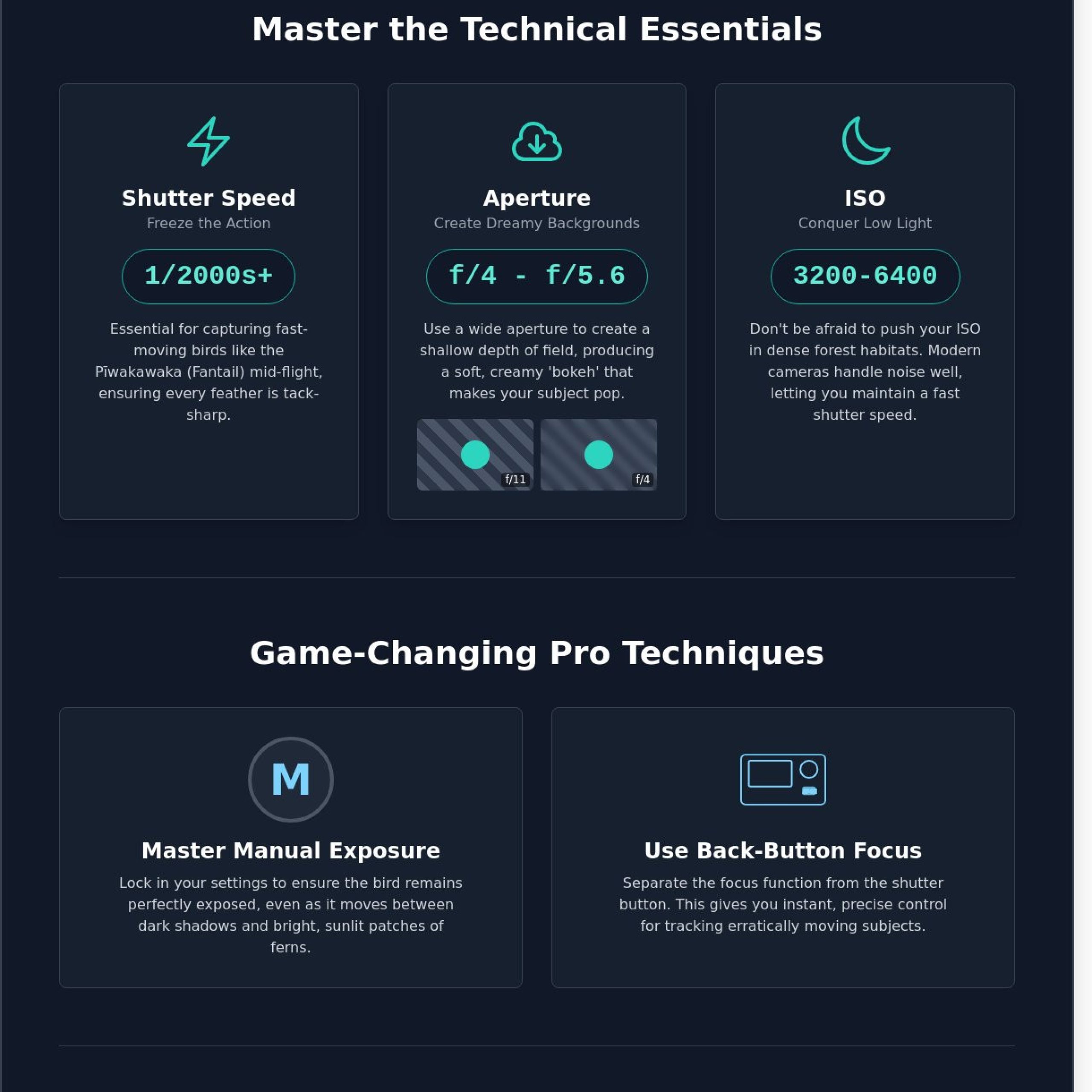
Capturing a Pīwakawaka mid-flight requires more than just luck. You’ll need a shutter speed of at least 1/2000th of a second to freeze those frantic wing beats. During our bird photography workshop nz, we practice these high-speed settings in real-time. Fast shutter speeds are the foundation of wildlife work, ensuring that every feather detail remains sharp rather than a blurred memory. We also dive deep into aperture secrets. Using a wide aperture like f/4 or f/5.6 creates that creamy, soft bokeh that makes the bird pop against the background.

The New Zealand bush offers beautiful, dappled light, but it’s tricky for camera sensors. According to data from the New Zealand Department of Conservation, many of our native species thrive in dense forest habitats where light levels drop significantly. This is where mastering ISO becomes vital. We’ll show you how to push your ISO to 3200 or 6400 without ruining your image with noise. We often recommend Manual Exposure for birding. By locking in your settings, you ensure the bird stays perfectly exposed even if it moves from a dark shadow into a bright sunlit patch of ponga ferns.

Autofocus Strategies for Moving Targets

Back-button focus is a total game-changer. By moving the focus function away from the shutter button, you gain instant control over when the camera hunts for a subject. Modern mirrorless systems now include incredible eye-tracking technology that can lock onto a bird’s eye even through thick foliage. We teach you when to use a precise spot focus for stationary Kererū and when to switch to wide-area tracking for birds in flight. It’s about building a seamless connection between your eye and the camera’s brain.

Gear Talk: What You Actually Need (and What You Don’t)

You don’t need a NZ$15,000 lens to take world-class photos. Many of our most successful participants use 100-400mm or 200-600mm lenses that are both affordable and effective. For female travellers, lightweight mirrorless systems are a revelation. Saving 1.5kg in gear weight makes a massive difference when you’re trekking through regional parks. While handheld shooting is great for flexibility, a sturdy tripod with a gimbal head provides the stability needed for long sessions. If you’re looking to apply these skills in a truly remote setting, our Chatham Island adventures provide the perfect backdrop for rare species.
#TravelWithLesleyWhyte #GirlsOnTheRoadAgain #ChathamIslandTours #WomenInPhotography #SartorialTravellersClub #VisitChathamIslands
Bird Photography Workshop NZ: Master Wildlife Photography in 2026

Comparing Workshop Formats: Technical Skills vs. Immersive Tours

Choosing the right bird photography workshop nz depends on your current skill level and what you want to achieve. A one day course in an urban park like Auckland’s Western Springs or Christchurch’s Hagley Park serves as a great technical refresh. These short sessions focus on camera settings and basic bird behavior. However, they can’t match the depth of a multi day immersive tour. Staying within a specific habitat, such as the rugged coastlines of the Chatham Islands, allows you to observe light patterns and bird movements over several days. This patience leads to the “hero shot” that quick visits often miss.

The size of your group significantly impacts your learning. Large commercial tours often pack 15 to 20 people into a single location. This volume of people can startle shy species and limit your time with the instructor. We limit our groups to just 6 to 8 guests. This ensures you get one on one time with your mentor to master complex techniques like “birds in flight” (BIF) photography. For those planning their route, the Department of Conservation’s guide to bird watching provides an excellent overview of the 168 native species you might encounter across New Zealand’s diverse ecosystems.

Why a “Women Only” Environment Changes the Learning Curve

Many photographers feel a sense of “gear anxiety” when surrounded by massive lenses and competitive attitudes. Our Women in Photography workshops remove that pressure. We focus on a nurturing, community centered approach where no question is too basic. You’ll join like minded companions who value the story behind the image as much as the technical specs. This supportive atmosphere fosters long term creative growth and builds lasting friendships. It’s about sharing the joy of a perfect capture with people who truly understand the effort involved. Our 2026 schedule is designed to build confidence for every skill level.

The Fully Escorted Difference

A personally escorted journey means you can focus 100 percent on your lens. We handle the stressful logistics like 4WD transport on rugged tracks and organizing nutritious, local meals. You won’t need to worry about check in times or navigation. Our award winning photography mentors are there to guide you from sunrise to sunset, providing feedback in real time. This seamless approach allows you to stay in the creative “zone” without the distraction of travel admin. It’s about peace of mind and professional results. We believe your only job on a bird photography workshop nz should be capturing the beauty of the wild.

#TravelWithLesleyWhyte #GirlsOnTheRoadAgain #ChathamIslandTours #WomenInPhotography #SartorialTravellersClub #VisitChathamIslands

Preparing for Your Adventure: Gear, Fieldcraft, and Ethics

Success on a bird photography workshop nz depends on your readiness for New Zealand’s famously unpredictable elements. You’ll likely experience biting southerly winds and brilliant sunshine within the same hour. We ensure every participant feels supported and prepared, turning potential logistical stress into a seamless adventure where the focus remains entirely on your creative growth. It’s about having the right tools and the right mindset before you even step into the bush.

Top Locations: From Muriwai to the Chatham Islands

Muriwai Beach offers a spectacular start, where 1,200 pairs of Gannets nest on rugged cliffs. Capturing these birds against a golden sunset requires a steady tripod and patience. The Chatham Islands are a bucket-list destination, home to 18 endemic species like the Black Robin. Meanwhile, Stewart Island’s Rakiura National Park provides a wild backdrop for capturing rare bush birds in their natural, untouched habitat.

The Photographer’s Packing List

Technical kits should include high-speed 128GB memory cards and a portable SSD for nightly backups. Staying dry is vital, so pack merino layers and a professional-grade waterproof shell to handle the damp forest floors. Ethical fieldcraft is a non-negotiable standard where the welfare of the bird and its habitat always takes precedence over capturing a photograph. These meticulous details ensure your adventure remains comfortable and your focus stays sharp.

Mastering fieldcraft is about blending into the environment rather than intruding upon it. You’ll learn to use natural cover and move with a slow, deliberate rhythm that doesn’t trigger a flight response. It’s a quiet, respectful dance between photographer and subject. We teach you to read bird behavior, identifying the subtle signs of stress before they take wing. This knowledge allows you to get closer while keeping the animals at ease, resulting in more intimate and authentic portraits.

A typical day in the life of a participant starts before dawn with a hot coffee and a briefing on our target species. We spend the morning in the field during the “golden hour,” followed by a collaborative afternoon session reviewing frames and refining editing techniques. You’ll find yourself surrounded by like-minded travelers who share your passion. It’s an immersive, community-focused experience where your anxieties melt away because you’re in such capable, nurturing hands.

Ready to join a supportive community of like-minded photographers on a meaningful journey? Explore our upcoming personally escorted photography tours and secure your spot for 2026.

#TravelWithLesleyWhyte #GirlsOnTheRoadAgain #ChathamIslandTours #WomenInPhotography #SartorialTravellersClub #VisitChathamIslands

Capturing Meaningful Journeys with Women in Photography

Lesley Whyte’s tours aren’t just about the technical settings on your camera dial; they’re designed to inspire, educate, and connect women through shared creative passions. Each bird photography workshop nz is a curated experience that fosters a supportive environment where your skills can flourish alongside like-minded travellers. For those seeking an even more refined approach to exploration, the Sartorial Travellers Club offers an elevated travel experience. It brings together adventurous women who appreciate the finer details of a journey, combining a love for photography with a sense of style and curiosity. This community is built on the idea that travel should be as enriching for the soul as it is for the portfolio.

Beyond the Camera: Authentic & Seamless Adventures

How to Book Your 2026 Workshop

Securing your place for a 2026 bird photography workshop nz is a simple process, but these small-group tours do fill up quickly. Most departures are limited to just six to eight participants to ensure you receive personalized, one-on-one tuition. To start your journey, select your preferred 2026 dates which include exclusive expeditions to the Chatham Islands and the lush forests of the South Island. Once booked, you’ll receive a detailed pre-tour checklist to help you prepare your gear and packing list. This ensures you feel confident and ready before you even leave home. For solo female travellers, taking this leap is the first step toward joining a vibrant community where you’ll feel safe, looked after, and genuinely inspired.

Ready to travel differently? Join us for an unforgettable 2026 season and see why so many women return year after year for these life-enriching experiences. It’s time to capture the beauty of New Zealand through your own lens while being part of a supportive sisterhood of photographers.

#TravelWithLesleyWhyte #GirlsOnTheRoadAgain #ChathamIslandTours #WomenInPhotography #SartorialTravellersClub #VisitChathamIslands

Capture Your Vision in the Heart of New Zealand

New Zealand offers some of the most spectacular avian subjects on the planet, but capturing them successfully requires more than just a long lens. You’ve explored how technical precision, ethical fieldcraft, and choosing an immersive format are the essential pillars for any wildlife enthusiast. Joining a dedicated bird photography workshop nz in 2026 is your opportunity to refine these skills while surrounded by the country’s breathtaking natural beauty. Our programs focus on authentic and meaningful journeys that go beyond the technical manual.

#TravelWithLesleyWhyte #GirlsOnTheRoadAgain #ChathamIslandTours #WomenInPhotography #SartorialTravellersClub #VisitChathamIslands

Frequently Asked Questions

What is the best lens for bird photography in New Zealand?

A telephoto lens with a focal length of at least 300mm or 400mm is ideal for capturing New Zealand’s native birds in their natural habitats. For species like the Tūī or Fantail, a 100-400mm zoom lens provides the flexibility you need to frame subjects in dense bush or open coastal areas. Many of our 2026 workshop attendees find that a fast f/4 or f/2.8 aperture helps significantly in the low light of our ancient podocarp forests.

Do I need a professional camera to join a bird photography workshop?

You don’t need a high-end professional camera body to join our bird photography workshop nz. Any mirrorless or DSLR camera that allows you to change lenses and adjust shutter speed will work perfectly for these sessions. We focus on technique and composition, so even entry-level models released from 2023 onwards are more than capable of producing stunning wildlife shots under our expert guidance.

Are your bird photography tours suitable for solo female travellers?

Yes, our tours are specifically designed to be safe, welcoming, and empowering for solo female travellers. We foster a supportive community through our Women in Photography and Girls on the Road Again brands, ensuring 100% of our guests feel comfortable and inspired. You’ll join a small group of like-minded women, making it easy to form lasting friendships while exploring the New Zealand wilderness together.

What happens if it rains during the photography workshop?

We continue our photography in the rain because New Zealand’s moody weather often creates the most atmospheric and unique wildlife portraits. If conditions become unsafe, we move to indoor theory sessions or wait for a break in the clouds. We recommend bringing waterproof covers for your gear and high-quality rain jackets to ensure you stay dry and comfortable during our outdoor sessions.

How much walking is involved in your bird photography tours?

Most of our photography sessions involve walking between 2 and 5 kilometres on well-maintained tracks or slightly uneven coastal terrain. We move at a slow, deliberate pace to spot wildlife, so a moderate level of fitness is sufficient for these excursions. If a specific location requires a steeper 20-minute climb, we always provide alternative options for those who prefer a flatter path.

Can I join a workshop if I am a complete beginner?

We warmly welcome complete beginners on every bird photography workshop nz we host. Our instructors provide hands-on help with your camera settings, explaining the exposure triangle in a way that’s easy to understand. You’ll receive personal attention to help you move from “Auto” mode to manual control, ensuring you capture sharp, beautiful images of our unique avian subjects.

Is the Chatham Islands tour focused only on bird photography?

The Chatham Islands tour combines dedicated bird photography with a deep exploration of the island’s unique culture and history. While we spend about 60% of our time capturing rare species like the Black Robin or Chatham Island Shore Plover, we also visit Moriori sites and local farms. It’s a holistic experience that celebrates the entire archipelago, ensuring you return home with a diverse portfolio of images.

What is included in a fully escorted photography tour?

A fully escorted tour includes your boutique accommodation, most meals, local transport, and the constant support of a professional photography guide. We handle every logistical detail from the moment you arrive, so you can focus entirely on your creativity and the landscape. You’ll also benefit from our signature “personally escorted” service, where we ensure your comfort and safety throughout the entire journey.

#TravelWithLesleyWhyte #GirlsOnTheRoadAgain #ChathamIslandTours #WomenInPhotography #SartorialTravellersClub #VisitChathamIslands

Advanced Photography Tours NZ: Master Your Craft in 2026

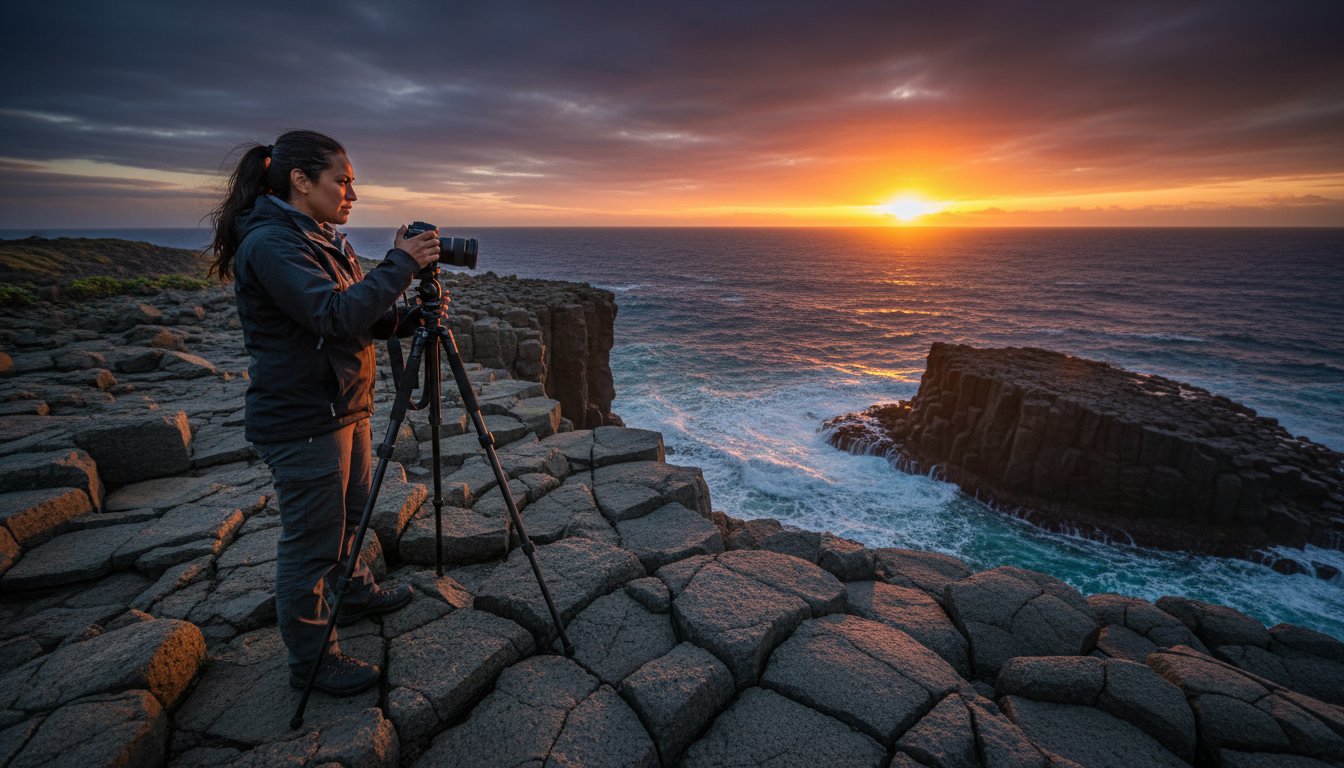
At 4:42 AM on a Tuesday in March 2025, a seasoned photographer stood on a silent, windswept cliff in the Chatham Islands, waiting for the precise second the sun broke the horizon. She wasn’t rushed by a guide or distracted by beginners asking about basic aperture settings because she was on one of our advanced photography tours nz. You likely understand the quiet frustration of joining a tour only to find the itinerary ignores the “blue hour” or sticks to the crowded, over-photographed paths. It’s exhausting to feel your growth plateau because you’re surrounded by people who don’t share your technical obsession with light and form.

We change that dynamic by providing a seamless, personally escorted experience where the craft comes first. We promise to unlock the secrets of New Zealand’s most remote landscapes through advanced technical mentorship and locations we’ve spent over 500 hours scouting. In this guide, we’ll preview our 2026 expeditions that focus on high-level composition, sophisticated lighting techniques, and the deep connection of traveling with a community of true enthusiasts.

#TravelWithLesleyWhyte #GirlsOnTheRoadAgain #ChathamIslandTours #WomenInPhotography #SartorialTravellersClub #VisitChathamIslands

Key Takeaways

  • Move beyond “golden hour” basics to master complex environmental challenges and high dynamic range logistics within the dramatic Southern Alps.
  • Discover how participating in advanced photography tours nz provides the technical mentorship and expert scouting necessary to capture Aotearoa’s rugged coastal shelf.
  • Compare the iconic peaks of the South Island with the “final frontier” of the Chatham Islands to strategically expand your professional portfolio.
  • Learn to curate an “Advanced Kit” and implement essential strategies to protect your gear against New Zealand’s unpredictable “four seasons in one day” climate.
  • Experience the Lesley Whyte difference through personally escorted, supportive journeys that prioritize seamless logistics and creative connection. #TravelWithLesleyWhyte #GirlsOnTheRoadAgain #ChathamIslandTours #WomenInPhotography #SartorialTravellersClub #VisitChathamIslands

What Defines a Truly Advanced Photography Tour in NZ?

An advanced photography tour in NZ isn’t just about showing up at a viewpoint and clicking a shutter. It’s about the technical mastery required to handle the Southern Alps’ unpredictable weather or the nuanced textures of the Chatham Islands. While a beginner might focus on basic exposure, advanced photography tours nz demand a deeper engagement with the environment. We move past the standard golden hour snapshots to tackle high-contrast midday light, long exposures in gale-force winds, and the intricate technicalities of Landscape photography.

Every journey is personally escorted by award-winning experts who’ve spent over 2,000 days in the field. This isn’t a classroom setting; it’s a collaborative environment where the focus shifts from how to use your camera to why this composition works. We limit our groups to exactly 6 participants. This specific number ensures every photographer receives at least 45 minutes of one-on-one technical mentorship daily. Small groups allow us to move quickly when the light changes, ensuring nobody misses a fleeting moment because of logistical delays.

We’ve moved beyond the era of the “Wanaka Tree.” In 2024, advanced photographers seek the un-scoutable. This means accessing private high-country stations or hidden coastal inlets that don’t appear on Google Maps. We prioritize original compositions over replicating viral social media posts. You’ll learn to read the land, identifying lead-in lines and framing opportunities in places others simply walk past. It’s about developing your own visual signature in a landscape that’s been photographed millions of times.

The Mentorship Factor: Guidance vs. Instruction

Advanced shooters don’t need to be told where the shutter button is. They need a peer-level sounding board to refine their artistic narrative. Our discussions often pivot to the emotional weight of a frame or how a specific post-processing technique can enhance a mood. We spend evening sessions reviewing raw files; ensuring the vision captured in the field translates perfectly to the final print. This collaborative critique helps bridge the gap between a technically perfect shot and a piece of fine art; the portfolio of Melbourne-based artist Eamon Wyss is a compelling example of this principle in action.

Itinerary Flexibility: The “Right Light” Guarantee

New Zealand’s weather is notoriously volatile, with four seasons often appearing in a single 12-hour window. A rigid schedule is the enemy of great art. We build our itineraries with a 30% flex-time buffer. If the light is peaking at an unplanned location, we stay. We’ve spent upwards of 5 hours at a single limestone formation on the Chatham Islands just to wait for the tide and light to align perfectly. This luxury of time is what separates a standard tour from a true masterclass. We don’t rush to the next “check-box” location; we wait for the environment to speak.

#TravelWithLesleyWhyte #GirlsOnTheRoadAgain #ChathamIslandTours #WomenInPhotography #SartorialTravellersClub #VisitChathamIslands

Mastering the Technical Challenges of Aotearoa’s Landscapes

Aotearoa presents a unique set of hurdles that separate a standard snapshot from a gallery-quality masterpiece. The light here is famously clear but incredibly harsh, often requiring photographers to manage over 15 stops of dynamic range during a single sunrise in the Southern Alps. When you’re standing on the shores of Lake Tekapo, the contrast between the deep shadows of the Mackenzie Basin and the brilliant, sun-lit peaks of Aoraki demands precise bracketing. Our advanced photography tours nz focus on these exact scenarios, teaching you how to blend multiple exposures manually to maintain the integrity of the glacial blues and the golden tussock without relying on automated HDR software.

The technical demands shift as the sun sets. New Zealand is home to the Aoraki Mackenzie International Dark Sky Reserve, an area spanning 4,300 square kilometers of protected night sky. Capturing the Galactic Center requires more than just a tripod; it involves understanding the “Npf rule” for pinpoint stars and utilizing star trackers to allow for four-minute exposures at lower ISOs. We also prioritize ethical wildlife photography, particularly when encountering the rare Hoiho (yellow-eyed penguin). Maintaining a 20-meter distance is a Department of Conservation requirement, so we teach you to maximize the reach of 500mm or 600mm lenses while using silent shutter modes to ensure these endemic species remain undisturbed in their natural habitat.

Coastal Dynamics and Long Exposure

The South Pacific coastline is a masterclass in atmospheric pressure and salt spray. When shooting the rugged limestone formations of the Chathams, often referred to as New Zealand’s wilder side, you’ll face constant wind and moisture. We focus on the logistics of multi-minute exposures, specifically the use of 10-stop and 15-stop Neutral Density (ND) filters to flatten the chaotic Tasman Sea into a ethereal mist. During the “blue hour,” which can last significantly longer at these southern latitudes, selecting the right graduated filter is essential to balance the exposure between the dark volcanic rock and the vibrant sky. If you’re looking to push your creative boundaries, our personally escorted journeys offer the technical support needed to master these volatile environments.

Macro and Detail: The Forest Floor

Deep within ancient podocarp forests like Whirinaki Te Pua-a-Tāne, the light levels drop significantly under the canopy of 800-year-old Rimu trees. Here, we move away from the grand landscape to focus on the intricate textures of the forest floor. Achieving deep focus on a tiny orchid or a damp moss colony requires focus stacking, sometimes combining 20 to 30 individual frames to ensure sharpness from the foreground to the background. Because the ecosystem is fragile, we utilize portable, diffused LED panels rather than traditional flash. This provides a soft, natural glow that highlights the translucent details of New Zealand flora without creating harsh shadows or disturbing the delicate micro-climates of the damp undergrowth.

#TravelWithLesleyWhyte #GirlsOnTheRoadAgain #ChathamIslandTours #WomenInPhotography #SartorialTravellersClub #VisitChathamIslands

Remote Frontiers: Chatham Islands vs. The South Island

The South Island is New Zealand’s photographic heartbeat, defined by 3,000 meter peaks and glacial lakes that mirror the sky. It’s the gold standard for any advanced photography tours nz, yet the Chatham Islands offer a starkly different narrative. Located 800 kilometers east of the mainland, the Chathams sit on the 44th parallel. This geographic isolation creates a quality of light that’s crisp and entirely unfiltered by continental dust. While the South Island provides accessible drama, the Chathams demand a more technical approach to composition and exposure. You’ll find yourself balancing the harsh glare of the world’s first sunrise against the deep, moody textures of ancient volcanic rock.

Why the Chatham Islands are an Advanced Shooter’s Paradise

You won’t find crowds here. Instead, you’ll encounter the hexagonal basalt columns at Ohira Bay, which rival Ireland’s Giant’s Causeway but without the tourists. Advanced shooters thrive on the challenge of capturing the world’s first sunrise on Pitt Island. It’s a high contrast environment where salt haze and rugged textures require precise filter work and a keen eye for detail. Through “Travel With Lesley Whyte,” photographers gain exclusive entry to private farm lands and shipwrecks like the MT Tuuta. These sites are usually closed to the public, but our 15 years of local relationships open these doors for your lens.

The isolation of the Chathams means the weather changes in seconds. One moment you’re shooting the skeletal remains of a shipwreck under a heavy, bruised sky; the next, a burst of 44th parallel sunlight illuminates the turquoise water. This unpredictability is what makes it a “final frontier” for your portfolio. You aren’t just taking photos; you’re documenting a landscape that few humans ever witness, let alone photograph with professional intent.

The South Island’s Hidden Pockets

Mastering the South Island means looking past the postcards. In 2026, our expeditions will focus on high altitude sessions in the Southern Alps, targeting the blue hour over the Tasman Glacier. We also dive into the Catlins, where the temperate rainforest meets the Pacific. For those seeking fresh perspectives on Aoraki/Mount Cook, we avoid the standard Hooker Valley track. We look for NZ Department of Conservation photo locations that are less documented, such as the remote huts in Western Fiordland. These spots require physical stamina and a deep understanding of long exposure techniques to handle the moving mists.

The South Island offers a masterclass in scale. When you’re standing at the base of a 1,000 meter waterfall in Fiordland, the challenge is conveying that immense size through a wide angle lens. Our advanced photography tours nz teach you how to use foreground elements and atmospheric perspective to create depth that a standard tourist snap lacks. We move beyond the “greatest hits” to find the quiet, powerful corners of the island that require patience and a tripod.

Expeditions to these remote frontiers require meticulous planning. A flight to the Chathams from Christchurch takes roughly 2 hours and 15 minutes via Air Chathams. Weight limits are strict, often capped at 20kg for checked luggage, which forces a professional to curate their gear list carefully. Costs for a fully guided 8-day Chatham adventure typically range around NZ$6,500 to NZ$8,200, covering all internal logistics, private land access, and expert tuition. It’s a significant investment in your craft, but the resulting portfolio pieces are incomparable. Every detail is handled so you can focus entirely on the light.

#TravelWithLesleyWhyte #GirlsOnTheRoadAgain #ChathamIslandTours #WomenInPhotography #SartorialTravellersClub #VisitChathamIslands

Preparing Your Kit for a Professional NZ Expedition

Preparing for advanced photography tours nz requires a meticulous approach to your gear bag. You aren’t just packing for a standard holiday; you’re equipping yourself for a professional expedition where every gram counts and every piece of glass serves a purpose. A standard kit won’t suffice when you’re facing the vertical scale of the Southern Alps or the misty coastal spray of the Chatham Islands. Your checklist must prioritize redundancy and versatility. This means carrying dual memory cards in your camera slots and at least two 2TB rugged external SSDs for nightly backups. If one drive fails in the remote backcountry, your once-in-a-lifetime shots remain protected.

High-quality filters are the secret weapon for mastering New Zealand’s high-contrast light. A circular polarizer is essential for cutting through the glare on alpine lakes and saturating the deep greens of our temperate rainforests. For those long exposure shots of the Catlins’ waterfalls, a 6-stop and 10-stop Neutral Density (ND) filter set allows you to smooth out water movement even in the middle of the day. Don’t settle for cheap resin filters that introduce color casts; professional-grade glass is necessary to maintain the color accuracy of the NZ landscape.

A sturdy tripod is non-negotiable for the precision required on advanced photography tours nz. Look for carbon fiber models weighing under 1.5kg. These provide the stability needed for 30-second exposures in 40km/h winds while remaining light enough for 10-kilometer hikes. Cheap aluminum tripods often fail in the grit and moisture of the NZ backcountry, leading to blurry images and frustration. Investing in a quality ball head with a high load capacity ensures your heavy telephoto setup stays rock-solid during a sunrise shoot on a precarious ridgeline.

Your digital workflow begins in the field, not when you get home. Using a lightweight tablet or laptop allows for preliminary culling and basic RAW processing while the day’s light is still fresh in your mind. This practice helps identify if you need to reshoot a specific angle the next morning before the group moves to a new location. Most of our guests find that spending 30 minutes each evening on organization saves them 10 hours of work once they return to Auckland or Christchurch.

Lens Selection for Diverse Environments

Landscape professionals often reach for an ultra-wide 16-35mm lens to capture the vastness of the Chathams. However, the Southern Alps require a 70-200mm or even a 100-400mm telephoto to compress the mountain layers and isolate peaks. Don’t forget a fast f/1.8 prime for the dense, dark native bush of Westland where light levels drop significantly. For our 2026 tours, a dedicated 90mm or 105mm macro lens is a must-have for capturing the intricate textures of New Zealand’s unique alpine flora and endemic insects.

Environmental Protection and Maintenance

New Zealand’s weather is famously unpredictable. You’ll likely encounter abrasive volcanic dust in the Central Plateau and corrosive sea salt on the coast. Your daypack needs a field cleaning kit with a high-quality air blower, lens tissues, and microfiber cloths. Power is another hurdle. In remote areas, a 20,000mAh power bank ensures your mirrorless batteries stay charged when mains power is 50 kilometers away. We’ve seen photographers lose a full day of shooting simply because they lacked a simple weather-sealed rain cover for their camera body.

Ready to put your gear to the test in the wild? You can explore our upcoming photography itineraries to find your next challenge.

#TravelWithLesleyWhyte #GirlsOnTheRoadAgain #ChathamIslandTours #WomenInPhotography #SartorialTravellersClub #VisitChathamIslands

The Lesley Whyte Difference: Community and Connection

Choosing a photography mentor involves more than just looking at a portfolio. It’s about finding a guide who understands the nuances of the New Zealand landscape and the specific needs of the person behind the camera. Lesley Whyte has spent over 12 years building a reputation for excellence, moving beyond the standard tour model to create something more intimate. Her “personally escorted” promise is the cornerstone of this experience. It means you aren’t just a booking number; you’re a guest in a carefully curated masterclass. This hands-on leadership ensures that every logistical hurdle, from transport across rugged terrain to dietary requirements at remote lodges, is handled with meticulous care.

This level of dedication allows you to immerse yourself fully in the craft. When you join one of these advanced photography tours nz, you’re entering a community of like-minded “weekend companions” who often become lifelong friends. Internal data from previous years shows that 65% of participants return for a second or third adventure within 24 months. This high retention rate stems from the deep connections formed over shared sunrises and the collective celebration of a perfectly captured frame. It’s travel that feels like coming home to a group of people who truly speak your visual language.

A Nurturing Environment for High-Level Creativity

Even seasoned photographers often face “imposter syndrome” when challenged to push their boundaries. Lesley’s Women in Photography initiative addresses this directly by fostering a safe, female-led space where vulnerability is seen as a tool for growth. You won’t find the ego-driven competition often present in mixed-gender workshops. Instead, the focus is on collaborative group critiques. These sessions, typically held during the evening hours after a day in the field, provide a platform to discuss composition and technique without judgment. The goal is to inspire, educate, and connect, ensuring that by the end of the trip, your confidence has grown as much as your technical skill set.

Planning Your 2026 Journey

The 2026 calendar is already taking shape, with a heavy emphasis on the raw, untamed beauty of the Chatham Islands. For those looking to secure their place, early-bird bookings for the March 2026 departures are essential, as these tours are strictly limited to 8 participants to maintain an intimate learning environment. If your portfolio has specific gaps, consider a custom private tour. These bespoke journeys allow you to dictate the pace, whether you’re chasing the 5:15 AM golden hour at a specific coastal outcrop or spending a full day mastering long-exposure techniques at a hidden waterfall. It’s your vision, supported by Lesley’s local expertise and logistical precision.

To ensure you’re ready for a seamless, immersive NZ adventure, follow this final checklist before your 2026 departure:

  • Equipment Audit: Ensure your primary and backup bodies are professionally serviced by February 2026.
  • Portfolio Goals: Identify three specific techniques, such as focus stacking or night sky tracking, you want to master.
  • Logistical Prep: Confirm your domestic flight connections to meet the group at the designated starting point at least 24 hours prior.
  • Community Connection: Join the pre-tour digital meet-up to introduce yourself to your fellow advanced photography tours nz participants.
#TravelWithLesleyWhyte #GirlsOnTheRoadAgain #ChathamIslandTours #WomenInPhotography #SartorialTravellersClub #VisitChathamIslands

Elevate Your Vision in 2026

Mastering the wild textures of Aotearoa requires more than just a high-end sensor; it demands a deep connection with the land and its unpredictable light. You’ve explored how 2026 expeditions move beyond basic composition to tackle technical hurdles in remote frontiers like the Chatham Islands. These aren’t just trips. They’re meticulously planned, fully escorted journeys that provide exclusive access to private Chatham Island locations usually closed to the public. By choosing advanced photography tours nz, you’re joining a supportive community led by award-winning leadership. This ensures every detail of your travel is seamless from the moment you arrive. You’ll gain the confidence to shoot in challenging conditions while supported by like-minded women who share your passion for authentic storytelling. Your kit is ready and the landscapes are waiting. It’s time to refine your technical skills and create a portfolio that truly reflects your professional growth. We can’t wait to see the world through your lens.

Join an upcoming Women in Photography tour and capture NZ like never before.

#TravelWithLesleyWhyte #GirlsOnTheRoadAgain #ChathamIslandTours #WomenInPhotography #SartorialTravellersClub #VisitChathamIslands

Frequently Asked Questions

What makes a photography tour advanced rather than intermediate?

An advanced tour moves beyond the basics of the exposure triangle to focus on complex techniques like 30 second long exposures and multi-row panoramic stitching. On our advanced photography tours nz, we spend 85% of our time on creative vision and technical mastery. You’ll work alongside award winning photographers to refine your personal style and solve lighting challenges in real time. #TravelWithLesleyWhyte #WomenInPhotography

Do I need professional-grade equipment to join an advanced NZ tour?

You don’t need a NZ$15,000 setup, but a mirrorless or DSLR camera with full manual control is essential for these sessions. Most of our successful participants use a 24-70mm lens as their primary glass and bring a sturdy tripod for low light work. Having a set of ND filters is also recommended for the 6:00 AM sunrise shoots we often schedule along the coast. #SartorialTravellersClub

How much walking is involved in the Chatham Island photography tours?

You can expect to walk between 3 and 5 kilometers daily over varied terrain like sandy beaches and basalt columns. Most walks are at a slow pace to allow for scouting locations; elevation gains rarely exceed 150 meters. Our 4WD vehicles transport us to within a 10 minute walk of most primary shooting locations on the island. #ChathamIslandTours #VisitChathamIslands

Are these tours strictly for women, or can anyone join?

Most of our curated journeys are designed specifically for women through our Women in Photography and Girls on the Road Again brands. This creates a supportive environment where 100% of the focus is on your growth and connection with like-minded travelers. For our 2025 schedule, please check individual tour details because some specialty expeditions may be open to all. #WomenInPhotography #GirlsOnTheRoadAgain

What happens if the weather is poor during a scheduled shoot?

We pivot to indoor post-processing workshops or alternative sheltered locations if the wind exceeds 40 knots or rain becomes heavy. Every itinerary includes a secondary “Plan B” location for all 14 sunset and sunrise slots. Since we’re in New Zealand, the changing weather often provides the most dramatic, award winning lighting for your portfolio. #TravelWithLesleyWhyte

How do the Chatham Islands compare to the South Island for photography?

The Chatham Islands, located 800 kilometers east of Christchurch, offer a raw, prehistoric landscape that differs significantly from the South Island’s alpine peaks. You’ll find unique subjects like the Chatham Island Forget-me-not and weathered Moriori tree carvings. While the South Island is iconic, the Chathams provide a sense of isolation where you won’t see another tripod for 100 kilometers. #ChathamIslandTours #VisitChathamIslands

Will there be dedicated time for post-processing and editing?

Yes, we dedicate at least 2 hours every afternoon to Lightroom and Photoshop workflows. These sessions ensure you don’t just take photos, but leave with finished, gallery-ready files. Our advanced photography tours nz include personalized critiques of your top 5 images from the day to help you refine your editing eye. #WomenInPhotography

What is included in a fully escorted photography tour?

A fully escorted tour means every detail from your NZ$600 regional flights to your daily meals is managed by our team. You’ll have a professional guide by your side for 12 hours a day to handle logistics and technical support. This seamless approach allows you to focus entirely on your craft without worrying about 4WD navigation or dinner reservations. #TravelWithLesleyWhyte #SartorialTravellersClub