
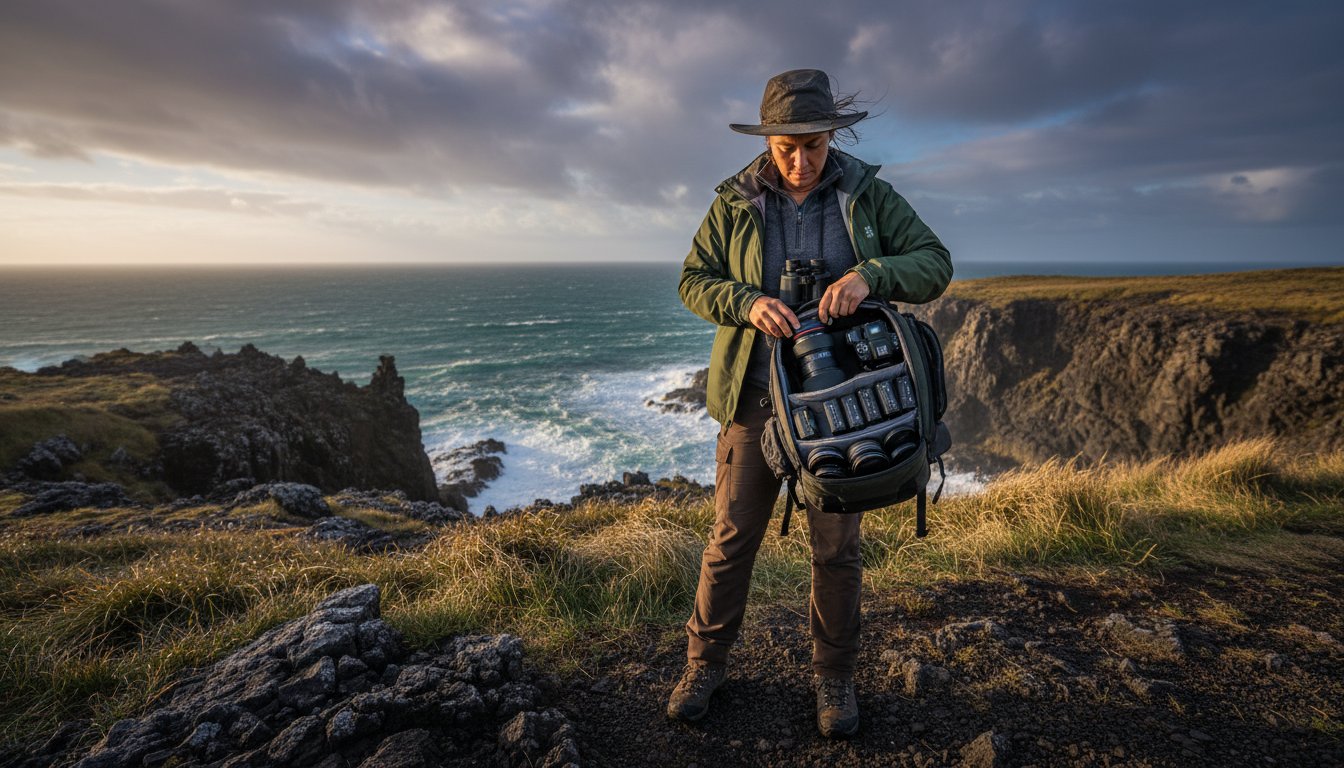
What to Pack for a Photography Tour in 2026: The Ultimate Checklist

What to Pack for a Photography Tour in 2026: The Ultimate Checklist

Last November, a guest on our Chatham Islands adventure stood before a colony of Royal Albatross, only to find her camera battery was flat and her spares were sitting on the charger in her room. It’s a heartbreaking moment every creative traveler fears. We know you want to capture every fleeting light change without the nagging anxiety of forgetting a crucial piece of kit or struggling with a bag that feels like a lead weight. Figuring out what to pack for a photography tour doesn’t have to be a guessing game that leaves you exhausted before the first shutter click.

You deserve a seamless experience where your gear feels like an extension of your vision, not a burden. This guide provides a meticulous 2026 checklist to help you master your packing list, ensuring you have the right lenses for 100 percent of the shots you want while staying within those tight 7kg or 15kg domestic airline weight limits. We’ll walk through the essential weather-ready layers for the New Zealand elements, the best lightweight tripod options, and the small comforts that make a long day in the field feel like a breeze.

#TravelWithLesleyWhyte #GirlsOnTheRoadAgain #ChathamIslandTours #WomenInPhotography #SartorialTravellersClub #VisitChathamIslands
Key Takeaways

  • Curate the ideal 2026 camera kit by balancing high-end mirrorless technology with essential backup systems to ensure a seamless creative adventure.
  • Learn how to select lightweight carbon-fiber support and calculate power needs for long, productive days in remote New Zealand climates.
  • Master a professional layering philosophy designed to keep you comfortable and protected during the unique weather conditions of the Chatham Islands.
  • Discover exactly what to pack for a photography tour to safeguard your gear against coastal elements while implementing a foolproof “Double-Backup” digital workflow.
  • Experience the peace of mind that comes with a personally escorted tour, where meticulous logistics allow you to focus entirely on your photographic craft. #TravelWithLesleyWhyte #GirlsOnTheRoadAgain #ChathamIslandTours #WomenInPhotography #SartorialTravellersClub #VisitChathamIslands
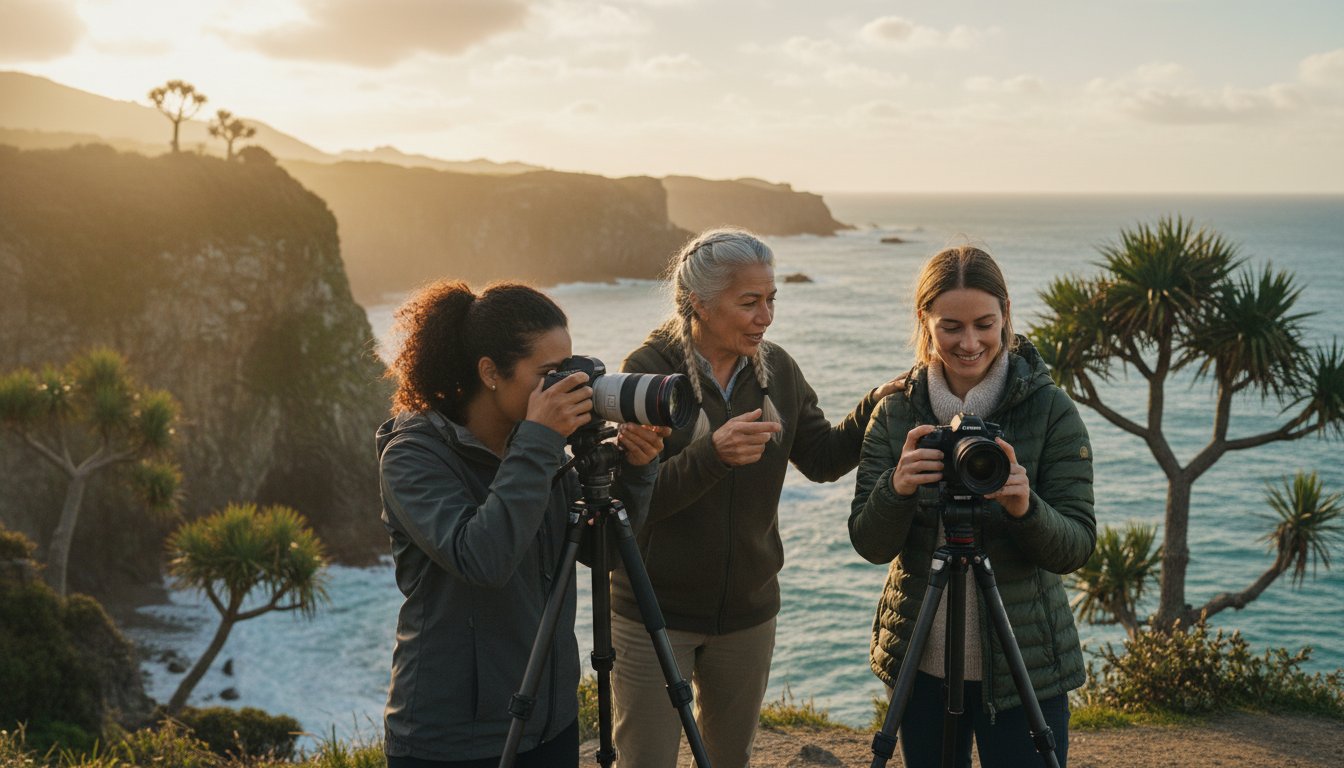
Selecting the Right Camera Bodies and Lenses for Your Journey

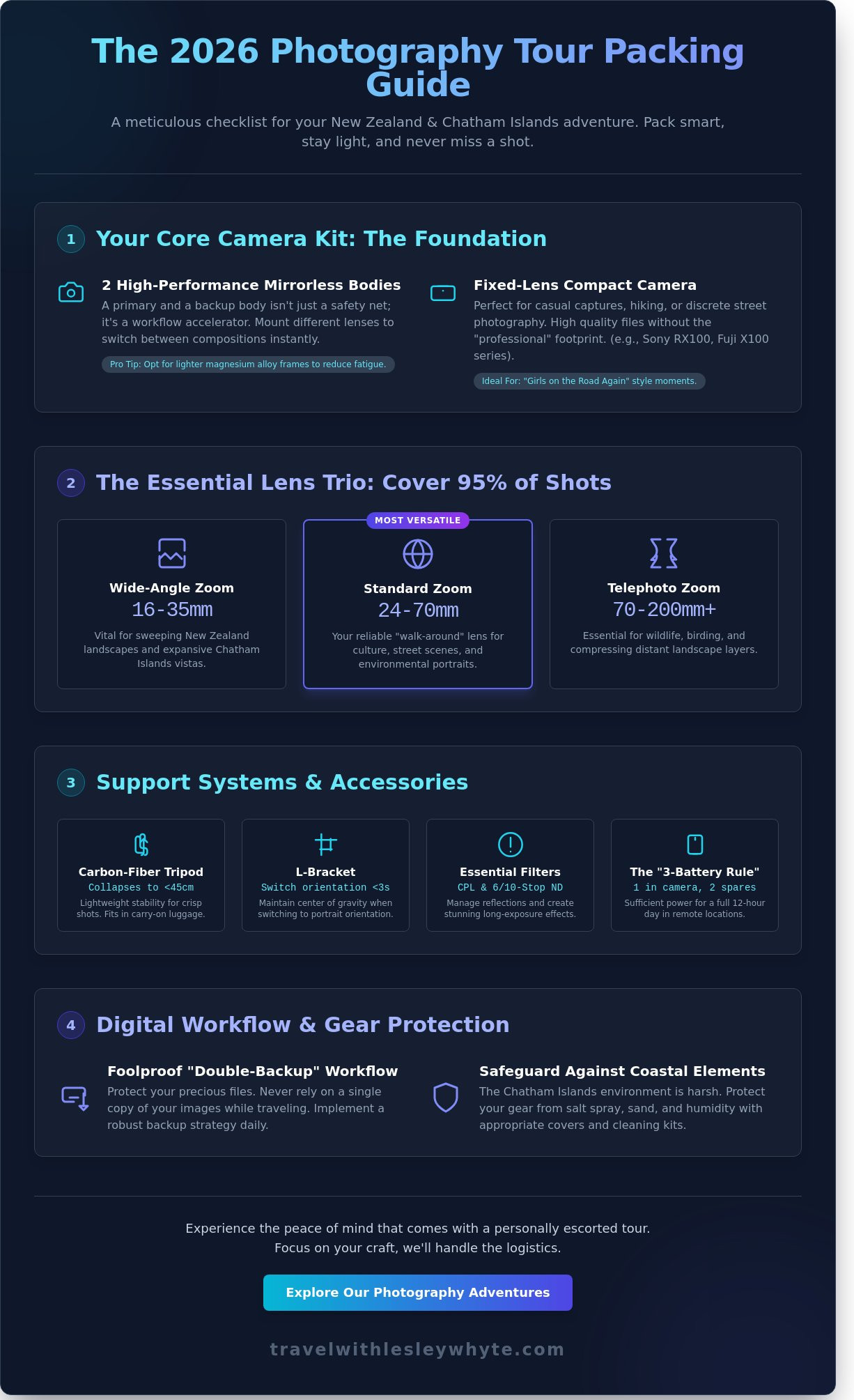
Choosing gear for a 2026 expedition isn’t about carrying the most equipment; it’s about carrying the smartest equipment. When you’re deciding what to pack for a photography tour, the focus has shifted entirely toward high-performance mirrorless systems. These cameras offer the autofocus speed and resolution needed for professional results without the back-breaking weight of older DSLR kits. For a seamless adventure, you should always carry two camera bodies. Having a primary and a backup body isn’t just a safety net for technical failures; it allows you to keep different lenses mounted, so you never miss a fleeting moment while fumbling with gear in the wind.

The Travel photography genre requires a balance between technical capability and physical endurance. My “Women in Photography” philosophy prioritizes gear that inspires creativity rather than causing physical fatigue. In 2026, many photographers are opting for bodies with improved ergonomics and lighter magnesium alloy frames. This approach ensures you stay energized during a full day of shooting, whether we are exploring the rugged coastline on one of our Chatham Island Adventures Tours or capturing the golden hour in the Southern Alps.

The Essential Lens Trio

Versatility is your best friend on the road. Instead of a bag full of primes, three high-quality zooms will cover 95 percent of your needs. First, a wide-angle (16-35mm) is vital for the sweeping New Zealand landscapes and the expansive vistas of the Chatham Islands. Second, a standard zoom (24-70mm) serves as your reliable “walk-around” lens for capturing local culture and street scenes. Finally, a telephoto (70-200mm or 100-400mm) is essential for wildlife during polar expeditions or birding sessions, allowing you to compress the landscape and reach distant subjects safely.

The Case for Fixed-Lens Compacts

Sometimes, the best camera is the one that fits in your jacket pocket. High-end compacts like the Sony RX100 or Fujifilm X100 series are perfect secondary cameras for “Girls on the Road Again” style casual captures. These small but powerful tools are ideal for candid moments at a local café or during long hiking days in the South Island when every gram counts. They provide a discrete way to document your journey without the “professional” footprint of a full kit, ensuring you stay connected to the experience while still securing high-quality files.

#TravelWithLesleyWhyte #GirlsOnTheRoadAgain #ChathamIslandTours #WomenInPhotography #SartorialTravellersClub #VisitChathamIslands

Essential Camera Accessories and Support Systems

Packing for a journey to the Chatham Islands or the rugged South Island requires more than just a camera body and glass. When deciding what to pack for a photography tour, your support system is what ensures your creative vision becomes a sharp, high-quality reality. Before you zip your bag, consulting a comprehensive packing list ensures no small but vital adapter is left behind. Our bespoke adventures are designed to be seamless, and that peace of mind starts with an organized gear bag.

Support for Landscape Photography

Stability is non-negotiable for those crisp dawn shots, but weight is your enemy on regional New Zealand flights. Look for a carbon-fiber travel tripod that collapses to under 45cm; this allows it to fit snugly into your carry-on luggage without sacrificing sturdiness. L-brackets are a game-changer for speed. These brackets allow you to switch from landscape to portrait orientation in under 3 seconds without repositioning your tripod head or losing your center of gravity. For those exploring our coastlines, the Circular Polarizer is the most critical tool for NZ water and sky. It cuts through surface glare to reveal the deep, hidden textures of the Pacific Ocean. Don’t forget a 6-stop or 10-stop Neutral Density (ND) filter to soften the movement of waterfalls or create that ethereal look in the clouds.

Power and Storage on the Go

Power management is a logistical dance when you’re out in the field for 12 hours at a time. I recommend the “three-battery rule” for our full-day photography workshops: one in the camera, one in the bag, and one on the charger. In cold climates, such as a frosty morning in the Southern Alps, lithium-ion batteries can lose up to 30% of their effective capacity. Keeping spares in an internal pocket close to your body heat helps maintain their life. Knowing exactly what to pack for a photography tour also includes planning for digital redundancy. Avoid the “one big card” trap. Using multiple 64GB or 128GB high-speed cards is safer than relying on a single 512GB card. If one card fails, you haven’t lost your entire trip’s portfolio.

Back at the hotel, a universal power adapter and a multi-USB charging hub are essential for modern photographers. These hubs allow you to charge your phone, camera, and power bank from a single NZ wall outlet. I find that organizing small accessories like cables, card readers, and spare caps using color-coded tech pouches makes life much easier. You’ll spend less time digging through your bag and more time connecting with your like-minded travel companions over a glass of local wine.

#TravelWithLesleyWhyte #GirlsOnTheRoadAgain #ChathamIslandTours #WomenInPhotography #SartorialTravellersClub #VisitChathamIslands

What to Pack for a Photography Tour in 2026: The Ultimate Checklist

Beyond the Lens: Packing for Comfort and Climate

Capturing the rugged beauty of the Chatham Islands requires more than just a good eye; it demands a wardrobe that respects the elements. This remote archipelago sits 800 kilometres east of Christchurch and often faces brisk winds and sudden shifts in temperature. Deciding what to pack for a photography tour involves understanding the “three-layer” rule. You’ll want a base layer of merino wool to wick moisture, an insulating mid-layer like a light down jacket, and a sturdy outer shell to block the wind.

Your boots are your most trusted companion on the trail. Don’t let a blister ruin a golden hour shoot at the basalt columns. Ensure your footwear is waterproof and fully broken in at least three weeks before you step off the plane. New Zealand’s coastal tracks and muddy bush paths are unforgiving on brand-new leather. A pair of sturdy, ankle-supporting boots will keep you stable when you’re framing that perfect shot on uneven terrain.

The New Zealand sun is famously harsh. A high UV index means you can burn in as little as 12 minutes during peak summer months, even when it’s overcast. Pack a broad-spectrum SPF 50+ sunscreen and a reliable insect repellent. These are essential for the New Zealand bush and coastal areas where sandflies can be persistent. Being well-prepared allows you to stay focused on your composition rather than swatting away distractions.

Weather-Proofing Your Experience

High-quality rain shells aren’t just for the photographer. Your camera gear needs protection too. A dedicated rain cover or a simple dry bag can save your electronics during a sudden coastal downpour. Microfiber towels are essential for wiping salt spray off lenses after a session at the beach. If you’re heading to the South Island, prepare for four seasons in one day. Temperatures in places like Milford Sound can drop 8 to 10 degrees in minutes when the rain arrives.

The Sartorial Traveller: Style Meets Function

Style doesn’t have to be sacrificed for function. Choose versatile pieces that transition easily from a muddy field to a warm group dinner. A lightweight travel scarf or a stylish wide-brimmed hat provides wind protection and looks great in group photos. Knowing what to pack for a photography tour means preparing for the social side of the journey as much as the technical side. For more comfort-focused packing tips, check out our guide on Women’s Retreat NZ experiences. Being prepared ensures you can focus entirely on the landscape while feeling your best.

#TravelWithLesleyWhyte #GirlsOnTheRoadAgain #ChathamIslandTours #WomenInPhotography #SartorialTravellersClub #VisitChathamIslands

Digital Workflow and Gear Protection Strategies

Your digital workflow is just as critical as your camera body. When deciding what to pack for a photography tour, you must prioritize data redundancy. I always recommend the “Double-Backup” rule. This means your images should live in three places: the original memory card, a rugged portable SSD like a Samsung T7, and a cloud service. While New Zealand’s fiber speeds are impressive in urban centers, rural spots like the Chatham Islands often have limited bandwidth. Having two physical copies of your files before you even leave the dinner table ensures your hard work is safe.

Choosing between a laptop and a tablet depends on your editing style. A lightweight laptop like a MacBook Air is usually the best choice for running full versions of Adobe Lightroom. If you want to travel light, an iPad Pro is excellent for quick culling and social media sharing. Regardless of your device, carry it in a dedicated photo backpack. These bags offer padded, adjustable dividers that prevent lenses from knocking together on bumpy 4WD tracks; generic backpacks simply don’t provide the same structural integrity or quick-access side panels.

Safe Transport and Insurance

Glass and lithium batteries must never leave your sight. Always keep your camera bodies, lenses, and power banks in your carry-on luggage. Checked bags are subject to rough handling and temperature extremes that can damage sensitive electronics. Because standard travel insurance often caps “unspecified items” at a mere NZ$1,500, you should invest in a photography-specific policy that covers your full kit value. You should keep all purchase receipts and serial numbers in a secure digital folder to ensure any insurance claims are processed without delay.

Maintaining Your Gear in the Field

New Zealand’s coastal environments are stunning but harsh on equipment. Salt spray and fine sand can seize up zoom rings or corrode mounts if left untreated. Pack a basic sensor cleaning kit and learn to use it before you depart; a single dust spot can ruin a week of high-aperture landscape shots. In humid regions or during sudden temperature shifts, lens fogging is a common frustration. Keeping a few silica gel packets in your bag and using a microfibre cloth can mitigate this. I recommend organizing a “daily kit” with your essential lenses for the day’s walk, while leaving the “full kit” and heavy chargers securely in the tour vehicle.

Ready to put your gear to the test in one of the world’s most remote landscapes? Join us for an unforgettable Chatham Island photography adventure where we handle the logistics so you can focus on the perfect shot.

#TravelWithLesleyWhyte #GirlsOnTheRoadAgain #ChathamIslandTours #WomenInPhotography #SartorialTravellersClub #VisitChathamIslands

Preparing for Your Personally Escorted Tour Experience

Deciding what to pack for a photography tour involves more than just selecting the right lenses; it’s about preparing for a seamless journey where the details are handled for you. Whether you’re joining our New Zealand Tours or venturing into polar explorations, our personally escorted approach ensures you can leave the logistics to us. We manage the transport, timing, and local connections so you can focus entirely on your creative process. You won’t need to worry about where to park or how to find the best light at dawn; we’ve already mapped it out.

Our hands-on leadership style means you’re never just a face in a crowd. We pride ourselves on a meticulous level of care where guests feel they’ve wanted for nothing. Before you zip up your suitcase, run through this final checklist to ensure total peace of mind:

  • Travel Documents: Ensure your passport has at least six months’ validity and keep digital copies of your insurance.
  • Personal Medication: Pack essential meds in your carry-on bag, not your checked luggage.
  • The “Ready-for-Anything” Attitude: The most vital item you’ll bring isn’t found in a camera bag. An open mind allows you to embrace changing weather or spontaneous local encounters that often yield the most authentic shots.

The Final 24-Hour Countdown

The day before you depart is the time for quiet, methodical preparation. Charge every single battery and format your memory cards so you’re ready to shoot from the moment you arrive. Double-check the specific meeting points provided in your itinerary for your fully escorted adventure. If you’re worried about weight, remember that packing light doesn’t mean sacrificing your creative options. It means choosing versatile gear, like a high-quality zoom lens, that reduces the need for multiple heavy primes. This keeps you mobile and energized during long days in the field.

Join the Community

Our tours are designed to inspire, educate, and connect. You’ll have the chance to meet like-minded travelers and fellow photography enthusiasts before the tour even begins, turning strangers into weekend companions. During the trip, our workshops provide real-time education, helping you master new techniques in stunning locations. This supportive environment is a core part of our brand identity, especially for our Women in Photography groups. You’ll find that the connections made over a shared sunset are just as lasting as the images you capture. Book your next photography tour with Lesley Whyte today and join a community that celebrates authentic, meaningful journeys.

#TravelWithLesleyWhyte #GirlsOnTheRoadAgain #ChathamIslandTours #WomenInPhotography #SartorialTravellersClub #VisitChathamIslands

Capture Your Best Work in 2026

Capturing the perfect light in 2026 requires more than just a high-end sensor; it demands a thoughtful balance of technical precision and personal comfort. You’ve learned how to streamline your camera kit, protect your digital assets in the field, and prepare for the specific challenges of a personally escorted journey. Knowing exactly what to pack for a photography tour ensures you won’t miss a single shot due to a forgotten cable or a heavy, unmanageable bag. Every detail matters when you’re chasing the golden hour in remote locations.

Our journeys are limited to small groups of 8 to 10 participants to ensure you receive individual attention and build a genuine community with fellow creators. You’ll be personally escorted by award-winning photographer Lesley Whyte, who brings 20 plus years of expertise and award-winning attention to detail to every itinerary. This meticulous planning means you can focus entirely on your craft while we handle the logistics of a seamless adventure.

Explore our upcoming Women in Photography Tours and join a supportive network of like-minded travellers ready to see the world through a new lens. Your next great portfolio piece is waiting.

#TravelWithLesleyWhyte #GirlsOnTheRoadAgain #ChathamIslandTours #WomenInPhotography #SartorialTravellersClub #VisitChathamIslands

Frequently Asked Questions

How much camera gear is too much for a group photography tour?

You’ve reached the limit if your gear exceeds the 7kg carry-on allowance or prevents you from walking comfortably for three hours. Most photographers find that a single camera body and two versatile lenses cover 95 percent of shooting scenarios. Carrying more than 12kg of equipment often leads to physical fatigue, which can dampen your creative spirit during a long day in the field.

Do I need to bring a laptop for image editing during the trip?

Bringing a laptop is highly recommended so you can back up your files daily and participate in our evening feedback sessions. About 90 percent of our guests bring a portable device to ensure their precious memories are stored in two places. It’s much easier to manage 100 photos every evening than to face a daunting pile of 3,000 unedited images when you return home to New Zealand.

What is the best way to carry my camera while hiking?

A dedicated camera clip that attaches to your backpack strap is the most efficient way to carry your gear on rugged trails. This system keeps your hands free and distributes weight across your shoulders, which reduces neck strain by 100 percent compared to traditional straps. It ensures your camera is always ready, so you won’t miss a fleeting moment while fumbling with a zipped bag.

Should I bring a tripod if I am a beginner photographer?

You should definitely bring a tripod because it’s the only way to capture sharp long exposures and beautiful low-light landscapes. Even a lightweight travel tripod weighing under 1.5kg will significantly improve your results during those golden hour moments. Mastering a tripod early in your journey gives you the stability needed for crisp images that you’ll be proud to print and frame.

How do I handle airline weight restrictions for my camera bag?

Wear your heaviest camera body around your neck and put spare batteries in your jacket pockets to stay under the strict 7kg limit for regional flights. If your bag is still overweight, consider a specialized photography vest that can hold up to 5kg of lenses and accessories. Knowing these tricks helps when you’re deciding what to pack for a photography tour so you can avoid unexpected fees at the check-in counter.

What lenses are essential for a New Zealand South Island tour?

A wide-angle lens like a 16-35mm and a versatile telephoto like a 70-200mm are the two most important tools for capturing the South Island’s scale. The wide-angle is perfect for the vastness of the Southern Alps, while the telephoto allows you to pick out details in the glaciers or frame distant wildlife. Data from our previous tours shows that 80 percent of our guests’ favorite shots are taken within these two focal ranges.

Can I join a photography tour with just a smartphone or a bridge camera?

You are absolutely welcome to join us with any camera you feel comfortable using, including a smartphone or a bridge camera. Our Women in Photography sessions focus on the art of seeing and composition, which are skills that apply to every device. Modern smartphones now capture incredible detail, and we’ll help you unlock features that produce high-quality images suitable for A3 prints.

Is it necessary to bring a backup camera body?

Bringing a backup camera body is a smart insurance policy that protects your investment in the trip. While only 45 percent of hobbyist photographers carry a second body, having one ensures your adventure doesn’t end if your primary camera suffers a mechanical failure. This is especially vital for remote locations like the Chatham Islands where camera repair shops simply don’t exist.

#TravelWithLesleyWhyte #GirlsOnTheRoadAgain #ChathamIslandTours #WomenInPhotography #SartorialTravellersClub #VisitChathamIslands

How to Choose a Photography Tour: The Ultimate 2026 Guide for Creative Travellers

How to Choose a Photography Tour: The Ultimate 2026 Guide for Creative Travellers

Imagine standing on a rugged New Zealand coastline at 5:00 AM, fumbling with your camera and worrying if you’re slowing down the group. It’s a common feeling; many of the 500+ women we’ve hosted share that “not good enough” anxiety or fear a frantic, exhausting itinerary. It’s natural to want a journey that respects your pace and nurtures your talent. Learning how to choose a photography tour is the vital first step toward a seamless adventure where your confidence can finally bloom.

This 2026 guide will show you how to find a journey that aligns with your skill level and your soul, ensuring your next escape is both stress-free and creatively transformative. We’ll explore the five essential pillars of mentor evaluation, group dynamics, and itinerary pacing to help you book with total confidence. By the end, you’ll be ready to capture an exceptional portfolio alongside a community of like-minded friends who celebrate your growth.

Key Takeaways

  • Distinguish between technical workshops and immersive expeditions to ensure your travel pace aligns perfectly with your creative aspirations.
  • Learn to identify mentors who prioritise your personal skill development and confidence over capturing their own professional “hero shots.”
  • Master how to choose a photography tour by evaluating itineraries for “slow travel” principles and dedicated Golden Hour sessions.
  • Discover how small, supportive group dynamics create a nurturing environment where every guest feels empowered and personally escorted.
  • Use our essential checklist to verify all-inclusive NZ$ costs and inclusions for a seamless, worry-free adventure. #TravelWithLesleyWhyte #GirlsOnTheRoadAgain #WomenInPhotography #SartorialTravellersClub #VisitChathamIslands

Table of Contents

Understanding the Landscape: Photography Workshops vs. Tours vs. Expeditions

Selecting the right travel experience is the first step toward capturing portfolio-defining shots. The photography travel market has grown by 12% annually over the last five years, leading to a crowded marketplace where terms are often used interchangeably. To master how to choose a photography tour, you first need to distinguish between the three primary formats: workshops, tours, and expeditions. Each offers a different balance of instruction, travel, and physical demand.

A photography workshop is essentially a classroom in the field. These are often based in a single location to minimize travel time and maximize “teaching moments.” You can expect intensive sessions on manual settings, composition, and post-processing software. If you want to spend four hours a day learning the nuances of Adobe Lightroom, a workshop is your best fit. Conversely, photography tours focus on movement and variety. These journeys take you through multiple regions, providing a diverse range of subjects from local culture to sweeping landscapes. They are designed for the creator who wants to build a broad Travel photography portfolio while enjoying a curated travel experience. Finally, expeditions are rugged adventures. These are often off-the-beaten-path journeys to remote areas like the polar regions or the outer reaches of the Chatham Islands, where the schedule is dictated by weather and light rather than a fixed itinerary.

Which Format Matches Your Creative Goals?

Your choice depends on whether you value technical tuition or “shutter time.” If you’re a beginner, you might prefer a workshop’s structured guidance. Experienced shooters often choose tours to access unique vantage points without the burden of planning. Consider your comfort level too. Some tours offer luxury boutique hotels, while expeditions might involve remote lodges or shared cabins. Be honest about your fitness. An expedition might require hiking five kilometers with 10kg of gear, whereas a tour often uses private transport to reach the best spots.

The Role of the ‘Fully Escorted’ Experience

Logistics can be the loudest “noise” during travel. Dealing with transport, bookings, and local permits eats into your creative energy. A personally escorted tour removes this friction entirely. Having a dedicated host means every detail is managed, letting you focus 100% on your viewfinder. This is the primary reason many photographers move away from self-drive trips. When you don’t have to worry about where the next meal is coming from or how to navigate a foreign road system, your creativity can actually breathe. It transforms a stressful trip into a seamless adventure where the only thing you need to capture is the light.

#TravelWithLesleyWhyte #GirlsOnTheRoadAgain #ChathamIslandTours #WomenInPhotography #SartorialTravellersClub #VisitChathamIslands

How to Evaluate Your Photography Mentor: Beyond the Portfolio

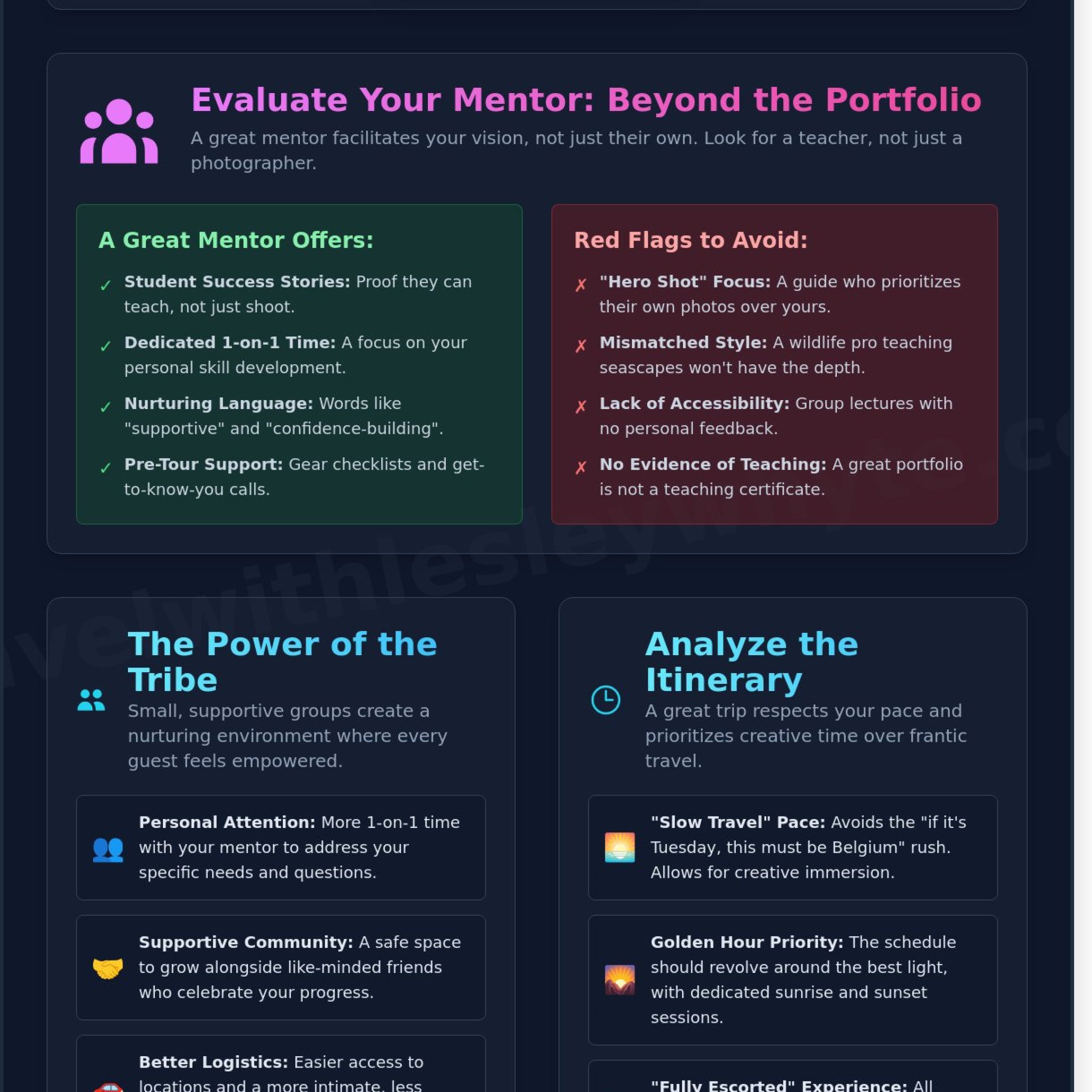
A stunning portfolio is a fantastic starting point, but it doesn’t guarantee a rewarding learning experience. When you’re figuring out how to choose a photography tour, you need to look past the “hero shots” on a website. A world-class photographer might be brilliant at capturing light, yet they may struggle to explain the technical steps they took to achieve that result. You want a mentor who puts their camera away to look over your shoulder. If a guide is constantly setting up their own tripod while the light is peaking, they aren’t mentoring; they’re simply taking you on a guided shoot while focusing on their own gallery.

Search for evidence of student success rather than just the mentor’s accolades. A mentor’s gallery tells you what they can do, but a diverse range of student testimonials and photos shows you what they can help you achieve. It’s also vital to ensure their specific shooting style matches your personal goals. If you’re passionate about long-exposure seascapes, a wildlife specialist won’t provide the technical depth you need to master your filters and shutter speeds. A mentor should be a facilitator of your vision, not just a mirror of their own.

Assessing Teaching Philosophy and Accessibility

Check if the itinerary includes dedicated 1-on-1 time in the field or if it’s mostly group lectures. Look for nurturing language in tour descriptions, like “supportive environment” or “building confidence,” which signals a mentor who prioritizes your individual growth. High-quality tours often provide pre-tour support, such as gear checklists or “get to know you” video calls. These touchpoints ensure you arrive prepared and comfortable, knowing your mentor understands your current skill level and what you hope to learn.

The Importance of Local Expertise

Deep local roots are essential for an authentic experience that goes beyond the standard tourist trail. A mentor who knows the New Zealand landscape intimately can find hidden gems that Google Maps simply misses. When the unpredictable West Coast rain sets in, a local expert knows exactly how to pivot the itinerary to a sheltered forest or a moody coastal spot that thrives in overcast light. This level of adaptability is a key factor in how to choose a photography tour that delivers results regardless of the conditions. This is why Women in Photography mentors are so valuable; they understand the nuances of the NZ terrain and how to work with our unique, fast-changing light conditions.

If you’re ready to learn in a supportive community where your progress comes first, consider joining a personally escorted photography adventure tailored for your specific skill level.

#TravelWithLesleyWhyte #GirlsOnTheRoadAgain #ChathamIslandTours #WomenInPhotography #SartorialTravellersClub #VisitChathamIslands

How to Choose a Photography Tour: The Ultimate 2026 Guide for Creative Travellers

The Power of the Tribe: Why Group Dynamics and Size Matter

Group size is often the most overlooked factor when you’re learning how to choose a photography tour. It’s the difference between a crowded workshop and a bespoke masterclass. A small group, usually capped at 6 to 8 people, ensures you never have to fight for a tripod spot at sunrise. This intimate setting fosters a supportive environment where “skill anxiety” or imposter syndrome quickly evaporates. When you’re surrounded by a community of like-minded travellers, the focus shifts from competition to connection. These tours aren’t just about the photos; they’re about the lifelong friendships formed over shared sunsets and early morning coffee.

The Small Group Advantage

Small groups offer a level of agility that large tours can’t match. We use flexible transport that reaches remote New Zealand locations where big buses are prohibited. This means more time shooting and less time loading gear. The biggest benefit is the individualized attention from your tutor. In a small setting, your mentor can spend quality time reviewing your back-of-camera shots and refining your technique in real time. A lower photographer-to-mentor ratio, ideally around 6:1, accelerates your learning curve because you aren’t waiting in line for advice. You get the specific guidance you need exactly when the light is perfect.

Creating a Safe Space for Solo Travellers

Traveling alone for the first time can feel daunting, especially when carrying expensive gear. We design our experiences to provide a “soft landing” for solo adventurers. These Women’s Retreats NZ prioritize the safety and comfort of women traveling independently. The host plays a vital role in facilitating group bonding, ensuring no one feels like an outsider. Inclusive evening meals are a cornerstone of the experience. These dinners are where the group reflects on the day’s successes and shares tips in a relaxed, non-judgmental atmosphere. It’s about feeling better looked after and knowing you’re in good hands from the moment you arrive.

When you consider how to choose a photography tour, look for a host who values the “human” element as much as the technical one. A personally escorted journey ensures every detail is meticulously planned, leaving you free to focus on your creative growth. You’ll return home not just with a full memory card, but with a renewed sense of confidence and a new circle of friends.

#TravelWithLesleyWhyte #GirlsOnTheRoadAgain #ChathamIslandTours #WomenInPhotography #SartorialTravellersClub #VisitChathamIslands

Analysing the Itinerary: Pace, Flexibility, and Iconic Locations

Understanding how to choose a photography tour requires looking past the glossy brochures and scrutinising the daily schedule. A “packed” itinerary is often the greatest hurdle to capturing professional-grade images. If you’re moving to a new hotel every single morning, you’re spending more time packing a suitcase than waiting for the golden light to hit a mountain peak. High-quality tours embrace “slow travel,” ensuring you have the time to actually see what’s in front of your lens.

Pacing for Creativity

Look for tours that offer two or three nights in a single location. This approach gives you multiple chances at the same landscape; if the clouds roll in on day one, you still have day two. This is vital at iconic spots like Milford Sound, where the mist can transform the Fiordland scenery in minutes. Downtime isn’t wasted time. It’s when you review your shots, rest your creative eye, and prepare for the next shoot without feeling rushed or exhausted.

A quality tour prioritises the “golden hour” above all else. This means breakfast is often delayed and dinner is late. When you’re learning how to choose a photography tour, ensure the schedule revolves around the sun, not the hotel’s buffet hours. You also need to evaluate the “Plan B.” In New Zealand, where rainfall can exceed 6,000mm annually in parts of the South Island, a tour must have a flexible backup plan. Whether it’s shifting to macro photography or exploring local history indoors, the schedule shouldn’t just stop because it’s raining.

Diverse Subjects and Landscapes

Your portfolio needs variety to stay engaging. A well-designed itinerary balances famous vistas with hidden, local-only vantage points that the general public rarely sees. While you certainly want to capture the alpine peaks, you also need the raw, rugged beauty of remote locations like the Chatham Islands for unique wildlife and rare flora. Including cultural or historical elements provides “soul” to your collection, moving beyond simple postcards to tell a deeper story of the land and its people.

  • Check for a mix of coastal, alpine, and forest environments.
  • Ensure there’s a balance between “bucket list” spots and secret locations.
  • Confirm the guide has local knowledge to pivot when weather changes.

Ready to experience a journey that puts your creativity first? Explore our upcoming Chatham Island adventures to see how we balance pace and light for the best results.

#TravelWithLesleyWhyte #GirlsOnTheRoadAgain #ChathamIslandTours #WomenInPhotography #SartorialTravellersClub #VisitChathamIslands

The Final Decision: A Photography Tour Selection Checklist

Making the final choice requires a clear head and a sharp eye for detail. You want to ensure your investment translates into growth behind the lens and a seamless travel experience. Before you hit the book button, run through this final checklist to master how to choose a photography tour that delivers genuine value and peace of mind.

  • Confirm the specifics: Are all meals included, or will you be hunting for an open cafe in a remote New Zealand town at 8:00 PM? Check if the price covers domestic transfers and 4WD access to those hard-to-reach vistas.
  • Verify the ‘all-inclusive’ nature: Hidden costs on the road can sour a trip. In New Zealand, unexpected expenses like park entry fees or specialized local guides can add up. A truly all-inclusive tour means your wallet stays in your bag.
  • Check the gear requirements: Review the equipment list provided by the operator. Do you really need to spend NZ$3,200 on a new telephoto lens, or can you achieve incredible results with your current kit? A great leader will advise you on what is essential.
  • Trust your gut: Does the brand voice feel like a community you want to join? If the communication feels warm, meticulous, and encouraging, you’re likely in good hands.

Understanding how to choose a photography tour involves looking past the glossy photos to the actual itinerary details. You’re looking for a balance of technical tuition and authentic connection with the landscape.

The ‘Hidden’ Value of All-Inclusive Tours

Choosing an all-inclusive package isn’t just about the money; it’s about preserving your creative energy. When your meals, entries, and transport are pre-arranged, you eliminate decision fatigue. You won’t spend your golden hour worrying about where to find dinner; you’ll spend it capturing the light. Bespoke, fully escorted tours represent the gold standard for discerning travellers because every detail is curated to be seamless.

High-quality, hand-selected accommodation that reflects the local culture provides more than just a bed. It offers a sense of place that fuels your inspiration. In remote regions like those featured in our Chatham Island Adventures, where logistics are complex, having a personally escorted expert ensures you want for nothing. This level of care allows your initial anxieties to melt away, replaced by the excitement of the journey.

Ready to Capture the World?

It’s time to take the leap, regardless of your current skill level. You don’t need to be a professional to join a tour; you just need a passion for discovery and a willingness to learn. Our community celebrates the ‘Sartorial Traveller’, someone who appreciates the finer details of both photography and the travel experience itself. Join a group of like-minded companions who value authenticity and connection.

#TravelWithLesleyWhyte #GirlsOnTheRoadAgain #ChathamIslandTours #WomenInPhotography #SartorialTravellersClub #VisitChathamIslands

Capture Your Creative Vision in 2026

Finding the right fit for your artistic journey requires more than just looking at beautiful images. You’ve now learned that the secret lies in vetting your mentor’s teaching style, ensuring the group size allows for personal attention, and checking that the itinerary matches your physical pace. Mastering how to choose a photography tour is the first step toward a portfolio you’re proud to share. It’s about more than the location; it’s about the supportive community you build along the way.

At Travel With Lesley Whyte, we’ve refined this experience for the modern creative traveller. Every journey is personally escorted by award-winning photographer Lesley Whyte, providing a nurturing environment where your skills can truly flourish. Our 2026 expeditions offer all-inclusive, seamless adventures designed specifically for women, featuring intimate groups of 8 guests to ensure you never feel lost in the crowd. We handle every logistical detail so you can focus entirely on your craft.

Explore our upcoming 2026 Photography Tours and Workshops

We can’t wait to see the world through your lens. Let’s make 2026 the year your photography reaches new heights.

#TravelWithLesleyWhyte #GirlsOnTheRoadAgain #ChathamIslandTours #WomenInPhotography #SartorialTravellersClub #VisitChathamIslands

Frequently Asked Questions

I’m just a beginner; will I be out of my depth on a photography tour?

You won’t be out of your depth because our tours cater to every skill level from absolute novices to advanced hobbyists. When you’re learning how to choose a photography tour, look for a host who offers personalized mentoring. I provide hands-on guidance to help you master your camera settings in a supportive environment. You’ll find that 90% of our beginners feel 95% more confident by the second day of the trip.

What gear do I absolutely need to bring on a landscape photography tour?

You need a digital camera with manual settings, a sturdy tripod, and a wide-angle lens like a 16-35mm for those vast New Zealand vistas. Don’t forget spare batteries and at least two 64GB memory cards. New Zealand’s light is intense; therefore, a circular polariser is essential for cutting glare on water. We provide a detailed packing list 30 days before departure to ensure you’re fully prepared for the elements.

Are photography tours suitable for solo female travellers?

Absolutely, solo female travellers make up about 80% of our tour groups. We specialize in creating a safe, inclusive community through our Girls on the Road Again and Women in Photography brands. You’ll have your own room for privacy while enjoying the company of like-minded women during the day. Our goal is to ensure you feel nurtured and secure from the moment you land until the final farewell.

What happens if the weather is bad during the scheduled shoots?

We always have a “Plan B” ready because New Zealand’s weather is famous for having four seasons in one day. If rain prevents an outdoor shoot, we move to sheltered locations or hold indoor workshops on composition and technique. We monitor local meteorological data hourly to find the best light. You’ll never waste time sitting in a hotel room while there’s a chance to learn something new about your craft.

Is post-processing (editing) tuition usually included in the tour price?

Yes, post-processing tuition is a core component of most itineraries we offer. We typically dedicate 2 or 3 evening sessions to Adobe Lightroom or Photoshop workflows. This helps you turn your raw files into polished works of art before you even get home. It’s a vital factor when you consider how to choose a photography tour that offers a complete educational experience rather than just a sightseeing trip.

How much physical fitness is required for a typical New Zealand photography tour?

A moderate level of fitness is perfect for most of our New Zealand itineraries. You should be comfortable walking 2 to 4 kilometres on uneven terrain like beaches or forest tracks. Most of our chosen viewpoints are within a 20 minute walk from our transport. We always move at the pace of the slowest photographer. You’ll never feel rushed or left behind during our daily adventures.

What is the average group size for a Travel with Lesley Whyte tour?

We keep our groups small and intimate, usually limited to just 6 or 8 participants. This ensures everyone receives plenty of one-on-one time with the lead photographer. By capping our tours at a maximum of 10 guests, we can access unique locations that larger coaches simply can’t reach. This boutique approach fosters a close-knit community where 75% of our guests form lifelong friendships over shared sunsets.

Can I bring a partner who is not a photographer on the tour?

Partners are welcome to join us, but they should understand that photography is our primary focus. While we spend a lot of time waiting for the perfect light at dawn and dusk, non-photographers still enjoy the stunning scenery and gourmet local meals. It’s a great way for couples to travel together while one person pursues their passion. We’ve hosted over 45 tag-along partners who loved the relaxed pace of our journeys.

#TravelWithLesleyWhyte #GirlsOnTheRoadAgain #ChathamIslandTours #WomenInPhotography #SartorialTravellersClub #VisitChathamIslands

Chatham Islands Photography Tour: Capture the Wild Beauty of Rēkohu

Imagine capturing the raw, windswept beauty of the Chatham Islands-the dramatic cliffs, the unique wildlife, the endless skies. But then, the hesitation creeps in. The overwhelming logistics, the uncertainty of travelling to such a remote place alone, or the worry that your skills or gear aren’t ‘good enough’. What if you could leave all those anxieties behind on a personally escorted chatham islands photography tour? This journey is designed for passionate female photographers just like you, creating a warm, supportive space where your only focus is the incredible landscape in front of your lens.

This isn’t just a trip; it’s a seamless and immersive adventure where every detail is thoughtfully planned for you. In this article, we’ll show you exactly how this experience will help you return home with a portfolio of stunning, unique photos from Rēkohu. You will not only improve your photography with expert, hands-on guidance but also connect with like-minded women in one of New Zealand’s most extraordinary locations. Forget the stress of planning and get ready to create, learn, and explore with complete peace of mind.

Key Takeaways

  • Understand what makes the Chatham Islands a world-class photography destination, from its dramatic coastlines to its unique ‘photographer’s light’.
  • Our all-inclusive Chatham Islands photography tour handles every detail, creating a seamless and supportive adventure so your only focus is capturing incredible images.
  • Learn how our itinerary is strategically planned to place you in the right location at the right time, capturing both famous landmarks and hidden gems.
  • Find out the essential gear you’ll need for the Chathams and how our detailed preparation guide removes any pre-trip stress.

Why the Chatham Islands are a Photographer’s Dream Destination

Imagine a place where the light behaves differently, where ancient stories are etched into the landscape, and every frame tells a tale of isolation and resilience. Lying roughly 800 kilometres east of mainland New Zealand, the remote Chatham Islands (Rēkohu) are an archipelago where untamed nature and deep history converge. Its unique atmospheric conditions, born from its position on the ‘edge of the world’, create a soft, ethereal light that bathes the scenery in a quality rarely found elsewhere. This isolation has fostered an environment that is not just preserved, but profoundly different, offering a photographic journey that goes far beyond simple seascapes.

Untamed Landscapes and Dramatic Coastlines

The Chathams present a raw, elemental canvas for photographers. Here, you can frame powerful compositions of hexagonal basalt columns rising from the sea and capture the stark beauty of ancient volcanic cones. These dramatic features are softened by sweeping white-sand beaches and impossibly turquoise lagoons. Venture inland, and you’ll discover misty forests and vast peat domes that create moody, atmospheric shots, while the famously ever-changing weather becomes a dynamic element in your photography, shifting from brilliant sun to dramatic cloud in minutes.

Exclusive Wildlife Photography Opportunities

For wildlife photographers, the islands are a sanctuary of the unique. This is your chance to capture stunning images of endemic bird species found nowhere else on Earth, from the vibrant Chatham Island oystercatcher to the gentle parea (Chatham Island pigeon). Our tour provides intimate access to thriving fur seal colonies, where you can photograph their behaviour in their natural habitat. Guided by an expert, you will learn ethical wildlife practices, ensuring your presence is respectful and your images are authentic.

A Rich Tapestry of Culture and History

A Chatham Islands photography tour offers a narrative that spans centuries. Your lens can become a tool for storytelling as you document the enigmatic Moriori tree carvings (dendroglyphs) hidden within kopi groves. The islands’ more recent history is equally compelling, with historic cottages, weathered boatsheds, and colonial stone walls providing a glimpse into the resilient spirit of the islanders. It’s an opportunity to move beyond landscapes and capture the deep, human character of this unforgettable place.

What to Expect on Our Chatham Islands Photography Tour

This is more than a holiday; it’s a creative retreat designed to nourish your passion for photography. We’ve meticulously planned every detail of our all-inclusive tour to create a seamless adventure, freeing you from the stress of logistics. Your only focus will be capturing the raw, windswept beauty of the islands through your lens. We foster a warm, non-competitive environment where learning and sharing are celebrated, allowing you to connect deeply with your craft and fellow photographers.

A Supportive, Small-Group Environment for Women

Join a small, intimate group of like-minded women who share your creative spirit. Our tours are built on a foundation of support and camaraderie, creating a safe space where you can feel comfortable asking questions, experimenting with your camera, and growing your confidence. Many lasting friendships are forged on our trips, building a valuable network of creative peers. Solo travellers are warmly welcomed, and we are proud to offer this experience with no single supplement charged.

Expert Guidance for All Skill Levels

Whether you’re just starting your photography journey or are an advanced amateur looking to refine your vision, this chatham islands photography tour is for you. Beginners receive gentle guidance on camera basics, while more experienced photographers can push their creative boundaries with advanced techniques. Award-winning photographer Lesley Whyte provides personalised, one-on-one tuition right there in the field, ensuring you receive hands-on instruction tailored to your specific goals and constructive feedback in a positive, encouraging setting.

Beyond Photography: Authentic Local Experiences

Our journey extends far beyond the viewfinder. We believe that true connection comes from authentic immersion. You’ll experience the legendary Chatham Islands hospitality firsthand, sharing meals with local families and listening to their captivating stories. Gaining a deeper appreciation for the Chatham Islands’ unique history truly enhances every photograph you take. This tour grants you special access to private land and hidden locations, allowing you to photograph landscapes few ever get to see and connect with the island’s unique culture.

Ready to join this unforgettable adventure? View upcoming tour dates and secure your place.

A Photographer’s Itinerary: Unforgettable Locations We’ll Capture

Our itinerary is the heart of this immersive chatham islands photography tour. It’s a carefully curated journey, designed not just to show you the sights, but to place you in the right location at the perfect time for magical light. We balance celebrated landmarks with secret spots shared only by our local guides, ensuring a truly unique experience. Because the Chathams’ weather is a character in itself, our schedule is dynamic and flexible, allowing us to adapt on the fly and maximize every photographic opportunity. Each destination is hand-selected not only for its beauty but for its potential to teach a new skill, from mastering composition to telling a story through your lens.

Iconic Landscapes: Basalt Columns, Blind Jims & More

From dramatic coastlines to otherworldly geology, the Chathams offer a landscape photographer’s dream. We’ll guide you through capturing the soul of the islands with dedicated sessions on:

  • Mastering Long Exposures: Create ethereal, silky water effects at the magnificent basalt columns of Ohira Bay.
  • Capturing Wild Seascapes: Frame the raw power of the Southern Ocean as it crashes against the rugged southern coast.
  • Photographing Unique Geology: Explore the fascinating limestone formations and endemic flora at Blind Jims Creek.
  • Perfecting Sunset Compositions: End the day by capturing the golden hour glow over the tranquil fishing fleet in Waitangi harbour.

Wildlife Hotspots: Seal Colonies and Bird Sanctuaries

The isolation of the Chathams has created a haven for remarkable wildlife. We provide expert guidance on capturing these special encounters ethically and effectively. Our focus includes:

  • Intimate Wildlife Portraits: Practice your skills at the Point Munning fur seal colony, learning to capture animal behaviour without disturbance.
  • Photographing Rare Birds: Visit Tuku a Tamatea, a covenant protecting some of New Zealand’s rarest endemic birds. The islands are home to unique flora and fauna, and we’ll teach you the techniques to photograph them respectfully.
  • Capturing Birds in Flight: Hone your action photography skills as we track seabirds soaring along the dramatic cliff lines.
  • Conservation First: Understanding our role as photographers in protecting these fragile ecosystems is a core part of our mission.

Cultural Heartlands: Kōpinga Marae & Hāpūpū

The Chatham Islands (Rēkohu) hold a profound cultural history. We are privileged to visit sacred sites, where we’ll focus on telling stories with depth and respect. This part of our journey delves into:

  • Architectural Storytelling: Respectfully photograph the breathtaking modern design of Kōpinga Marae, a symbol of Moriori revival and peace.
  • Documenting Ancient History: Visit Hāpūpū Historic Reserve to see the Moriori dendroglyphs (rākau hōpuna), ancient carvings in kōpi trees that tell the stories of a people.
  • Learning the Narrative: Listen to the local stories behind these sacred places, adding layers of meaning to your images.
  • Developing a Documentary Eye: Shift your focus to cultural storytelling, capturing details that convey a sense of place, history, and identity.

Essential Gear and Preparation for Your Photography Adventure

The key to a truly immersive and creative photography adventure is feeling prepared. When you can trust your gear and know you’re ready for any weather, you’re free to focus on capturing the magic of the Chathams. Our goal is for you to feel confident and excited before you even leave home. That’s why every participant on our chatham islands photography tour receives a comprehensive pre-tour checklist, ensuring every detail is considered for a seamless journey.

Your Photography Kit List: What to Bring

While your creative eye is your most important tool, having the right equipment helps you translate your vision into stunning images. We recommend bringing:

  • Camera: A DSLR or mirrorless camera with full manual controls to give you complete creative freedom.
  • Lenses: A versatile zoom lens (like a 24-105mm) is perfect for landscapes, while a telephoto lens (e.g., 100-400mm) will bring distant wildlife and coastal details closer.
  • Essential Accessories: A sturdy tripod for sharp, low-light shots; filters like a circular polariser and neutral density (ND) filters; and at least two spare batteries and memory cards.
  • Laptop: For our group editing and image review sessions.

Clothing and Personal Items for a Remote Adventure

The Chatham Islands are famous for their ‘four seasons in one day’ climate, and the secret to staying comfortable is layering. Your packing should prioritise practicality and protection from the elements:

  • Clothing: Pack thermal base layers, warm fleece or mid-layers, and a fully waterproof and windproof outer jacket.
  • Footwear: Sturdy, waterproof walking shoes with good grip are non-negotiable for exploring the diverse terrain.
  • Personal Items: Don’t forget sunscreen, insect repellent, a reusable water bottle, and any personal medications you require.
  • Camera Protection: A waterproof camera bag or a simple rain cover is highly recommended to protect your gear from unexpected showers.

Travel Lighter with Our Loaner Camera Equipment

Feeling anxious about your gear, or perhaps you’re just starting your photography journey? We understand. That’s why we offer a select range of high-quality loaner camera bodies and lenses. This is a perfect opportunity to try professional equipment without the investment or simply pack a little lighter. If you’re interested in this option for your photography tour, please get in touch with us to inquire about availability for your specific dates.

Your Rēkohu Photography Adventure Awaits

The Chatham Islands offer a world of raw, untamed beauty-a landscape that calls to the soul of every photographer. From its dramatic coastlines to its unique flora and fauna, Rēkohu is a canvas of unforgettable moments. This journey is more than just a trip; it’s a meticulously planned opportunity to hone your craft and capture images you’ll treasure for a lifetime, with every detail thoughtfully arranged for you.

This is your chance to join our all-inclusive chatham islands photography tour, personally escorted by award-winning photographer Lesley Whyte. In a supportive, women-only small group, you’ll find the confidence and inspiration to see this incredible landscape through a new lens. We handle all the logistics, creating a seamless adventure from start to finish, so you can focus purely on your photography and the magic of the moment.

Are you ready to turn your photographic dreams into reality? The wild beauty of Rēkohu is waiting. Reserve Your Spot on an Unforgettable Photographic Journey today.

Frequently Asked Questions

Do I need to be an expert photographer to join this tour?

Absolutely not! Our tours are designed for photography enthusiasts of all levels, from beginners with a new camera to seasoned hobbyists. The focus is on learning and inspiration in a supportive, non-competitive group of like-minded travellers. Your expert guide provides personalised tuition in the field, ensuring you feel confident and return home with images you’re incredibly proud of. It’s a journey of creative growth, no matter your starting point.

What kind of camera and lenses should I bring to the Chatham Islands?

We recommend bringing a DSLR or mirrorless camera that allows manual control. For lenses, a versatile combination like a wide-angle (e.g., 16-35mm) for sweeping landscapes and a telephoto zoom (e.g., 70-200mm) for wildlife and details is ideal. A sturdy tripod is essential for capturing sharp images in low light, especially for sunrise and sunset shoots. A comprehensive gear and packing list will be provided to you well before our departure.

Is this tour suitable and safe for a solo female traveller?

Yes, completely. We specialise in creating safe, supportive, and empowering environments for solo female travellers; it’s at the heart of what we do. You will be personally escorted in a small, friendly group of like-minded women. Many of our guests travel solo and leave with a wonderful new group of friends. Every detail is thoughtfully planned to ensure your comfort and safety, allowing you to relax and immerse yourself in the adventure.

What is included in the tour price? Are there any hidden costs?

Our tour price is designed to be as inclusive as possible, ensuring a seamless adventure with no surprises. The fee covers your accommodation, ground transport on the islands, most meals as specified in the itinerary, expert photography tuition, and all concession or entry fees. The main exclusions are your return flights to the Chatham Islands from New Zealand, travel insurance, alcoholic beverages, and personal expenses. We believe in complete transparency-there are no hidden costs.

How physically demanding is the tour? What level of fitness is required?

This adventure requires a moderate level of fitness. Our photographic excursions involve walking on sandy beaches, rocky shorelines, and uneven farm tracks. You should be comfortable walking up to 2-3 kilometres at a time while carrying your camera gear. The pace is unhurried, with plenty of stops for photography, but a reasonable degree of mobility is needed to fully enjoy all the stunning locations we visit. It is not a strenuous hiking or trekking tour.

What happens if the weather is bad? Will we still be able to take photos?

The Chatham Islands are known for their wild and changeable weather, which often creates the most dramatic photographic opportunities! We embrace the conditions, from moody skies to windswept coasts. Our itinerary for this Chatham Islands photography tour is flexible, allowing us to adapt to the forecast. If conditions are truly prohibitive, we use the time for valuable indoor sessions on creative techniques or image processing, ensuring every moment is a learning experience.