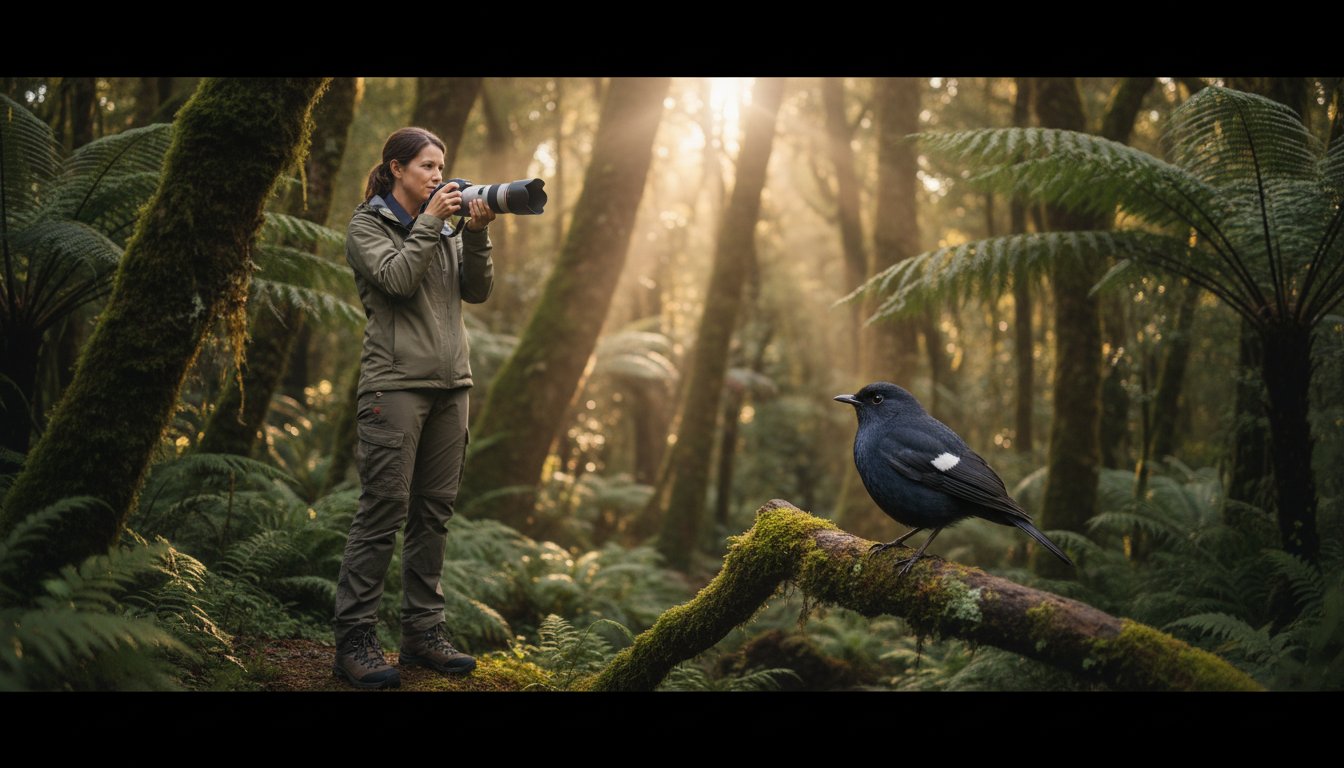
Imagine this: you’re standing in the hushed twilight of a remote forest, the air cool and crisp. Your camera is ready, but your initial anxieties have melted away because every detail has been handled for you. This isn’t just a dream; it’s the heart of the best wildlife photography tours new zealand offers. It was the reality for our small group on a recent tour to a remote New Zealand island, just moments before a rare Black Robin landed perfectly in frame.
Once you’ve captured New Zealand’s unique birdlife, the call of other iconic wildlife destinations is hard to ignore. For many photographers, the ultimate adventure is witnessing the “big five” on the African plains. A classic Masai Mara Safari, for example, offers a completely different yet equally rewarding challenge, with vast landscapes and unparalleled opportunities to photograph lions, elephants, and the great migration.
We know you’ve dreamt of capturing Aotearoa’s unique creatures, but the thought of navigating rugged terrain, finding elusive species, or joining an intimidating, fast-paced group can feel overwhelming. It’s a common concern that keeps too many passionate photographers from even trying.
That’s why this 2026 guide is for you. It’s here to show you exactly how to choose a personally escorted tour that makes your adventure seamless, supportive, and unforgettable. We’ll explore what makes these journeys different, helping you connect with a community of like-minded adventurers and return home with the images you’ve always wanted.
Discover how to select the best wildlife photography tours new zealand offers by evaluating crucial factors like group size and trip duration for an immersive experience.
Pinpoint the prime locations for capturing Aotearoa’s most elusive species, from the Chatham Islands to the ultimate destination for seeing Kiwi in their natural habitat.
Prepare for a successful journey with our guide to essential camera gear and a clear understanding of the DOC rules for ethical wildlife interaction.
Learn why a personally escorted tour is the seamless way to gain unparalleled access to rare wildlife, letting you focus entirely on your photography.
Why New Zealand is a Premier Wildlife Photography Destination in 2026
New Zealand isn’t just another location with beautiful landscapes; it’s a living museum of evolution. Separated from other landmasses for over 80 million years, its wildlife developed in almost complete isolation, creating a “biodiversity hotspot” unlike anywhere else on Earth. This ancient history has forged a paradise for photographers seeking truly unique subjects. The year 2026 stands as a particularly meaningful time to visit, as the nation’s ambitious conservation efforts begin to yield remarkable results, transforming the traditional tourist trail into a path of immersive, conservation-led discovery.
The very nature of travel here is changing. Gone are the days of passive “look and see” trips. Today, visitors are seeking deeper connections, and our expert-led wildlife photography tours new zealand are designed for just that: to create unforgettable images while contributing to the protection of the very creatures you’ve come to see. It’s an adventure with purpose, where your lens becomes a tool for both art and advocacy.
The “Land of Birds”: Understanding Aotearoa’s Unique Fauna
Aotearoa is, above all, the land of birds. For millennia, the Fauna of New Zealand evolved without the threat of land-based mammalian predators, allowing flightless birds like the kiwi, takahē, and the extinct moa to thrive. Understanding the difference between “native” and “endemic” is key to appreciating your portfolio’s potential. A native species might be found elsewhere, but an endemic species is found only here. Capturing a critically endangered, endemic takahē is a photographic achievement that tells a powerful story of survival. Predator-free island sanctuaries like Ulva, Stewart, and the remote Chatham Islands are now the epicentres of this story, offering photographers pristine environments with lush, clean backgrounds and a quality of natural light that makes every image sing.
Conservation-Led Photography: A Growing Trend
As we look towards 2026, the progress from New Zealand’s Predator Free 2050 strategy is becoming tangible. This nationwide mission is creating safer habitats, allowing vulnerable species to reclaim their ancestral homes. Your journey directly supports this work. A percentage of all Department of Conservation concession fees paid by tour operators goes directly into funding these critical projects. This means your passion for photography becomes an investment in the future of New Zealand’s wildlife. Photographing endangered species in 2026 carries a profound responsibility, focusing on techniques that cause zero disturbance, such as using long lenses and strictly adhering to approach distances set by DOC rangers.
Ethical wildlife photography in New Zealand means prioritising the animal’s welfare and its habitat’s integrity above capturing the “perfect” shot, ensuring our presence actively supports conservation.
This philosophy is at the heart of every trip we curate. It’s about creating a seamless adventure where you can focus on your craft, confident that your journey is making a positive impact. Joining one of our small-group wildlife photography tours new zealand in 2026 is an invitation to witness and document a nation’s inspiring conservation story as it unfolds.
Choosing the Right Wildlife Photography Tour in New Zealand
Selecting your ideal adventure from the diverse range of wildlife photography tours new zealand offers can feel overwhelming. The key is to look beyond the itinerary and consider the fundamental structure of the experience. Your decision should hinge on four critical factors: the tour’s duration, the size of your group, the depth of photographic instruction, and the level of logistical support provided. Understanding how these elements align with your personal goals will transform a simple holiday into an unforgettable creative journey.
The industry gold standard for an intimate and effective experience is a small group, typically capped at 8 to 10 photographers. This ensures you receive personalised attention from your guide and can move quietly without disturbing sensitive wildlife. It also means you won’t be jostling for the perfect angle at a critical moment. Equally important is the level of instruction. Some tours cater to seasoned professionals seeking access to unique locations, while others are designed to build skills from the ground up. Always check if the tour leader is an award-winning photographer whose style and teaching philosophy resonate with you.
Day Workshops vs. Fully Escorted Expeditions
Day workshops, often based in accessible sanctuaries like Zealandia in Wellington, are a fantastic introduction. They offer a concentrated burst of learning and guaranteed sightings in a controlled environment. However, their primary limitation is time. You’ll miss the soft, dramatic light of the “golden hours” at dawn and dusk, which is when most wildlife is active and the landscape is at its most beautiful. Multi-day expeditions are designed precisely to capture these moments. An immersive journey allows you to venture into remote habitats where patience is rewarded. To truly connect with and photograph many of New Zealand’s native animals, from the Fiordland crested penguin to the yellow-eyed penguin, you need the time that only a longer tour provides. Furthermore, a personally escorted tour means every detail, from transport to accommodation, is seamlessly managed. This is invaluable when facing New Zealand’s famously changeable “four seasons in one day” weather, as your guide can adapt the schedule instantly to maximise photographic opportunities, leaving you free to focus on your craft.
The Rise of Women-Only Photography Retreats
A growing and wonderfully welcome trend is the emergence of women-only photography tours. These journeys are crafted to provide more than just technical guidance; they create a nurturing and supportive community on the road. Many women find that a collaborative atmosphere, free from any sense of competition, helps their creativity flourish. The focus is on shared discovery and mutual encouragement, creating a safe space to ask questions, experiment with new techniques, and build lasting friendships with like-minded travellers. This dynamic is fundamentally different from a generic tour, offering a unique blend of adventure, education, and connection that inspires confidence and produces incredible creative results. Understanding these differences is key to finding the perfect fit, which is why we specialise in creating personally escorted, immersive experiences for women.
Beyond the Mainland: The Unique Wildlife of the Chatham and Stewart Islands
While New Zealand’s mainland offers incredible photographic journeys, true adventure awaits on its remote offshore islands. For photographers seeking to capture wildlife that exists nowhere else on earth, the Chatham and Stewart Islands are unparalleled. These isolated archipelagos are not just destinations; they are immersive experiences, promising raw landscapes and encounters with some of the world’s most vulnerable and precious species. It’s a world away from the everyday.
Chatham Island Adventures: Capturing the Rarest of the Rare
Often called the “Galapagos of the South,” the Chatham Islands are a sanctuary for endemic birdlife, forged by isolation and a powerful conservation story. The most famous resident is the Black Robin, a tiny bird that inspires immense hope. In 1980, its entire population was reduced to a single breeding pair. The success of its recovery is a testament to dedicated conservation efforts, a story powerfully echoed by organizations like WWF-New Zealand. Photographing this bird is more than a bucket-list shot; it’s capturing a living miracle. You’ll also have the chance to seek out the Chatham Island Taiko, one of the planet’s rarest seabirds, and the striking Chatham Island Oystercatcher against rugged, windswept coastlines and dramatic basalt columns.
Stewart Island: The Kiwi Photography Capital
Stewart Island (Rakiura) offers what many believe is impossible: the chance to photograph our national icon, the Kiwi, in its natural habitat. The Southern Brown Kiwi (Tokoeka) here are unusually active during daylight and twilight hours. Capturing them requires skill and respect. Our expert guides will teach you low-light techniques, such as using a red-filtered torch to avoid startling the birds, setting your camera to a high ISO (3200-6400), and using a fast prime lens. Just a short ferry ride away is Ulva Island, a predator-free sanctuary where you can photograph inquisitive Weka, vibrant Kākā, and tiny Mohua in a pristine forest setting. As an unforgettable bonus, the island’s minimal light pollution makes it a prime location for capturing the ethereal glow of the Aurora Australis on clear winter nights.
Accessing these fragile environments requires meticulous planning and deep local knowledge. The logistics of securing private charters, understanding weather patterns, and gaining access to protected areas are complex. This is the core value of our personally escorted wildlife photography tours new zealand; we handle every detail, ensuring your journey is seamless, safe, and focused entirely on the creative experience. You’re not just a tourist; you’re an explorer with a camera, welcomed into a community of passionate, like-minded travellers.
Preparing for Success: Gear, Ethics, and Local Insights
A truly unforgettable image is born long before you press the shutter. It begins with thoughtful preparation, a deep respect for your subject, and an understanding of the environment. Here in New Zealand, where the light can change in an instant and the wildlife is utterly unique, being prepared is the difference between a fleeting snapshot and a cherished portfolio piece. This is where meticulous planning transforms a trip into a seamless, rewarding photographic adventure.
Your camera bag is your toolkit, and for New Zealand’s diverse subjects, you need the right tools. A telephoto lens is non-negotiable. While a 70-200mm lens is versatile, a focal length of at least 300mm is essential for frame-filling shots without disturbing the wildlife. Many of our guests find a 100-400mm or 200-500mm zoom offers the perfect balance of reach and flexibility. For stability, the tripod versus monopod debate depends on the location. A sturdy tripod is crucial for low-light situations like capturing penguins at dusk, while a lightweight monopod provides the mobility needed to track birds through dense native bush. Finally, never underestimate our weather. A high-quality rain sleeve for your camera and lens, along with a fully waterproof camera bag, is mandatory. For our 2026 tours, we recommend packing a proven layering system: a merino wool base layer, a fleece mid-layer, and a reliable waterproof and windproof outer shell to handle the distinct micro-climates from Fiordland to the Bay of Islands.
Technical Tips for New Zealand Wildlife
Shooting in a dense, dark rainforest presents a unique challenge of low light and fast subjects. Don’t be afraid to increase your camera’s ISO to 1600 or even 3200 to achieve a fast enough shutter speed. To freeze the frantic movement of a pīwakawaka (fantail), you’ll need a shutter speed of at least 1/1250s, paired with continuous autofocus (AF-C) to track it effectively. Getting down to your subject’s eye level creates a powerful, intimate connection that transforms a simple snapshot into a compelling portrait.
The Ethical Photographer’s Code
On our wildlife photography tours new zealand, we operate with a deep respect for the natural world, guided by the principles set by the Department of Conservation (DOC). This means we strongly discourage the use of “playback” or bird call apps. While tempting, these can cause significant stress to native birds, disrupting their breeding cycles and wasting precious energy. We always maintain respectful distances, adhering to DOC’s 20-metre guideline for marine mammals and giving nesting birds an even wider berth. Our goal is to tell a story, capturing an animal within its environment, not just creating a “record shot.”
This patient, observant approach is the heart of the “Slow Photography” movement. It’s about understanding animal behaviour, anticipating the moment, and creating an image with intent and meaning. It’s a philosophy that values a single, powerful photograph over hundreds of random bursts. This mindful process not only results in better images but also fosters a deeper connection with the incredible wildlife we are privileged to witness.
The Lesley Whyte Experience: Personally Escorted Tours for Like-Minded Travellers
Travel is more than just seeing new places; it’s about creating unforgettable memories and forging genuine connections. At Travel With Lesley Whyte, our philosophy is built on three pillars: authentic, meaningful, and seamless experiences. We move beyond the typical tourist trail to create immersive journeys where your only focus is capturing the perfect shot. These aren’t just trips; they are personally escorted adventures designed for a small group of individuals who share your passion for photography and discovery.
From the moment you book, you become part of a carefully curated experience. We believe that the best wildlife photography happens when you’re completely present, not when you’re worrying about logistics. That’s what “personally escorted” means to us. It’s the promise that every detail, from internal flights and private transport to comfortable accommodation and gourmet meals, is meticulously planned and managed. This approach allows you to fully immerse yourself in the stunning landscapes and unique wildlife of Aotearoa.
A Seamless Adventure from Start to Finish
We handle all the behind-the-scenes work so you don’t have to. Our team, alongside hand-selected local guides and expert photographers, ensures your journey is smooth and enriching. You’ll be led by professionals who have deep knowledge of the local ecosystems and know the best times and places to capture that once-in-a-lifetime image. As past traveller Sarah K. from Wellington shared in her October 2023 review, “Lesley thinks of everything. I just had to show up with my camera, and the rest was a perfectly orchestrated adventure. I’ve never felt so looked after.”
Joining the Community
What begins as a group of strangers quickly transforms into a community of weekend companions and, often, lifelong friends. Our tours attract photographers who are eager to share knowledge, celebrate each other’s successes, and explore together. This sense of camaraderie continues long after the trip ends through our exclusive Wanderlust Travellers Club, where you can stay connected and be the first to hear about new adventures. Ready to book your spot? Our 2026 wildlife photography tours new zealand are now open for registration, featuring two incredible highlights:
Chatham Islands Adventure (2026): An 8-day immersive tour to one of New Zealand’s most remote and captivating archipelagos, focusing on endemic birdlife and dramatic coastal scenery.
Women in
Your Aotearoa Wildlife Adventure Awaits in 2026
New Zealand in 2026 presents an unparalleled canvas for photographers. From the iconic kiwi to the Chatham Island black robin, the key to capturing these rare species isn’t just about having the right gear; it’s about having the right guide. The best wildlife photography tours new zealand offers are those that combine deep local knowledge with ethical practices, ensuring you get the shot without disturbing these precious taonga (treasures).
This is where a meticulously planned, small-group experience becomes invaluable. With Travel with Lesley Whyte, you’re not just another tourist. You’re part of a supportive community on an adventure personally escorted by Lesley herself. We specialize in creating these meaningful journeys, whether it’s through our acclaimed Women in Photography workshops or our immersive Chatham Island Adventures.
Do I need professional-grade camera gear for a wildlife photography tour in NZ?
No, professional-grade gear isn’t required, but a camera with manual controls is highly recommended for creative flexibility. A DSLR or mirrorless camera with a telephoto lens, like a 100-400mm, is ideal for capturing distant birds and marine life. We provide a detailed pre-tour gear list to all our guests, ensuring you know exactly what to pack. Our focus is on helping you master the equipment you already own to capture beautiful images.
What is the best time of year for wildlife photography in New Zealand?
The best time for wildlife photography in New Zealand is during our spring and summer, from October through to March. This period aligns with the peak breeding seasons for many of our iconic native birds, including the Fiordland Crested Penguin and the Royal Albatross. The days are longer, offering more hours of beautiful golden light for photography. Our tours are meticulously scheduled to coincide with these optimal wildlife viewing and photography opportunities.
Are these tours suitable for solo female travelers?
Absolutely. Our tours are specifically designed to be a welcoming and safe space for everyone, and they are especially popular with solo female travelers who make up over 70% of our guests. We cultivate a supportive, small-group atmosphere that feels like traveling with friends. As every trip is personally escorted by Lesley Whyte, you can feel confident and cared for, allowing you to relax and immerse yourself in the adventure and your photography.
How much walking is required on a typical wildlife photography tour?
The amount of walking varies, but most daily excursions involve 2 to 5 kilometres on well-formed tracks at a relaxed pace. For example, our Stewart Island tours include coastal tracks that are generally flat with some small inclines, easily manageable for anyone with a moderate level of fitness. We always provide a detailed itinerary before you book that clearly outlines the physical requirements for each day, so you’ll know exactly what to expect.
What kind of birds can I expect to see on the Chatham Islands?
The Chatham Islands are a world-class destination for seeing rare and endemic birds. You can expect to photograph unique species like the Chatham Island Shag, the Pitt Island Shag, and the endemic Oystercatcher. A highlight for many is the chance to see the critically endangered Black Robin, a true conservation success story. Our expert local guides give us unparalleled access and knowledge, ensuring the best possible chances of spotting these incredible birds.
Is photography instruction included in the Travel With Lesley Whyte tours?
Yes, expert photography instruction is a key part of every tour we offer. Lesley, an award-winning photographer, provides continuous, hands-on guidance tailored to your individual skill level. Whether you’re a beginner learning about exposure or an advanced shooter refining your composition, you’ll receive one-on-one feedback in the field. We also include sessions on post-processing to help you bring your creative vision to life from capture to final print.
What happens if the weather is bad during our scheduled photography session?
We always have a robust contingency plan for inclement weather. If a planned outdoor shoot is not possible due to safety or extreme conditions, we pivot to a valuable indoor session. This could be a dedicated workshop on editing your images in Adobe Lightroom, a creative technique seminar, or a review and critique session. Sometimes, dramatic weather creates the most stunning photographic opportunities, and we are always ready to embrace them safely.
How do I secure a spot on a small-group tour for 2026?
To secure a spot for 2026, we highly recommend joining the priority waitlist on our website. Our small-group wildlife photography tours new zealand are capped at 8 guests and typically sell out over 18 months in advance due to high demand. By signing up for the waitlist, you will receive an exclusive email notification in early 2025, giving you first access to book before the dates are released to the general public.