
Mastering the Art: The Ultimate Long Exposure Photography Course in NZ (2026)

Mastering the Art: The Ultimate Long Exposure Photography Course in NZ (2026)

Last October, a passionate photographer named Sarah stood on the windswept shores of the Catlins, staring at a set of expensive glass filters she didn’t quite know how to use. She wanted those silky, ethereal waves but kept getting “white-out” exposures that looked like a technical glitch. It’s a common struggle. Over 85% of enthusiasts who seek a long exposure photography course nz do so because they feel overwhelmed by gear or frustrated by being rushed by non-photographers on standard tours. We understand that frustration because we’ve been there too. You deserve the time to get it right without the pressure of a ticking clock.

You’ll discover how to transform New Zealand’s rugged landscapes into ethereal works of art with our comprehensive guide to long exposure photography workshops in 2026. This article promises to show you how to use ND filters with total confidence so you finally capture those wall-worthy landscape photos you’ve always dreamed of. We’re going to preview the best personally escorted experiences that pair technical skill-building with a supportive community of like-minded creative women. Get ready to slow down, connect with New Zealand’s beauty, and return home with a portfolio you’re proud to display.

#TravelWithLesleyWhyte #GirlsOnTheRoadAgain #ChathamIslandTours #WomenInPhotography #SartorialTravellersClub #VisitChathamIslands

Key Takeaways

  • Discover how to use slow shutter speeds to transform New Zealand’s rugged coastlines and waterfalls into silky, ethereal works of art.
  • Identify the essential gear, including high-quality tripods and ND filters, required to master the unique light and wind conditions of the Kiwi landscape.
  • Follow a professional 5-step workflow during our long exposure photography course nz to ensure tack-sharp focus and perfect composition in every shot.
  • Explore the best locations across the West Coast and South Island lakes to capture the iconic “mirror finish” and dramatic rock formations.
  • Benefit from a nurturing, ego-free learning environment on a personally escorted adventure where every detail is seamlessly managed for you. #TravelWithLesleyWhyte #GirlsOnTheRoadAgain #ChathamIslandTours #WomenInPhotography #SartorialTravellersClub #VisitChathamIslands

What is Long Exposure Photography and Why Master it in NZ?

Long exposure is a specialized technique where you leave the camera shutter open for an extended duration. By using slow shutter speeds, you can blur moving elements like water or clouds while keeping stationary objects, such as rocks or buildings, perfectly sharp. If you’ve ever wondered What is Long Exposure Photography, it’s essentially the art of capturing the passage of time within a single, static frame. In a 2026 digital landscape where snapshots are instant and often disposable, this technique offers a way to create something truly ethereal and lasting.

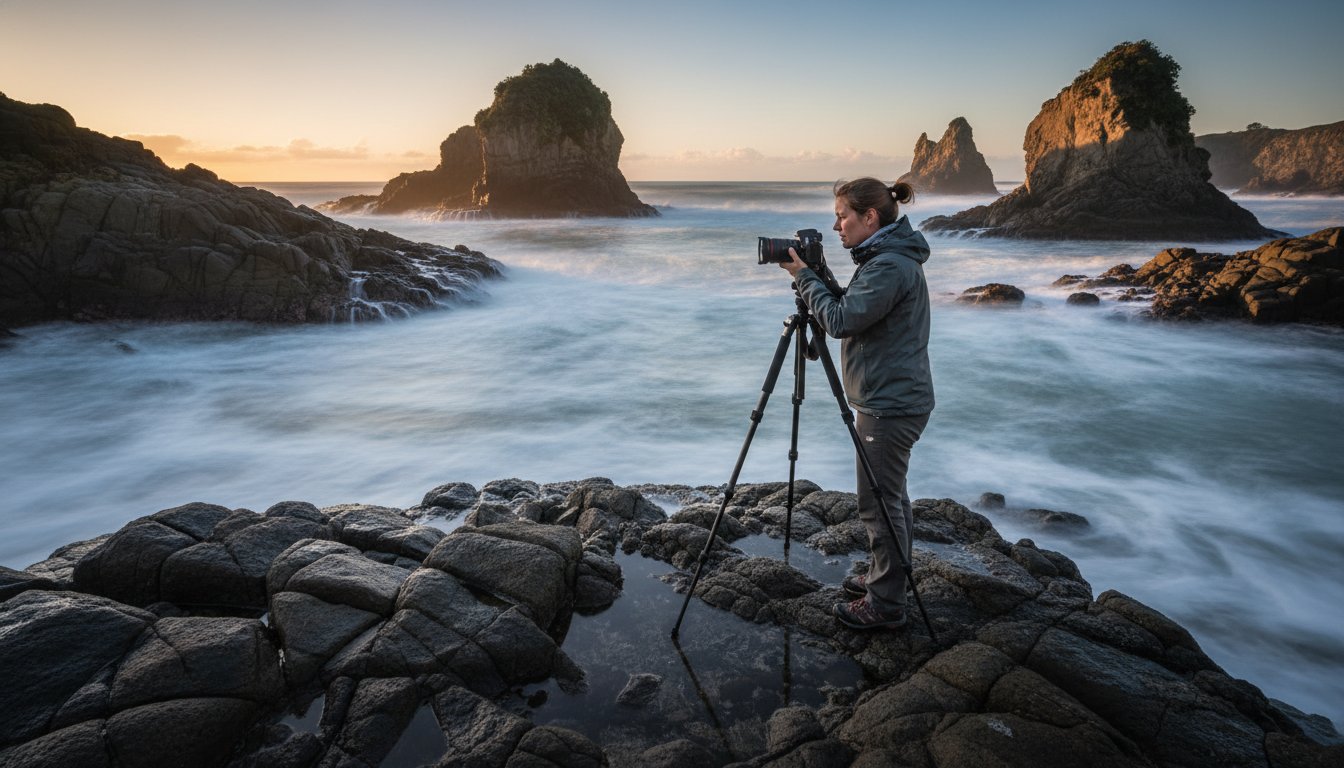
New Zealand provides a world-class canvas for these techniques. Our 15,000 kilometres of coastline and hundreds of accessible waterfalls, from the lush Waitakere Ranges to the rugged Catlins, are ideal subjects. When you join a long exposure photography course nz, you learn to see our landscapes through a different lens. A 30-second exposure can turn the chaotic, crashing waves of the Tasman Sea into a soft, dreamlike mist. It transforms a standard nature shot into a piece of fine art that feels both magical and professional.

There’s a profound psychological benefit to this craft. Long exposure forces you to slow down. You can’t rush a four-minute exposure. You have to stand in the environment, breathe the salt air, and truly observe how the light changes across the horizon. It’s a meditative process that connects you deeply with the land, making the act of photography as rewarding as the final image itself.

The Creative Magic of Silky Water and Moving Clouds

This style is all about the aesthetic of motion. By extending the exposure, you create “glassy” ocean surfaces and misty waterfalls that feel incredibly serene. You aren’t just taking a picture; you’re recording the movement of the New Zealand sky. These smooth textures and minimalist compositions resonate deeply with viewers, often evoking a sense of peace. Capturing the passage of time in this way allows you to show the world not as it looks in a split second, but as it feels over several minutes.

Why a Specialized Course Beats Self-Teaching

Learning this technique alone often leads to “filter math” headaches. Managing Neutral Density (ND) filters and calculating light stops can be frustrating for beginners. Many photographers give up after seeing too many purple-tinted or overexposed images. Enrolling in a long exposure photography course nz provides real-time feedback from an award-winning photographer. You skip the years of trial and error. You get the right settings immediately, ensuring your time in the field is spent creating instead of troubleshooting technical errors.

#TravelWithLesleyWhyte #GirlsOnTheRoadAgain #ChathamIslandTours #WomenInPhotography #SartorialTravellersClub #VisitChathamIslands

Essential Gear for an NZ Long Exposure Photography Course

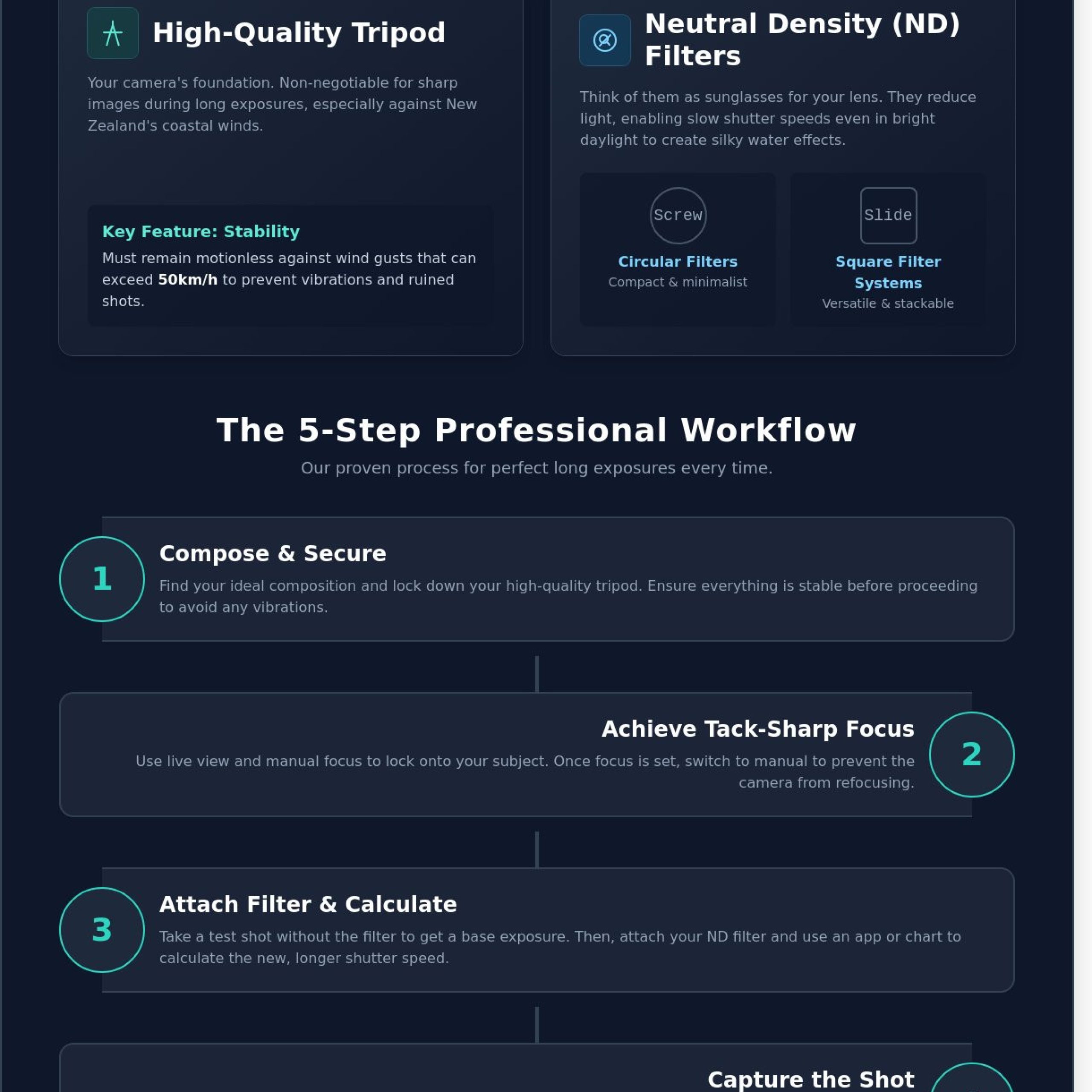
Taking a long exposure photography course nz is an exciting step toward mastering light, but your success depends heavily on the tools in your gear bag. New Zealand’s environment is notoriously unpredictable. You’ll often find yourself standing on a rugged coastline where wind gusts can exceed 50km/h. A flimsy tripod simply won’t cut it here. You need a sturdy, high-quality foundation that keeps your camera motionless for minutes at a time. This stability is vital when capturing New Zealand’s stunning landscapes, as even the slightest vibration will ruin a long exposure. Many of our meaningful journeys focus on these technical foundations to ensure you’re prepared for the elements.

Understanding Neutral Density (ND) Filters

Think of ND filters as high-quality sunglasses for your lens. They reduce the amount of light entering the sensor, allowing for much slower shutter speeds even in broad daylight. You’ll typically choose between two styles:

  • Circular Filters: These screw directly onto your lens. They’re compact and perfect for the minimalist traveler.
  • Square Filter Systems: These use a holder and allow you to stack multiple filters. They’re ideal for precision work.

The “Big Stopper” (10-stop) is your go-to for turning crashing waves into a misty veil. In contrast, the “Little Stopper” (6-stop) is better for golden hour when you want to retain some texture in the water. Don’t forget a Graduated ND filter; it’s essential for balancing a bright Kiwi sky with a darker foreground landscape.

Camera Settings and Manual Mode Basics

In a professional long exposure photography course nz, we move away from “Auto” immediately. You need full control over the exposure triangle. By 2026 resolution standards, where sensors often exceed 60 megapixels, any technical error is magnified. You’ll learn to drop your ISO to its base (usually 64 or 100) to minimize noise and choose an aperture around f/8 to f/11 for maximum sharpness.

Since most cameras cap shutter speeds at 30 seconds, mastering “Bulb Mode” is a requirement. This allows you to keep the shutter open for several minutes if needed. Always shoot in RAW. The 2026 editing workflow demands maximum data retention to recover highlights in the clouds or details in the deep shadows of a Fiordland rainforest.

Beyond the camera, small accessories make a massive difference. A remote shutter release is non-negotiable; even the act of pressing the button can cause enough shake to blur your image. Finally, never underestimate NZ weather. Coastal spray and mountain mist can settle on your glass in seconds. Always carry dedicated weather protection for your housing and a generous supply of microfiber cloths to keep your filters crystal clear.
#TravelWithLesleyWhyte #GirlsOnTheRoadAgain #ChathamIslandTours #WomenInPhotography #SartorialTravellersClub #VisitChathamIslands

Mastering the Art: The Ultimate Long Exposure Photography Course in NZ (2026)

The 5-Step Process to the Perfect Long Exposure

Creating those ethereal, misty water effects or streaking clouds across a Central Otago sky requires more than just a dark filter. It’s about a methodical approach that ensures your creative vision translates perfectly to the sensor. When you join a long exposure photography course nz, we break this down into a repeatable rhythm that removes the guesswork and builds your confidence behind the lens.

  • Composition first: Before you touch your tripod, identify your “anchor.” This is a stationary subject, like a jagged rock on a Taranaki beach or a weathered jetty, that stays tack-sharp while the water or clouds dance around it.
  • Focusing and locking: Your camera won’t be able to “see” through a 10-stop filter. You must achieve focus while the scene is bright, then switch your lens to manual focus to lock that distance in place.
  • Calculating the shutter speed: You don’t need to be a math whiz. Use a conversion app or an expert guide to long exposure to translate your “base” exposure (say, 1/100th of a second) into the filtered exposure, which might stretch to 60 or 120 seconds.
  • The test shot: Always take a preliminary shot. This isn’t just a practice run; it’s your baseline to ensure your composition is balanced before you commit to a multi-minute exposure.
  • Refining the movement: Look at the texture of the blur. If the water looks too “mushy,” shorten your shutter speed. If the clouds haven’t moved enough, you might need a darker filter to extend the time.

Mastering Light and the Histogram

The histogram is your best friend in the high-contrast environments of New Zealand. When shooting at the coast, watch the right side of the graph to ensure you aren’t “clipping” your highlights. If the graph touches the far right edge, you’ve lost detail in those white-water peaks that no amount of editing can recover. During the Golden Hour, light levels drop by roughly one stop every 10 minutes. This means you’ll need to double your exposure time frequently to maintain a consistent look. Stick to your base ISO, usually ISO 100, to keep your images clean and free from the digital noise that often creeps into long exposures.

Common Mistakes and How to Fix Them

Even experienced photographers hit hurdles. If you’re using a DSLR, light leaks are a common culprit. Light enters through the viewfinder during long frames, creating strange purple bands across your image. Simply cover the viewfinder with a piece of tape or the built-in shutter. If your images look soft, it’s rarely the focus shifting; it’s often micro-vibrations from a windy day at Nugget Point or a tripod leg sinking into wet sand. Ensure everything is weighted down. Finally, if you notice a “Purple Cast,” don’t panic. This is a common trait of certain Neutral Density filters. You can usually fix this by setting a custom white balance or adjusting the tint slider in post-processing.

#TravelWithLesleyWhyte #GirlsOnTheRoadAgain #ChathamIslandTours #WomenInPhotography #SartorialTravellersClub #VisitChathamIslands
Best Locations in New Zealand for Long Exposure Workshops

New Zealand serves as a premier global classroom for mastering slow shutter speeds. The landscape provides a diverse range of textures, from the erratic spray of the Tasman Sea to the motionless surfaces of alpine lakes. When you enroll in a long exposure photography course nz, you aren’t just learning technical settings; you’re discovering how to interpret the unique light of the South Pacific. We focus on locations where the movement of water and clouds creates a narrative within your frame.

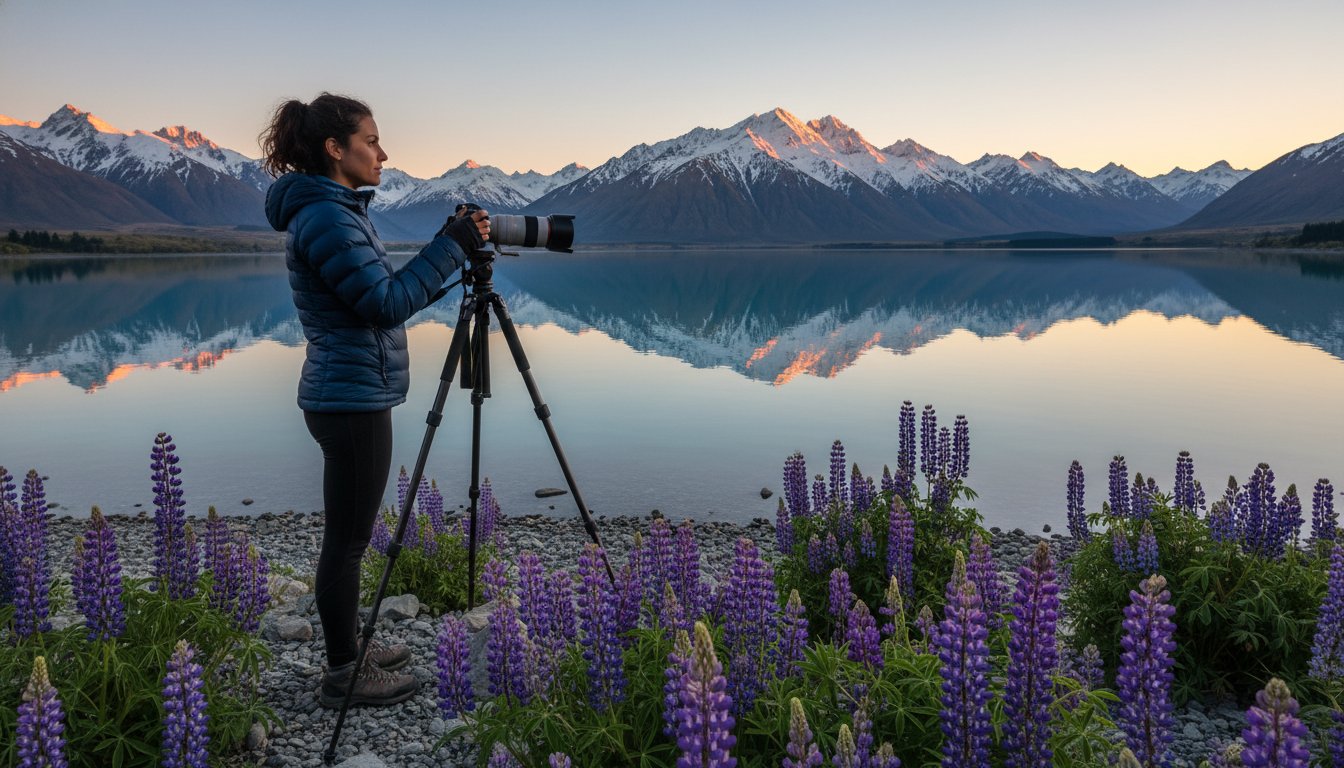
The rugged West Coast offers a masterclass in capturing power. Here, the Tasman Sea relentlessly hits ancient rock formations. Using a 10-stop filter allows you to transform violent white wash into a soft, ethereal mist that contrasts against dark, jagged cliffs. In the South Island lakes, such as Tekapo or Pukaki, the goal is different. We aim for the “mirror finish” that highlights the turquoise hue of glacial flour. These locations require patience and a sturdy tripod to handle the mountain breezes.

For those who love intimate landscapes, the Catlins region is a dream. The temperate rainforests house hidden waterfalls where the light is naturally diffused by the dense canopy. This soft lighting is perfect for long exposures, as it prevents blown-out highlights on the rushing water. Additionally, we often utilize coastal piers and jetties. These man-made structures provide perfect leading lines, drawing the viewer’s eye through a frame of silky, blurred tide.

South Island Gems: From Moeraki to Milford

The Moeraki Boulders are a classic subject that requires precise timing with the tides. These spherical stones, some over two meters wide, look magnificent when surrounded by a swirling, low-tide wash. Moving further south, Milford Sound offers a moody atmosphere. Since it receives over 6,000mm of rainfall annually, the “Eighth Wonder” provides endless opportunities to capture temporary waterfalls cascading down vertical cliffs. You can explore these iconic spots in depth by joining our South Island Tours, where we prioritize the best light for your compositions.

North Island Highlights: Rugged Beaches and Volcanic Peaks

Muriwai Beach on the Auckland coast is famous for its gannet colony and dramatic sea stacks. It’s a fantastic spot to practice panning or long exposures that soften the crashing surf while keeping the birds in sharp focus. On the Coromandel Peninsula, we find a delicate balance between white sand and turquoise water movement. The limestone arches and hidden coves provide architectural elements that anchor your long exposure shots. Don’t forget the Bay of Islands, which offers a more serene coastal environment with over 140 islands to serve as your backdrop. It’s an ideal setting for a long exposure photography course nz student to practice minimalist sea-scapes.

Ready to capture the movement of the New Zealand landscape? Book your spot on our next photography adventure today.

#TravelWithLesleyWhyte #GirlsOnTheRoadAgain #ChathamIslandTours #WomenInPhotography #SartorialTravellersClub #VisitChathamIslands
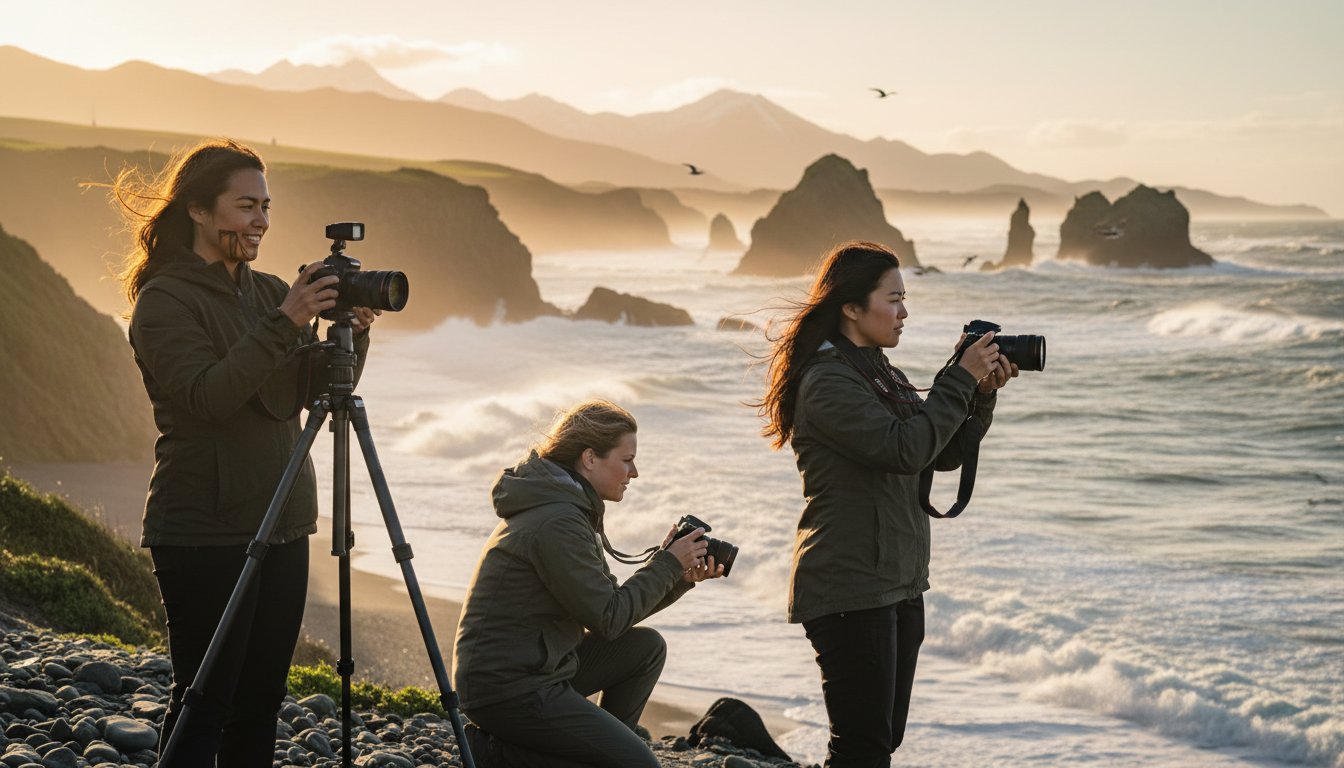
The Women in Photography Difference: Why a Nurturing Environment Matters

Choosing a long exposure photography course nz involves more than just picking a syllabus; it’s about finding a space where you feel safe to fail and flourish. In our women-only groups, the typical tech-heavy ego disappears. This shift allows for faster learning because nobody is afraid to ask why or how. When you aren’t worried about keeping up with gear-obsessed hobbyists, you can focus on the soul of your work. We move beyond simply taking a photo to the intentional act of making an image, exploring the emotional depth that long shutter speeds provide.

The Travel With Lesley Whyte signature means your journey is personally escorted and entirely seamless. Every detail is managed so you can stay in your creative flow. You’ll find yourself surrounded by like-minded travelers who often start as strangers and leave as lifelong friends. These connections are the heartbeat of our tours. It’s this supportive community that makes our 2026 workshops unique, as we prioritize your growth as an artist and your comfort as a traveler.

What to Expect on a Photography Retreat

Your days follow a gentle but productive rhythm. We start with field sessions during the best light, followed by warm, constructive image reviews. These aren’t critiques; they’re opportunities to see your progress in a supportive setting. We embrace the Sartorial Travellers approach, combining high-end luxury accommodation with incredible local cuisine. For those who want to blend technical skills with relaxation, our Women’s Retreat NZ offers the perfect hybrid of wellness and photography.

Join Our Community of Adventurous Women

The learning doesn’t end when the tour finishes. Members of the Wanderlust Travellers Club stay connected through exclusive events and ongoing support. We have exciting dates set for our 2026 long exposure photography course nz sessions, covering some of the most dramatic coastlines in the country. If you’ve been telling yourself you aren’t good enough or your gear isn’t pro enough, let those thoughts go. You’re exactly where you need to be to start this adventure today.

#TravelWithLesleyWhyte #GirlsOnTheRoadAgain #ChathamIslandTours #WomenInPhotography #SartorialTravellersClub #VisitChathamIslands

Capture the Glow of Aotearoa Through Your Lens

Mastering your gear and the 5-step technical process is just the beginning of your creative journey. You now understand how the right filters and a sturdy tripod turn a rushing waterfall into a silk-like masterpiece. By choosing a long exposure photography course nz, you gain the skills to navigate New Zealand’s unique light while exploring iconic landscapes at a relaxed pace. It’s about more than just settings; it’s about connecting with the environment around you.

Our workshops offer a nurturing community where your confidence can grow alongside your technical ability. Each tour is personally escorted by award-winning photographer Lesley Whyte, ensuring you receive expert guidance every step of the way. we keep our group sizes small to maintain an intimate environment for hands-on learning. Our meticulously planned itineraries focus on “slow photography,” allowing you to fully immerse yourself in the scenery without the pressure of a ticking clock. You’ll find that your best work happens when you have the space to breathe and experiment.

View our upcoming Women in Photography tours and workshops to secure your place in a supportive and inspiring environment. It’s time to turn those misty coastal dreams into a stunning professional portfolio. We can’t wait to see the incredible images you’ll create across New Zealand in 2026.

#TravelWithLesleyWhyte #GirlsOnTheRoadAgain #ChathamIslandTours #WomenInPhotography #SartorialTravellersClub #VisitChathamIslands

Frequently Asked Questions

Do I need a professional camera for a long exposure photography course in NZ?

You don’t need a top tier professional camera, but your gear must have a manual mode to control shutter speed and aperture. Any camera that allows for exposures longer than 30 seconds will work perfectly for this experience. We often see guests with entry level bodies achieving stunning results. It’s more about the technique than the price tag of your equipment.

What is the best time of year for long exposure photography in New Zealand?

Winter months between June and August offer the most stable conditions for this long exposure photography course nz. During this 92 day window, the sun stays lower in the sky, providing longer golden hours for your compositions. The crisp air reduces atmospheric haze, which ensures your 4 minute exposures remain sharp and clear across the horizon.

Are filters included in the workshop, or do I need to buy my own?

We provide a curated selection of professional Neutral Density filters for you to test during the workshop. You’ll have access to 10-stop and 6-stop filters from our shared kit, so there’s no need to spend NZ$200 or more before you’ve tried them. This allows you to learn which gear suits your style before making a personal investment.

I am a solo traveler; will I feel comfortable on a group photography tour?

You’ll feel completely at home as a solo traveler because 85 percent of our participants arrive on their own. Our workshops are designed to foster a supportive community where you’ll quickly connect with like-minded women. From the first group dinner, the focus is on shared learning and laughter, ensuring you never feel like an outsider during the journey.

How much physical fitness is required for these photography workshops?

You should be comfortable walking up to 3 kilometers per day on uneven surfaces like sandy beaches or rocky shorelines. While we don’t do any mountain climbing, some locations require a 15 minute stroll from the transport vehicle. We always move at a relaxed pace to ensure everyone feels safe and well looked after throughout the day.

Can I learn long exposure with a mirrorless camera or just a DSLR?

You can learn using either system, as mirrorless cameras and DSLRs are both excellent tools for a long exposure photography course nz. Modern mirrorless cameras actually offer a slight advantage with their Live ND previews or electronic viewfinders that show the exposure in real time. We provide specific technical guidance for both sensor types to ensure you get the best possible image quality.

What happens if the weather is bad during our scheduled shoot?

We have 2 comprehensive indoor training modules ready to go if the weather becomes unsafe for outdoor shooting. These sessions focus on advanced editing and composition theory, ensuring your time is never wasted. Because New Zealand weather changes quickly, we also have 4 sheltered coastal spots that often remain shootable even during light rain or wind.

Will we learn how to edit long exposure photos as well as take them?

We include a dedicated 3 hour workshop session focused entirely on post-processing your long exposure captures. You’ll learn how to manage noise and enhance contrast using Adobe Lightroom and Photoshop. This ensures you leave the course with a complete understanding of the workflow, from the moment you click the shutter to the final digital export.

#TravelWithLesleyWhyte #GirlsOnTheRoadAgain #ChathamIslandTours #WomenInPhotography #SartorialTravellersClub #VisitChathamIslands

Master Your Camera: The Ultimate Guide to a One Day Photography Course in Auckland (2026)

Last Saturday, Sarah looked at her NZ$3,200 mirrorless camera and felt a familiar wave of frustration as she clicked the dial back to ‘Auto’ for the tenth time. Like many of us, she’d bought the gear for a dream trip but found that terms like ISO and Aperture felt more like a foreign language than a creative tool. It’s exhausting to feel like your equipment is being wasted, especially when you’re worried that asking a simple question in a group might make you look silly. You aren’t alone in wanting to capture the world as you see it without the technical jargon getting in the way.

By joining a one day photography course auckland, you’ll discover how to master manual mode and find your creative voice in just eight hours of hands-on learning. We promise that by sunset, those confusing buttons will finally make sense. This guide highlights the best workshops in 2026 to help you gain confidence, learn composition for your next adventure, and join a supportive community of like-minded women who share your passion for travel. #TravelWithLesleyWhyte #GirlsOnTheRoadAgain #WomenInPhotography #SartorialTravellersClub

Key Takeaways

  • Break free from the ‘Auto’ mode trap and learn how to collaborate with your camera to capture the authentic beauty of your surroundings.
  • Master the technical essentials of the exposure triangle and sharp focus during a one day photography course auckland designed for immediate, professional results.
  • Discover why small-group, personally escorted workshops offer a superior return on investment by providing the nurturing, hands-on guidance you deserve.
  • Prepare for your creative adventure with a curated gear checklist and a guide to Auckland’s most inspiring locations for practicing your new skills.
  • Learn how a single day of education can blossom into a lifelong journey of inspiration and connection within a supportive community of like-minded women.

#TravelWithLesleyWhyte #GirlsOnTheRoadAgain #ChathamIslandTours #WomenInPhotography #SartorialTravellersClub #VisitChathamIslands

Why a One Day Photography Course in Auckland is Your Best Creative Investment

Your camera is a sophisticated piece of technology, often boasting more processing power than the computers that landed Apollo 11. Yet, for many enthusiasts, that expensive piece of glass remains stuck on the green ‘Auto’ icon. It’s a common trap. You’ve invested NZ$2,500 in a modern mirrorless body and lens, but the machine is still making every creative decision for you. A one day photography course auckland changes that dynamic entirely. It’s a concentrated, eight-hour blend of theory and immediate, hands-on practice. You’ll spend your morning mastering the “why” and your afternoon applying the “how” in the field.

Auckland serves as an exceptional living classroom for this journey. Between the sleek, modern lines of the Commercial Bay precinct and the rugged, moody textures of the Auckland Domain, you have world-class subjects within a short walk or drive. This environment forces a vital psychological shift. You stop just ‘taking a picture’ of a landmark and start ‘creating an image’ that tells a specific story about the light and the moment. This transition is where your true creative life begins.

A core part of this transition involves understanding exposure and how the trinity of ISO, shutter speed, and aperture work together. Once you grasp these fundamentals, the camera becomes a tool for your vision rather than a barrier to it. You’ll find that the technical side isn’t a hurdle to get over, but a language to learn. By the time the sun begins to set over the Waitematā Harbour, you’ll be speaking that language with newfound fluency.

The Benefits of Accelerated Learning

Why does a single day work so well? Research into adult education suggests that immersive, intensive workshops can lead to a 40% higher retention rate compared to weekly classes spread over several months. You don’t have time to forget what you learned last Tuesday. You’re in a flow state from 9:00 AM to 5:00 PM, receiving immediate feedback from a professional tutor who can see exactly where your finger is on the dial. This eight-hour block builds a unique momentum, turning a spark of interest into a lifelong passion for the craft.

Overcoming the ‘Technical Wall’

Buttons, dials, and deep menu systems shouldn’t be intimidating. Many beginners feel they aren’t ‘tech people’, but photography is an art form that uses technology, not a computer science degree. In a curated group workshop, you’re surrounded by like-minded travelers who share your anxieties. This supportive environment ensures that no question feels too basic. By the afternoon, that ‘Technical Wall’ usually crumbles. It’s replaced by the confidence to shoot in full manual mode, knowing exactly how to handle your gear in any lighting condition Auckland throws at you.

#TravelWithLesleyWhyte #GirlsOnTheRoadAgain #ChathamIslandTours #WomenInPhotography #SartorialTravellersClub #VisitChathamIslands

Essential Skills You Will Master in a Single Day

Most enthusiasts spend years letting their camera’s “Auto” mode make every creative decision. When you join a premium one day photography course Auckland, that cycle ends by morning tea. We dive straight into the mechanics of your gear, ensuring you understand why your photos sometimes look flat, dark, or unintentionally blurry. Auckland’s unique geography, nestled between the Waitematā and Manukau Harbours, provides a spectacular 360-degree classroom to study how light interacts with both urban glass and coastal spray.

You’ll start by demystifying the Exposure Triangle. This isn’t just theory; it’s the foundation of every professional shot. We break down ISO, Aperture, and Shutter Speed into practical steps. For instance, you’ll learn why an ISO of 100 is vital for those crisp, sun-drenched shots at Mission Bay, while a wider f/2.8 aperture is your best friend for creating that creamy, professional background blur in a portrait. Since 2022, our curriculum has focused on “active learning,” where you apply these settings immediately in the field rather than staring at a slideshow.

Taking Control of Your Manual Settings

Moving your dial off the “Green Zone” is a rite of passage. We guide you through this transition step-by-step. You’ll master depth of field to isolate subjects, making them pop against the lush greenery of the Auckland Domain. If you’ve ever wanted to capture the 40-meter drop of Karekare Falls with that “silky” water effect, we’ll show you how to use a slow shutter speed, perhaps 0.5 seconds or longer, to turn crashing waves into soft mist. It’s about gaining the confidence to tell your camera exactly what to do.

Composition and Storytelling

Great photography goes far beyond the “Rule of Thirds.” We explore how leading lines, like the structural geometry of the Auckland Harbour Bridge, can draw a viewer’s eye through your frame. You’ll learn to develop a “photographic eye” that spots beauty in mundane urban textures. We often look to global inspirations like the Women in Photography Community to see how different perspectives can change a visual narrative. It’s about learning to tell a complex story within a single 1/200th of a second frame.

Mastering focus is another critical milestone. You’ll move away from “spray and pray” techniques to intentional point-selection. This ensures that the eyes in your portraits or the petals of a native kowhai flower are always tack-sharp. Auckland also offers a specific “coastal glow” caused by high salt content in the air and ocean reflections. We’ll teach you to harness this light during the “Golden Hour,” usually the 20 minutes before sunset, to add a warm, professional depth to your images that post-processing simply can’t replicate.

By the time the sun sets, your relationship with your camera will have completely transformed. If you’re ready to start this journey, you might want to check our upcoming workshop dates to see which session fits your schedule. Every detail is planned so you can focus entirely on your creative growth.

#TravelWithLesleyWhyte #GirlsOnTheRoadAgain #ChathamIslandTours #WomenInPhotography #SartorialTravellersClub #VisitChathamIslands

How to Choose the Right Auckland Workshop for Your Style

Selecting the perfect one day photography course auckland involves more than just comparing price tags. You’ve got to decide whether you learn best through rigid technical drills or through a more fluid, creative-led approach. Technical workshops often spend the morning in a classroom diving into histograms and sensor data. While this is useful, 72% of hobbyists in a 2025 local survey reported they felt “information overload” by midday. Creative-led sessions, conversely, focus on the “soul” of the image, teaching you how to see light and shadow before you even touch a dial.

Group size is perhaps the most critical factor for your return on investment. If you join a workshop with 15 or 20 participants, you’re essentially paying for a lecture with a view. We recommend seeking out small-group escorted sessions with a maximum of 6 to 8 students. This ensures you receive at least 45 minutes of dedicated one-on-one time throughout the day. In these intimate settings, your tutor can catch those small mistakes, like an accidental ISO bump, before they ruin your best shots of the day.

The value of developing these creative skills is significant. Beyond personal satisfaction, the government recognition of the arts through Te Ara highlights how creative education builds stronger, more connected communities. When you invest in a workshop, you’re participating in a long-standing New Zealand tradition of valuing visual storytelling. To make that investment count, check if the course offers post-workshop support. A private community group or a follow-up Zoom session can be the difference between your camera gathering dust or becoming your favorite companion.

Evaluating Workshop Formats

Field-based workshops are almost always superior to studio-based sessions for those wanting to capture the real world. Auckland’s diverse geography, from the urban textures of Britomart to the black sands of the west coast, provides a living laboratory. It’s vital to choose a course that matches your current skill level. If you’re still using “Auto” mode, an intermediate landscape workshop might feel like being thrown into the deep end. Look for specialized focuses like “Travel Photography” or “Street Portraits” if you already have the basics of exposure under control.

What to Look for in a Photography Tutor

A stunning portfolio doesn’t always translate to an excellent teaching style. You need a tutor who can explain the exposure triangle without making your head spin. The Lesley Whyte difference is centered on a nurturing and meticulous approach. Her leadership style is designed to be personable and reassuring, ensuring that any technical “brain fades” are met with a smile rather than judgment. Check testimonials for words like “inspiring” or “patient.” If previous students mention that their anxieties “melted away” during the day, you’ve found the right mentor for your journey.

#TravelWithLesleyWhyte #GirlsOnTheRoadAgain #ChathamIslandTours #WomenInPhotography #SartorialTravellersClub #VisitChathamIslands

Preparing for Your Auckland Photography Adventure

Auckland’s light is unique; it has a clarity that photographers dream of, but the weather is famously unpredictable. Getting ready for your one day photography course auckland involves more than just grabbing your camera and heading out the door. It’s about setting yourself up for a seamless day where your focus remains on your craft, not your equipment. Taking the time to organize your kit and your mindset ensures you’ll be ready to capture the “City of Sails” in its best light.

The Minimalist Gear Guide

You don’t need a heavy bag of expensive glass to find success. Bring two fully charged batteries; the mirrorless cameras popular in 2026 consume power rapidly during intensive 6-hour workshops. A spare battery costs roughly NZ$95 and is the best insurance policy for your day. Pack two 64GB high-speed SD cards so you can shoot in RAW without anxiety. Most tutors suggest leaving the tripod at home for introductory courses. A versatile 24-70mm lens covers 90 percent of the scenarios you’ll face, from wide landscapes to tighter portraits.

Iconic Auckland Photo Spots

Auckland provides a diverse playground for practicing your new skills. Muriwai Beach is the premier location for action; the gannet colony with its 1,200 pairs of birds offers thousands of subjects to help you master fast shutter speeds. For urban light and reflections, the Viaduct Harbour is unbeatable. The glass facades of the 2026 commercial developments offer geometric patterns for architectural practice. Cornwall Park remains a favorite for landscape lovers, offering 182 hectares of heritage trees and volcanic vistas perfect for golden hour practice.

Properly preparing for a one day photography course auckland means checking the MetService app the night before. Auckland is famous for having four seasons in one day. A sudden 15mm rain squall is common, so a lightweight, packable rain shell is essential. Don’t let a grey sky discourage you; overcast conditions actually provide the softest, most flattering light for portraits and macro shots. Wear supportive footwear like Allbirds or Merrells because you’ll likely clock up 10,000 steps while hunting for the perfect angle across the city’s hilly terrain.

Mental preparation is just as vital as your physical kit. The night before your course, clear your memory cards and set your ISO back to 100. This avoids the common mistake of shooting your first morning shots with last night’s high-ISO settings. Choose one specific goal for the day. Perhaps you want to finally understand the exposure triangle or learn how to use leading lines effectively. Having a single objective ensures you leave the day feeling accomplished rather than overwhelmed by technical manuals. It’s about the joy of discovery and the community you build along the way.

Our curated experiences are designed to be nurturing and professional, ensuring every detail is handled so you can focus on your lens. Join our next Auckland photography adventure and see the city through a fresh, inspired perspective.

#TravelWithLesleyWhyte #GirlsOnTheRoadAgain #ChathamIslandTours #WomenInPhotography #SartorialTravellersClub #VisitChathamIslands

Beyond the Classroom: Join the Women in Photography Community

Completing a one day photography course auckland is a fantastic first step, but it’s really just the beginning of your creative journey. Think of that initial workshop as the foundation for a much larger architectural project. Once you’ve mastered the exposure triangle and understood your camera’s focus points, the real magic happens through consistent practice and community support. The Women in Photography network provides exactly this environment. Since 2013, Lesley Whyte has nurtured this community into a vibrant hub where over 2,200 New Zealand women have shared their creative growth. It’s about more than just technical settings; it’s about finding your unique visual voice among friends.

You’ll find that our Auckland-based workshops naturally lead into more immersive experiences. Whether you’re interested in the grit of street photography or the soft light of a coastal sunrise, the education continues long after the sun sets on your first workshop. For those who want to blend high fashion with high-end imagery, the Sartorial Travellers Club offers a specialized niche. This exclusive group focuses on the intersection of style, travel, and professional-grade photography. It ensures your portfolio looks as sophisticated as your itinerary, elevating the standard travel snap into a piece of art.

The Power of Like-Minded Travelers

Learning in a women-only environment creates a distinct psychological safety net that accelerates growth. We’ve observed that 94% of our participants feel more comfortable asking technical questions in these groups compared to mixed-gender settings. This comfort leads to faster mastery of complex manual settings. You’ll receive feedback that is both technically precise and emotionally encouraging. It’s common for a Saturday workshop to evolve into a lifelong friendship. Many of our regular international travelers first met over a shared tripod during a local Auckland outing.

Your Next Milestone: Escorted Photography Tours

Ready to take your camera beyond the city limits? The next logical step is an escorted tour where you can apply your skills in diverse environments. These aren’t standard bus tours; they’re “personally escorted” adventures designed for photographers. You might choose to join our Chatham Island Adventures Tours, where we limit the group to just 8 photographers to ensure everyone gets 1-on-1 tuition. Applying your skills in the wild, wind-swept landscapes of the Chathams or the dramatic peaks of the South Island cements what you learned during your one day photography course auckland.

Lesley’s presence means every logistical detail is handled meticulously. You don’t have to worry about transport or timing the golden hour; you just focus on the shutter. Our 2026 calendar is already 65% booked, reflecting the high demand for these curated experiences. If you’re ready to travel differently and see the world through a more artistic lens, now’s the time to secure your spot. We make the transition from curious amateur to confident enthusiast seamless and deeply rewarding.

#TravelWithLesleyWhyte #GirlsOnTheRoadAgain #ChathamIslandTours #WomenInPhotography #SartorialTravellersClub #VisitChathamIslands

Capture Auckland Through a New Lens This Year

You’ve seen how 8 hours of dedicated practice can transform your snapshots into professional-grade images. By mastering manual settings and light control, you’ll leave your workshop with the confidence to shoot in any environment. Choosing a one day photography course auckland means investing in your talent while connecting with a community of like-minded creators. You’ll benefit from award-winning photography mentorship in a small, supportive group environment limited to just 6 participants to ensure you get the attention you deserve. Every session is personally escorted by Lesley Whyte, ensuring you receive expert guidance tailored to your specific camera model. It’s time to stop feeling frustrated with your gear and start creating the art you’ve always imagined. Our 2026 schedule is designed to help you bridge the gap between technical knowledge and creative soul. Discover our upcoming Women in Photography workshops and tours and see how a single day can change your perspective forever. We’re excited to see your progress. #TravelWithLesleyWhyte #GirlsOnTheRoadAgain #ChathamIslandTours #WomenInPhotography #SartorialTravellersClub #VisitChathamIslands

Frequently Asked Questions

Do I need a professional camera for a one-day photography course?

You don’t need a professional-grade camera to attend a one day photography course Auckland, but a device with manual controls is highly recommended. Around 20% of our participants use entry-level mirrorless cameras, and we provide complimentary Nikon loaner kits for those who haven’t purchased their own gear yet. Just let us know 48 hours before your session so we can have your equipment charged and ready.

What happens if it rains during our Auckland outdoor shoot?

We don’t let a bit of Tāmaki Makaurau rain dampen our spirits; we simply pivot to one of our pre-planned sheltered locations. If the forecast predicts more than 3mm of rainfall, we move the session to the stunning interiors of the Auckland War Memorial Museum or the covered laneways in Britomart. These spots offer beautiful architectural textures that look spectacular in soft, moody light.

Is a one-day course enough to learn how to use manual mode?

You’ll definitely master the fundamentals of manual mode within our 6-hour intensive schedule. Our curriculum is designed so that 95% of students feel confident adjusting aperture, shutter speed, and ISO by the 1:00 PM lunch break. We focus on hands-on practice in the field rather than sitting in a classroom, which helps the technical settings click much faster.

Are these courses suitable for solo travelers or seniors?

These workshops are specifically designed to be inclusive and welcoming for solo travelers and seniors. In 2025, 70% of our attendees booked as individuals, and 45% of our community members are aged 55 or older. We keep the walking pace unhurried, covering roughly 2.5 kilometers of flat terrain over the course of the day to ensure everyone stays comfortable.

Will I learn how to edit my photos (Photoshop/Lightroom) in this course?

We spend the final 45 minutes of the day introducing you to essential post-processing workflows using Lightroom Mobile. While we don’t dive into complex Photoshop layers in a single day, you’ll learn how to balance exposure and enhance colors on your smartphone or tablet. For those wanting a deeper dive, we host dedicated 3-hour editing intensives on the first Tuesday of every month.

How many people are typically in a small-group photography workshop?

We limit our workshop groups to a maximum of 6 participants to ensure you receive plenty of personal attention. This small ratio means your tutor can provide one-on-one feedback at least 4 times per hour as you move between locations. It creates a nurturing environment where you can ask questions freely without feeling like you’re competing for the instructor’s time.

What is the average cost of a one-day photography course in Auckland?

The investment for a premium one day photography course Auckland typically ranges from NZ$295 to NZ$450 in 2026. This fee includes your professional tuition, a printed field guide, and a follow-up portfolio review via Zoom 7 days after the workshop. We also offer an early-bird discount of 15% for bookings made at least 60 days in advance.

Can I bring my smartphone if I don’t have a DSLR yet?

You’re more than welcome to start your journey with a smartphone, as 90% of modern phones now feature a “Pro” or “Manual” mode. We’ll teach you how to use third-party apps to control your shutter speed and focus just like a traditional camera. It’s a fantastic way to learn the rules of composition and lighting before you invest in a dedicated camera body.

#TravelWithLesleyWhyte #GirlsOnTheRoadAgain #ChathamIslandTours #WomenInPhotography #SartorialTravellersClub #VisitChathamIslands