
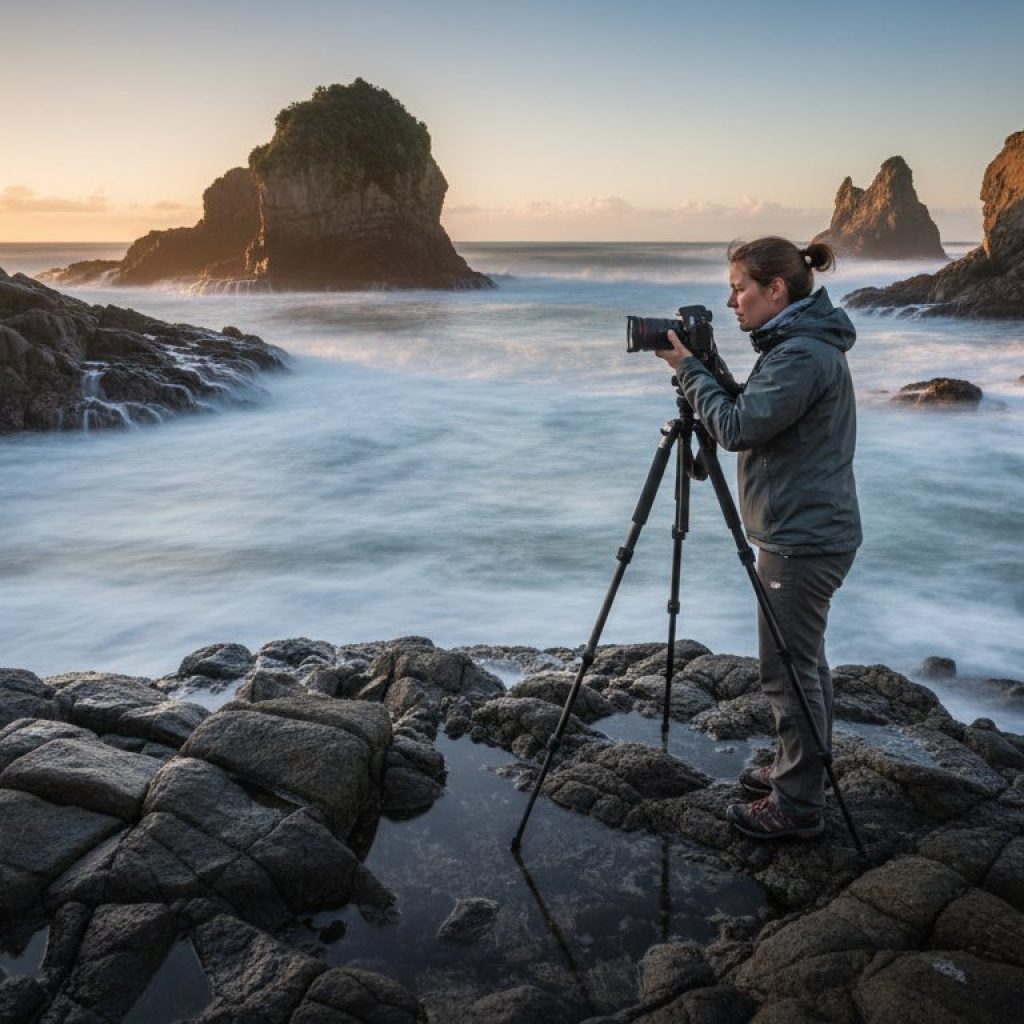
Last October, a passionate photographer named Sarah stood on the windswept shores of the Catlins, staring at a set of expensive glass filters she didn’t quite know how to use. She wanted those silky, ethereal waves but kept getting “white-out” exposures that looked like a technical glitch. It’s a common struggle. Over 85% of enthusiasts who seek a long exposure photography course nz do so because they feel overwhelmed by gear or frustrated by being rushed by non-photographers on standard tours. We understand that frustration because we’ve been there too. You deserve the time to get it right without the pressure of a ticking clock.
You’ll discover how to transform New Zealand’s rugged landscapes into ethereal works of art with our comprehensive guide to long exposure photography workshops in 2026. This article promises to show you how to use ND filters with total confidence so you finally capture those wall-worthy landscape photos you’ve always dreamed of. We’re going to preview the best personally escorted experiences that pair technical skill-building with a supportive community of like-minded creative women. Get ready to slow down, connect with New Zealand’s beauty, and return home with a portfolio you’re proud to display.
#TravelWithLesleyWhyte #GirlsOnTheRoadAgain #ChathamIslandTours #WomenInPhotography #SartorialTravellersClub #VisitChathamIslands
Key Takeaways
- Discover how to use slow shutter speeds to transform New Zealand’s rugged coastlines and waterfalls into silky, ethereal works of art.
- Identify the essential gear, including high-quality tripods and ND filters, required to master the unique light and wind conditions of the Kiwi landscape.
- Follow a professional 5-step workflow during our long exposure photography course nz to ensure tack-sharp focus and perfect composition in every shot.
- Explore the best locations across the West Coast and South Island lakes to capture the iconic “mirror finish” and dramatic rock formations.
- Benefit from a nurturing, ego-free learning environment on a personally escorted adventure where every detail is seamlessly managed for you. #TravelWithLesleyWhyte #GirlsOnTheRoadAgain #ChathamIslandTours #WomenInPhotography #SartorialTravellersClub #VisitChathamIslands
What is Long Exposure Photography and Why Master it in NZ?
Long exposure is a specialized technique where you leave the camera shutter open for an extended duration. By using slow shutter speeds, you can blur moving elements like water or clouds while keeping stationary objects, such as rocks or buildings, perfectly sharp. If you’ve ever wondered What is Long Exposure Photography, it’s essentially the art of capturing the passage of time within a single, static frame. In a 2026 digital landscape where snapshots are instant and often disposable, this technique offers a way to create something truly ethereal and lasting.
New Zealand provides a world-class canvas for these techniques. Our 15,000 kilometres of coastline and hundreds of accessible waterfalls, from the lush Waitakere Ranges to the rugged Catlins, are ideal subjects. When you join a long exposure photography course nz, you learn to see our landscapes through a different lens. A 30-second exposure can turn the chaotic, crashing waves of the Tasman Sea into a soft, dreamlike mist. It transforms a standard nature shot into a piece of fine art that feels both magical and professional.
There’s a profound psychological benefit to this craft. Long exposure forces you to slow down. You can’t rush a four-minute exposure. You have to stand in the environment, breathe the salt air, and truly observe how the light changes across the horizon. It’s a meditative process that connects you deeply with the land, making the act of photography as rewarding as the final image itself.
The Creative Magic of Silky Water and Moving Clouds
This style is all about the aesthetic of motion. By extending the exposure, you create “glassy” ocean surfaces and misty waterfalls that feel incredibly serene. You aren’t just taking a picture; you’re recording the movement of the New Zealand sky. These smooth textures and minimalist compositions resonate deeply with viewers, often evoking a sense of peace. Capturing the passage of time in this way allows you to show the world not as it looks in a split second, but as it feels over several minutes.
Why a Specialized Course Beats Self-Teaching
Learning this technique alone often leads to “filter math” headaches. Managing Neutral Density (ND) filters and calculating light stops can be frustrating for beginners. Many photographers give up after seeing too many purple-tinted or overexposed images. Enrolling in a long exposure photography course nz provides real-time feedback from an award-winning photographer. You skip the years of trial and error. You get the right settings immediately, ensuring your time in the field is spent creating instead of troubleshooting technical errors.
Essential Gear for an NZ Long Exposure Photography Course
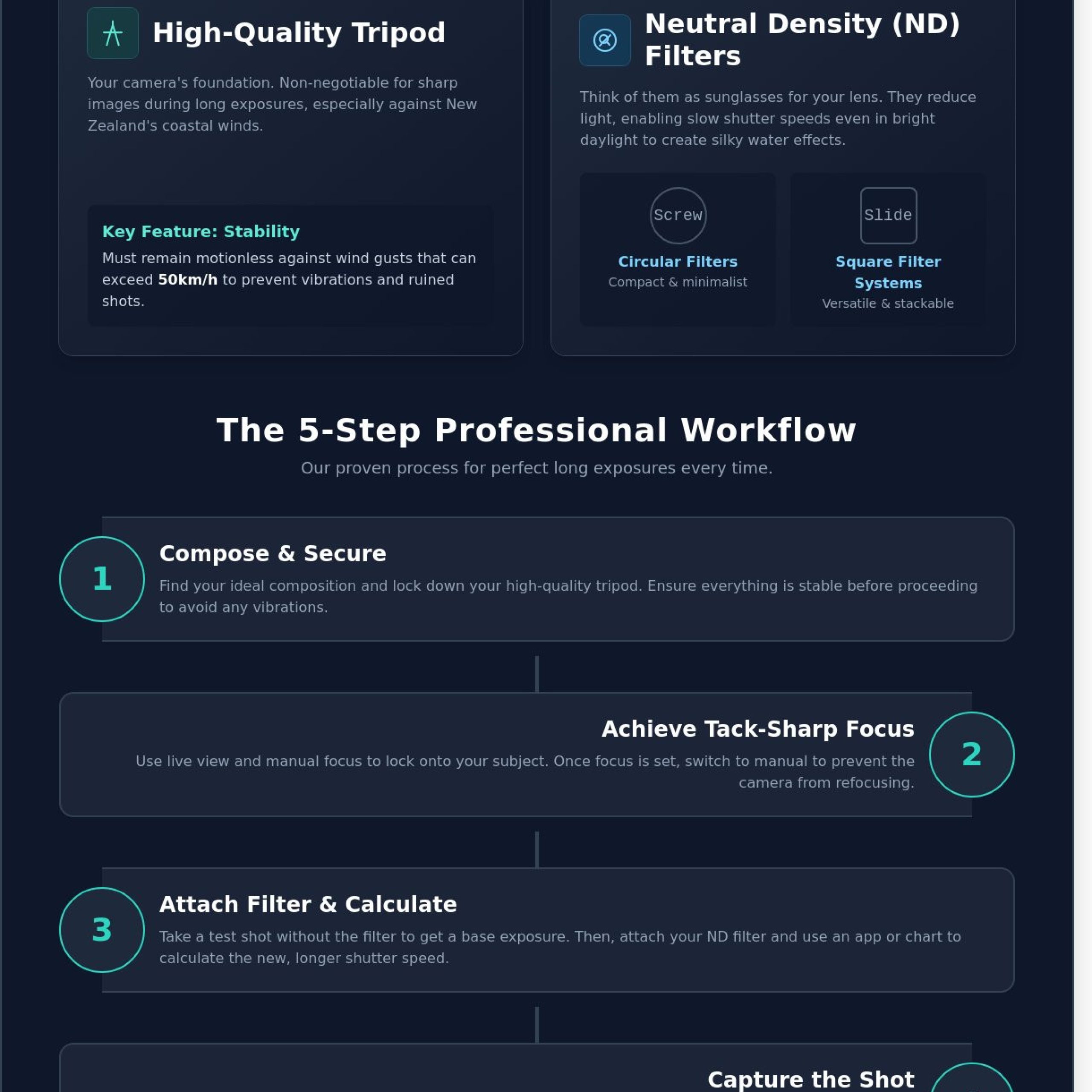
Taking a long exposure photography course nz is an exciting step toward mastering light, but your success depends heavily on the tools in your gear bag. New Zealand’s environment is notoriously unpredictable. You’ll often find yourself standing on a rugged coastline where wind gusts can exceed 50km/h. A flimsy tripod simply won’t cut it here. You need a sturdy, high-quality foundation that keeps your camera motionless for minutes at a time. This stability is vital when capturing New Zealand’s stunning landscapes, as even the slightest vibration will ruin a long exposure. Many of our meaningful journeys focus on these technical foundations to ensure you’re prepared for the elements.
Understanding Neutral Density (ND) Filters
Think of ND filters as high-quality sunglasses for your lens. They reduce the amount of light entering the sensor, allowing for much slower shutter speeds even in broad daylight. You’ll typically choose between two styles:
- Circular Filters: These screw directly onto your lens. They’re compact and perfect for the minimalist traveler.
- Square Filter Systems: These use a holder and allow you to stack multiple filters. They’re ideal for precision work.
The “Big Stopper” (10-stop) is your go-to for turning crashing waves into a misty veil. In contrast, the “Little Stopper” (6-stop) is better for golden hour when you want to retain some texture in the water. Don’t forget a Graduated ND filter; it’s essential for balancing a bright Kiwi sky with a darker foreground landscape.
Camera Settings and Manual Mode Basics
In a professional long exposure photography course nz, we move away from “Auto” immediately. You need full control over the exposure triangle. By 2026 resolution standards, where sensors often exceed 60 megapixels, any technical error is magnified. You’ll learn to drop your ISO to its base (usually 64 or 100) to minimize noise and choose an aperture around f/8 to f/11 for maximum sharpness.
Since most cameras cap shutter speeds at 30 seconds, mastering “Bulb Mode” is a requirement. This allows you to keep the shutter open for several minutes if needed. Always shoot in RAW. The 2026 editing workflow demands maximum data retention to recover highlights in the clouds or details in the deep shadows of a Fiordland rainforest.
Beyond the camera, small accessories make a massive difference. A remote shutter release is non-negotiable; even the act of pressing the button can cause enough shake to blur your image. Finally, never underestimate NZ weather. Coastal spray and mountain mist can settle on your glass in seconds. Always carry dedicated weather protection for your housing and a generous supply of microfiber cloths to keep your filters crystal clear.
The 5-Step Process to the Perfect Long Exposure
Creating those ethereal, misty water effects or streaking clouds across a Central Otago sky requires more than just a dark filter. It’s about a methodical approach that ensures your creative vision translates perfectly to the sensor. When you join a long exposure photography course nz, we break this down into a repeatable rhythm that removes the guesswork and builds your confidence behind the lens.
- Composition first: Before you touch your tripod, identify your “anchor.” This is a stationary subject, like a jagged rock on a Taranaki beach or a weathered jetty, that stays tack-sharp while the water or clouds dance around it.
- Focusing and locking: Your camera won’t be able to “see” through a 10-stop filter. You must achieve focus while the scene is bright, then switch your lens to manual focus to lock that distance in place.
- Calculating the shutter speed: You don’t need to be a math whiz. Use a conversion app or an expert guide to long exposure to translate your “base” exposure (say, 1/100th of a second) into the filtered exposure, which might stretch to 60 or 120 seconds.
- The test shot: Always take a preliminary shot. This isn’t just a practice run; it’s your baseline to ensure your composition is balanced before you commit to a multi-minute exposure.
- Refining the movement: Look at the texture of the blur. If the water looks too “mushy,” shorten your shutter speed. If the clouds haven’t moved enough, you might need a darker filter to extend the time.
Mastering Light and the Histogram
The histogram is your best friend in the high-contrast environments of New Zealand. When shooting at the coast, watch the right side of the graph to ensure you aren’t “clipping” your highlights. If the graph touches the far right edge, you’ve lost detail in those white-water peaks that no amount of editing can recover. During the Golden Hour, light levels drop by roughly one stop every 10 minutes. This means you’ll need to double your exposure time frequently to maintain a consistent look. Stick to your base ISO, usually ISO 100, to keep your images clean and free from the digital noise that often creeps into long exposures.
Common Mistakes and How to Fix Them
Even experienced photographers hit hurdles. If you’re using a DSLR, light leaks are a common culprit. Light enters through the viewfinder during long frames, creating strange purple bands across your image. Simply cover the viewfinder with a piece of tape or the built-in shutter. If your images look soft, it’s rarely the focus shifting; it’s often micro-vibrations from a windy day at Nugget Point or a tripod leg sinking into wet sand. Ensure everything is weighted down. Finally, if you notice a “Purple Cast,” don’t panic. This is a common trait of certain Neutral Density filters. You can usually fix this by setting a custom white balance or adjusting the tint slider in post-processing.
#TravelWithLesleyWhyte #GirlsOnTheRoadAgain #ChathamIslandTours #WomenInPhotography #SartorialTravellersClub #VisitChathamIslands
Best Locations in New Zealand for Long Exposure Workshops
New Zealand serves as a premier global classroom for mastering slow shutter speeds. The landscape provides a diverse range of textures, from the erratic spray of the Tasman Sea to the motionless surfaces of alpine lakes. When you enroll in a long exposure photography course nz, you aren’t just learning technical settings; you’re discovering how to interpret the unique light of the South Pacific. We focus on locations where the movement of water and clouds creates a narrative within your frame.
The rugged West Coast offers a masterclass in capturing power. Here, the Tasman Sea relentlessly hits ancient rock formations. Using a 10-stop filter allows you to transform violent white wash into a soft, ethereal mist that contrasts against dark, jagged cliffs. In the South Island lakes, such as Tekapo or Pukaki, the goal is different. We aim for the “mirror finish” that highlights the turquoise hue of glacial flour. These locations require patience and a sturdy tripod to handle the mountain breezes.
For those who love intimate landscapes, the Catlins region is a dream. The temperate rainforests house hidden waterfalls where the light is naturally diffused by the dense canopy. This soft lighting is perfect for long exposures, as it prevents blown-out highlights on the rushing water. Additionally, we often utilize coastal piers and jetties. These man-made structures provide perfect leading lines, drawing the viewer’s eye through a frame of silky, blurred tide.
South Island Gems: From Moeraki to Milford
The Moeraki Boulders are a classic subject that requires precise timing with the tides. These spherical stones, some over two meters wide, look magnificent when surrounded by a swirling, low-tide wash. Moving further south, Milford Sound offers a moody atmosphere. Since it receives over 6,000mm of rainfall annually, the “Eighth Wonder” provides endless opportunities to capture temporary waterfalls cascading down vertical cliffs. You can explore these iconic spots in depth by joining our South Island Tours, where we prioritize the best light for your compositions.
North Island Highlights: Rugged Beaches and Volcanic Peaks
Muriwai Beach on the Auckland coast is famous for its gannet colony and dramatic sea stacks. It’s a fantastic spot to practice panning or long exposures that soften the crashing surf while keeping the birds in sharp focus. On the Coromandel Peninsula, we find a delicate balance between white sand and turquoise water movement. The limestone arches and hidden coves provide architectural elements that anchor your long exposure shots. Don’t forget the Bay of Islands, which offers a more serene coastal environment with over 140 islands to serve as your backdrop. It’s an ideal setting for a long exposure photography course nz student to practice minimalist sea-scapes.
Ready to capture the movement of the New Zealand landscape? Book your spot on our next photography adventure today.
#TravelWithLesleyWhyte #GirlsOnTheRoadAgain #ChathamIslandTours #WomenInPhotography #SartorialTravellersClub #VisitChathamIslands
The Women in Photography Difference: Why a Nurturing Environment Matters
Choosing a long exposure photography course nz involves more than just picking a syllabus; it’s about finding a space where you feel safe to fail and flourish. In our women-only groups, the typical tech-heavy ego disappears. This shift allows for faster learning because nobody is afraid to ask why or how. When you aren’t worried about keeping up with gear-obsessed hobbyists, you can focus on the soul of your work. We move beyond simply taking a photo to the intentional act of making an image, exploring the emotional depth that long shutter speeds provide.
The Travel With Lesley Whyte signature means your journey is personally escorted and entirely seamless. Every detail is managed so you can stay in your creative flow. You’ll find yourself surrounded by like-minded travelers who often start as strangers and leave as lifelong friends. These connections are the heartbeat of our tours. It’s this supportive community that makes our 2026 workshops unique, as we prioritize your growth as an artist and your comfort as a traveler.
What to Expect on a Photography Retreat
Your days follow a gentle but productive rhythm. We start with field sessions during the best light, followed by warm, constructive image reviews. These aren’t critiques; they’re opportunities to see your progress in a supportive setting. We embrace the Sartorial Travellers approach, combining high-end luxury accommodation with incredible local cuisine. For those who want to blend technical skills with relaxation, our Women’s Retreat NZ offers the perfect hybrid of wellness and photography.
Join Our Community of Adventurous Women
The learning doesn’t end when the tour finishes. Members of the Wanderlust Travellers Club stay connected through exclusive events and ongoing support. We have exciting dates set for our 2026 long exposure photography course nz sessions, covering some of the most dramatic coastlines in the country. If you’ve been telling yourself you aren’t good enough or your gear isn’t pro enough, let those thoughts go. You’re exactly where you need to be to start this adventure today.
#TravelWithLesleyWhyte #GirlsOnTheRoadAgain #ChathamIslandTours #WomenInPhotography #SartorialTravellersClub #VisitChathamIslands
Capture the Glow of Aotearoa Through Your Lens
Mastering your gear and the 5-step technical process is just the beginning of your creative journey. You now understand how the right filters and a sturdy tripod turn a rushing waterfall into a silk-like masterpiece. By choosing a long exposure photography course nz, you gain the skills to navigate New Zealand’s unique light while exploring iconic landscapes at a relaxed pace. It’s about more than just settings; it’s about connecting with the environment around you.
Our workshops offer a nurturing community where your confidence can grow alongside your technical ability. Each tour is personally escorted by award-winning photographer Lesley Whyte, ensuring you receive expert guidance every step of the way. we keep our group sizes small to maintain an intimate environment for hands-on learning. Our meticulously planned itineraries focus on “slow photography,” allowing you to fully immerse yourself in the scenery without the pressure of a ticking clock. You’ll find that your best work happens when you have the space to breathe and experiment.
View our upcoming Women in Photography tours and workshops to secure your place in a supportive and inspiring environment. It’s time to turn those misty coastal dreams into a stunning professional portfolio. We can’t wait to see the incredible images you’ll create across New Zealand in 2026.
#TravelWithLesleyWhyte #GirlsOnTheRoadAgain #ChathamIslandTours #WomenInPhotography #SartorialTravellersClub #VisitChathamIslands
Frequently Asked Questions
Do I need a professional camera for a long exposure photography course in NZ?
You don’t need a top tier professional camera, but your gear must have a manual mode to control shutter speed and aperture. Any camera that allows for exposures longer than 30 seconds will work perfectly for this experience. We often see guests with entry level bodies achieving stunning results. It’s more about the technique than the price tag of your equipment.
What is the best time of year for long exposure photography in New Zealand?
Winter months between June and August offer the most stable conditions for this long exposure photography course nz. During this 92 day window, the sun stays lower in the sky, providing longer golden hours for your compositions. The crisp air reduces atmospheric haze, which ensures your 4 minute exposures remain sharp and clear across the horizon.
Are filters included in the workshop, or do I need to buy my own?
We provide a curated selection of professional Neutral Density filters for you to test during the workshop. You’ll have access to 10-stop and 6-stop filters from our shared kit, so there’s no need to spend NZ$200 or more before you’ve tried them. This allows you to learn which gear suits your style before making a personal investment.
I am a solo traveler; will I feel comfortable on a group photography tour?
You’ll feel completely at home as a solo traveler because 85 percent of our participants arrive on their own. Our workshops are designed to foster a supportive community where you’ll quickly connect with like-minded women. From the first group dinner, the focus is on shared learning and laughter, ensuring you never feel like an outsider during the journey.
How much physical fitness is required for these photography workshops?
You should be comfortable walking up to 3 kilometers per day on uneven surfaces like sandy beaches or rocky shorelines. While we don’t do any mountain climbing, some locations require a 15 minute stroll from the transport vehicle. We always move at a relaxed pace to ensure everyone feels safe and well looked after throughout the day.
Can I learn long exposure with a mirrorless camera or just a DSLR?
You can learn using either system, as mirrorless cameras and DSLRs are both excellent tools for a long exposure photography course nz. Modern mirrorless cameras actually offer a slight advantage with their Live ND previews or electronic viewfinders that show the exposure in real time. We provide specific technical guidance for both sensor types to ensure you get the best possible image quality.
What happens if the weather is bad during our scheduled shoot?
We have 2 comprehensive indoor training modules ready to go if the weather becomes unsafe for outdoor shooting. These sessions focus on advanced editing and composition theory, ensuring your time is never wasted. Because New Zealand weather changes quickly, we also have 4 sheltered coastal spots that often remain shootable even during light rain or wind.
Will we learn how to edit long exposure photos as well as take them?
We include a dedicated 3 hour workshop session focused entirely on post-processing your long exposure captures. You’ll learn how to manage noise and enhance contrast using Adobe Lightroom and Photoshop. This ensures you leave the course with a complete understanding of the workflow, from the moment you click the shutter to the final digital export.
#TravelWithLesleyWhyte #GirlsOnTheRoadAgain #ChathamIslandTours #WomenInPhotography #SartorialTravellersClub #VisitChathamIslands