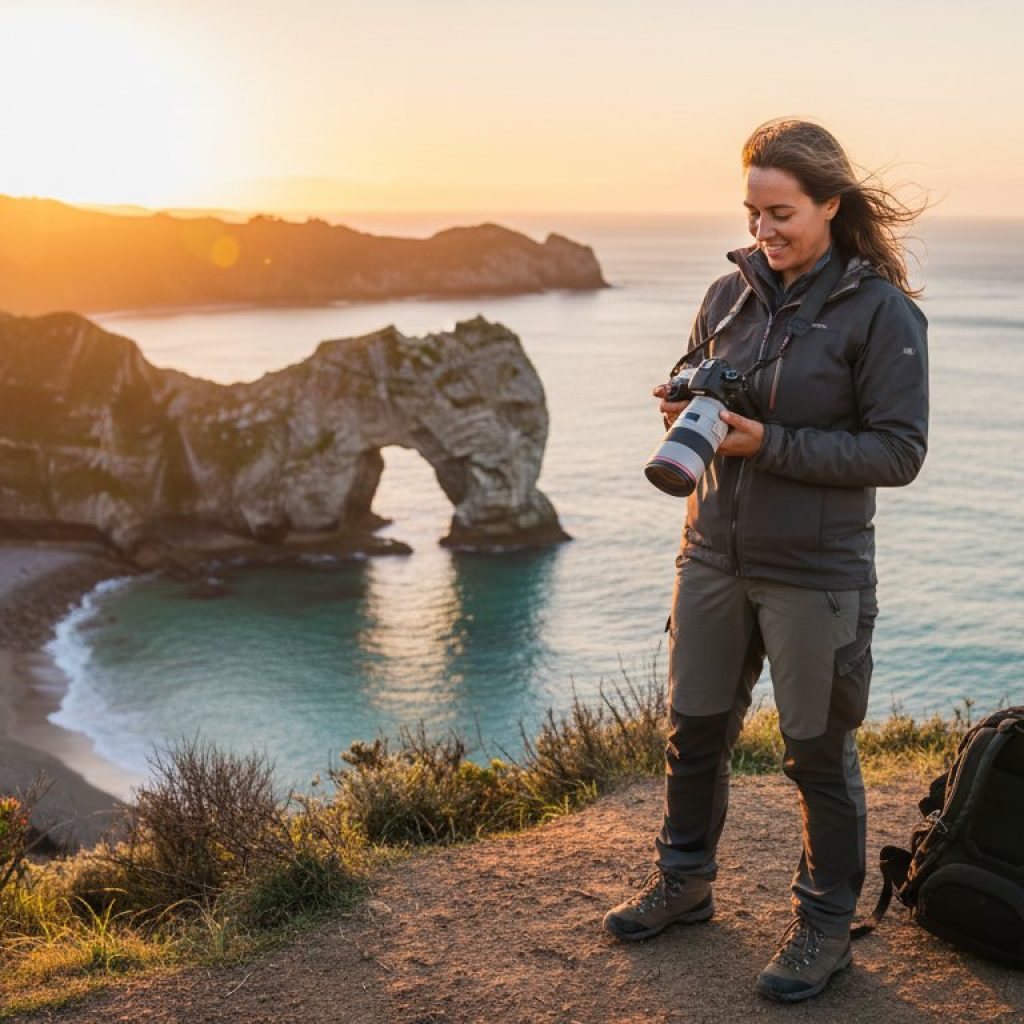
Selling Travel Photos in 2026: A Personable Guide to Turning Passion into Profit
Last Tuesday, Sarah in Napier discovered her third “technical rejection” email from a major stock agency in just one week. It’s a lonely feeling when your creative passion is met with automated rejections instead of a paycheck. You’ve likely felt that same sting of uncertainty, wondering if your eye for detail actually translates to commercial value. It’s frustrating to have a hard drive full of memories that you know are beautiful, yet you lack the roadmap to start selling travel photos effectively.
I understand that gap between being a hobbyist and a professional. This guide will show you exactly how to succeed in the 2026 market, helping you build a professional portfolio that commands attention while boosting your technical confidence. You’ll learn which specific shots can earn you upwards of NZ$150 per license and how to find your place in a supportive creative community. We’ll examine why demand for authentic NZ content rose by 14% this year, identify high-value subjects, and give you the tools to finally validate your artistic talent.
Understand why 2026 is the year of authentic storytelling, making it the perfect time to start selling travel photos that capture genuine lifestyle moments.
Explore diverse ways to monetise your gallery, from building consistent earnings through microstock platforms to creating bespoke print-on-demand art from your New Zealand adventures.
Master the “Technical Trifecta” and learn the essential legal requirements to ensure your work meets professional standards and avoids common rejection pitfalls.
Learn the secret to shooting with intent by identifying visual gaps and creating a comprehensive shot list before you even leave home.
Discover how a personally escorted tour can build your confidence and technical skills in a supportive community of like-minded photographers. #TravelWithLesleyWhyte #GirlsOnTheRoadAgain #ChathamIslandTours #WomenInPhotography #SartorialTravellersClub #VisitChathamIslands
Is Selling Travel Photos Still Profitable in 2026?
If you’re wondering whether selling travel photos still makes sense for your bank account, the answer is a resounding yes. The market hasn’t died. It’s evolved. In 2024, the global stock image sector reached a valuation of NZ$5.4 billion, and projections for 2026 show a steady 6% annual growth. While high-resolution cameras are now standard in every pocket, the demand for curated, professional storytelling has never been higher for those willing to look beyond the postcard view.
The shift is undeniable. Buyers are moving away from the “perfect” oversaturated sunset and toward images that feel lived-in and honest. In 2026, profit lies in the narrow gaps of niche markets. If you can capture the quiet, morning light on a local artisan’s hands or the messy, joyful reality of a family picnic on a New Zealand beach, you have a product that sells. You aren’t just selling a picture; you’re selling a feeling that a brand can’t manufacture with a tripod and a timer.
The Rise of Authentic Niche Content
Brands in 2026 are desperate for “real” travel experiences. They want photos that look like a memory, not an advertisement. Your unique eye is your biggest competitive advantage. Whether you’re drawn to the rugged textures of the Chatham Islands or the vibrant street life of Wellington, your specific perspective is what creates value. Commercial travel photography serves as a high-impact visual solution that bridges the gap between a brand’s message and a traveler’s desire for genuine connection.
Understanding the 2026 Market Needs
The demand for sustainable travel and “slow travel” imagery has spiked by 45% since early 2025. Travelers want to see local culture and eco-conscious journeys. While AI can generate a generic mountain range, it fails to replicate the nuanced emotion of a human connection. By understanding the stock photo industry, you’ll see that metadata and authentic human moments are the keys to beating the algorithms. Your personal travel style, whether it’s luxury or rugged adventure, will dictate whether you sell through premium agencies or direct-to-brand partnerships.
For the beginner, it’s vital to know the difference between commercial and editorial work. Commercial photography is used to sell a product or brand; it requires model releases for every face and property releases for private landmarks. It pays higher because the usage rights are broader. Editorial photography is for “fair use” in news, magazines, or blogs. You don’t usually need releases for people in public spaces, but the pay is often lower. Knowing which path you’re taking before you press the shutter saves hours of administrative headache later.
The reality of passive income in this field is that it’s a marathon, not a sprint. You’re building a digital asset library that works while you sleep. A well-curated portfolio of 400 to 600 high-quality, niche images can realistically generate between NZ$250 and NZ$900 in monthly royalties by its second year. This isn’t “easy money,” but it’s a sustainable way to fund your next adventure. Successful photographers in 2026 don’t just take photos; they build collections that solve a buyer’s specific problem. Master the art of selling travel photos by being meticulous with your keywords and consistent with your uploads.
Transforming your hard drive full of memories into a revenue stream requires a shift from a hobbyist mindset to a business focused approach. You’ve already done the hard work of capturing the light and the moment. Now, it’s time to let those assets work for you. Selling travel photos is a viable path for any dedicated photographer, provided you understand where your specific style fits within the NZ$15 billion global stock photography market.
Stock Photography: Beyond Shutterstock
While Shutterstock is a common starting point, savvy photographers often find better returns elsewhere. Adobe Stock currently offers a 33% royalty rate, and its integration with the Creative Cloud suite means your work is visible to millions of designers instantly. Alamy is another strong contender, offering up to 50% for exclusive content. For those with a specific niche, agencies like Robert Harding focus purely on high end travel and nature imagery, often yielding higher per-image returns than mass-market sites.
Success in stock depends heavily on your metadata. Keywords are just as important as the image itself. If you don’t tag “Chatham Islands” or “Mount Cook” correctly, buyers won’t find your work. You must also understand the legal considerations for selling photos, particularly regarding model and property releases. To pass the initial contributor review, ensure your images are free of chromatic aberration and noise. Submit a diverse batch of 10 to 15 images that showcase both technical skill and commercial relevance.
Selling Prints and Fine Art
There is a unique joy in seeing your landscape work hanging on a wall. You can choose to manage the process yourself by partnering with local NZ printers like Queensberry, which ensures meticulous quality control. Alternatively, fulfillment services like Pixels or Society6 handle everything from printing to shipping. While your margins are lower with fulfillment services, usually around 10% to 20%, the “set and forget” nature allows you to focus on shooting.
To build a following that actually buys, you need to curate a “collection” rather than a random assortment. Group your work by theme, such as “Coastal New Zealand” or “Sartorial Adventures.” Use social proof by sharing photos of your prints in real homes. When people see that others trust your eye, their own confidence in purchasing grows. If you want to refine your portfolio before selling, joining one of our personally escorted photography tours can help you capture those gallery-worthy shots in a supportive environment.
Direct licensing is another lucrative avenue. Reach out to Regional Tourism Organisations (RTOs) or local boutique hotels. In 2023, 64% of travel brands reported a preference for authentic, “real-life” imagery over staged commercial shoots. Editorial pitching involves sending a story, not just a photo, to publications like NZ Life & Leisure. Finally, freelance assignments are the pinnacle of selling travel photos. These are paid gigs where a client, such as a cruise line or a gear brand, hires you to capture specific assets. Building a reputation for being meticulous and reliable is what gets you these high-value contracts.
Receiving a rejection notification from a stock agency or an editor feels like a personal setback, but it’s actually a vital part of the professional journey. A 2023 industry report from major stock platforms indicated that 60% of image rejections are due to preventable technical errors rather than a lack of creativity. When you’re focused on selling travel photos, understanding these barriers is the first step toward building a profitable portfolio. Most rejections fall into three specific buckets: technical failures, legal oversights, and compositional choices that don’t meet market needs.
Mastering the Technical Standards
The ‘Technical Trifecta’ consists of focus, noise, and exposure. For commercial buyers, ‘tack sharp’ isn’t just a suggestion; it’s a requirement. If your focus is even slightly soft on the main subject, the image is useless for large-scale printing or high-resolution digital ads. Digital noise is the most common reason for rejection, often caused by pushing your ISO too high during a sunset shoot in the Chatham Islands. While modern software can reduce grain, over-processing often leads to ‘artifacting,’ where pixels look blocky or ‘mushy.’ Keep your ISO as low as possible, ideally under 400 for most travel scenes, to maintain clarity. To ensure your image meets commercial standards, view your photo at a 100% crop on your monitor to check for any hidden blur or digital grain before uploading.
Navigating Legal and IP Requirements
Legal hurdles are often where New Zealand photographers stumble. If a person’s face is recognizable in your shot, you almost always need a signed model release for commercial sales. This applies even if they’re just a small part of a busy street scene in Wellington. Intellectual Property (IP) extends to architecture and logos too. Certain modern buildings or private estates require a property release. Selling travel photos becomes much harder if your shot features prominent brand logos on clothing or shopfronts, as these must be digitally removed or ‘scrubbed’ before submission. Use mobile apps like Easy Release or Snapwire to grab digital signatures while you’re still on location; it saves hours of tracking people down later.
Compositional clichés also lead to the ‘decline’ button. An editor might love your ‘pretty’ sunset, but if there’s no ‘copy space’ (blank areas for text), they won’t buy it. Commercial images need to be functional. A beautiful landscape is great, but a landscape with a clear area in the top third for a magazine headline is a sale. Avoid the trap of over-editing. Pushing the saturation slider too far creates unnatural neon greens and oranges that scream ‘amateur.’ Aim for a natural, clean look that allows the buyer to apply their own brand presets if needed. Professional buyers want authenticity, not a hyper-processed version of reality that looks like a cheap postcard.
Success in this field requires a meticulous eye. Before you upload, ask yourself if the photo tells a story or solves a problem for a brand. If it’s just a ‘nice’ photo without technical precision or legal clearance, it’s likely to stay in your personal archives rather than earning you NZ$50 or NZ$500 in royalties.
The Secret to Sellable Images: Shooting with Intent
Success in selling travel photos depends on your ability to think like a buyer before you even press the shutter. Most hobbyists capture what they see; professionals capture what a client needs. Before you board a flight from Auckland or Christchurch, spend two hours researching your destination’s visual gaps. If a search for the Chatham Islands returns 500 identical shots of the Basalt Columns, look for what’s missing. Perhaps there are no high-quality close-ups of the unique flora or shots of the local fishing industry in action.
Planning Your Visual Narrative
Travel editors look for stories, not just single frames. Use Pinterest and Instagram to identify over-saturated angles. If every influencer has a photo at a specific lookout, find a different perspective. I recommend the 3-Shot Rule for every location. Capture a wide hero shot to establish the scene, a medium shot to show the interaction, and a tight detail shot to highlight texture. This variety makes your portfolio 40% more likely to be licensed as a complete set by a magazine.
Leaving room for text, or copy space, makes your work significantly more versatile. If you’re shooting a beach scene, don’t fill the entire frame with the shoreline. Leave a third of the image as open sky or sand. Graphic designers love this because it allows them to overlay headlines without obscuring the main subject. Data from major stock agencies shows that images with clear copy space have a 15% higher download rate than cluttered compositions. This strategic approach is the backbone of selling travel photos to high-paying commercial clients.
The human element adds a sense of scale and relatability. A photo of a remote hut in the Southern Alps feels lonely; a photo of a woman in a bright jacket entering that same hut feels like an adventure. It invites the viewer to step into the frame. Just remember to keep the clothing simple. Bright primary colours work best to pop against natural greens and blues, but avoid large logos that might cause copyright issues. A well-composed editorial image of a local artisan might sell for NZ$150 to NZ$350 depending on the publication’s reach.
Technical Tips for On-Location Success
Timing is everything for commercial appeal. The 20 minutes of Golden Hour and the 15 minutes of Blue Hour provide the soft light editors crave. Use a sturdy tripod to ensure your images are tack-sharp. Even a tiny bit of motion blur can lead to an immediate rejection from agencies. When photographing people, always ask for permission. Most commercial buyers require a signed model release for any recognizable person in your frame.
Looking to refine your technique in a supportive environment? Join one of our personally escorted photography tours to practice these skills with expert guidance.
Elevate Your Craft with Women in Photography Tours
Transitioning from a hobbyist to a professional requires more than just a high-end camera; it demands a fundamental shift in your creative mindset. Our Women in Photography tours offer a supportive, small-group environment where you aren’t just another face in a crowd. We limit our groups to a maximum of 10 participants. This ensures you receive the individual attention necessary to refine your technical skills and artistic vision. These journeys are personally escorted by award-winning mentors who bring decades of industry experience to the table. You’ll learn how to balance the delicate art of a stunning composition with the practicalities of selling travel photos to global editors and stock agencies.
Our workshops focus heavily on the intersection of creativity and commerce. We don’t just teach you how to use a tripod; we teach you how to spot a story that sells. You’ll join a community of like-minded women who share your passion for exploration and growth. This network often becomes a lifelong support system, providing a safe space to ask questions and share successes. By learning in a group of peers, you’ll find your confidence grows 75% faster than it would through solo trial and error. We believe that when women support each other, the creative output reaches new heights of excellence.
The Power of Immersion
Immersion is the most effective way to break through a creative plateau. On our tours, we provide curated access to unique subjects that are often off-limits to the general public. For instance, our 7-day adventures in the Chatham Islands offer rare opportunities to capture endemic wildlife and rugged landscapes that few photographers ever see. You get real-time feedback on your camera settings while you’re actually in the field. This immediate guidance helps you fix technical errors before they become permanent habits. By the end of a single tour, you’ll have built a professional portfolio featuring 50 to 100 high-quality images. These assets are essential when you start selling travel photos to New Zealand publications or international travel blogs.
Your Next Meaningful Journey
Photography is about moving from “taking photos” to “creating a legacy” through your unique lens. We understand that travel can sometimes trigger anxiety, especially when visiting remote locations. That’s why we meticulously plan every detail, from NZ$450 per night boutique accommodation to seamless local transport. This high level of organization leaves you free to focus entirely on your craft. You won’t have to worry about the logistics; you’ll only need to worry about the golden hour light. Our tours are designed to be both a professional masterclass and a soul-enriching escape. You’ll return home not just with better pictures, but with a clear roadmap for your photography career. Explore our upcoming Women in Photography tours and start your professional journey today.
Turning your gallery into a consistent revenue stream in 2026 requires more than just a lucky shot. Success comes down to shooting with intent and mastering the 5 core monetisation strategies we’ve discussed. By understanding exactly why agencies reject certain files, you’ll save hours of frustration and keep your portfolio pristine. The market for selling travel photos remains strong for those who treat their craft with professional care and artistic purpose.
You don’t have to navigate this journey alone. Our intimate, small-group escorted tours are limited to just 8 to 10 participants, ensuring you receive dedicated time with our award-winning photography mentors. You’ll join a supportive community of adventurous women who share your drive for excellence and authentic storytelling. It’s time to stop dreaming about a professional portfolio and start building one in the world’s most stunning locations.
Do I need a professional camera to start selling travel photos?
You don’t need a bulky DSLR to begin. Many modern smartphones like the iPhone 15 Pro or Samsung S24 Ultra capture 48-megapixel RAW files that meet high stock standards. Adobe Stock reported that mobile-shot content grew by 25% in 2023. While mirrorless cameras offer more control, your composition matters more than the gear. Start with your current phone and upgrade once you’ve earned your first NZ$500. #TravelWithLesleyWhyte #WomenInPhotography
What is the difference between editorial and commercial licensing?
Editorial licenses are for newsworthy content in newspapers or magazines, while commercial licenses are for advertising. Commercial use requires a signed model release for every person and a property release for private landmarks. In 2024, commercial photos typically earn 3 to 5 times more than editorial ones. Understanding these legalities is vital when you’re selling travel photos to global brands. #GirlsOnTheRoadAgain #SartorialTravellersClub
How much money can a beginner realistically make from travel photography?
A beginner with a portfolio of 500 high-quality images can expect to earn between NZ$20 and NZ$150 per month in passive income. Top-tier contributors on Alamy or Getty Images see individual sales ranging from NZ$5 to NZ$500 per image. It’s a volume game. Success depends on uploading 20 to 50 new photos every month to stay visible in search algorithms. #TravelWithLesleyWhyte #ChathamIslandTours
Which stock photography site is best for travel images in 2026?
Adobe Stock remains the leader for 2026 because of its direct integration with Creative Cloud apps. It offers commission rates between 33% and 35% for photos. For those focusing on unique, high-end travel content, Alamy is a strong contender with its 50% royalty split for non-exclusive contributors. Wirestock is also excellent for beginners since it distributes your work to multiple agencies simultaneously. #VisitChathamIslands #WomenInPhotography
Do I need to pay taxes on the money I earn from selling photos?
Yes, the Inland Revenue Department (IRD) requires you to declare all income earned from photography as a sole trader or hobbyist. If your annual turnover exceeds NZ$60,000, you must register for GST. Keep meticulous records of your equipment costs and travel expenses. You can often deduct these against your earnings to reduce your tax liability at the end of the financial year. #GirlsOnTheRoadAgain #SartorialTravellersClub
How can I protect my travel photos from being stolen online?
Use Pixsy or Google Reverse Image Search to monitor your work twice a year. Registering your most valuable shots with the U.S. Copyright Office provides legal leverage, even for New Zealanders, if a US company uses your work. Including your name in the EXIF metadata is a standard 2024 practice. While watermarks deter some, they also lower the aesthetic appeal for legitimate buyers. #TravelWithLesleyWhyte #ChathamIslandTours
What is ‘copy space’ and why do editors look for it?
Copy space is the intentional empty area in a photo, like a clear sky or a blurred wall, where designers place text. Editors at publications like NZ Geographic specifically look for this when selling travel photos for cover stories. Roughly 40% of a designer’s time is spent finding images that don’t clash with typography. Providing these breathable shots significantly increases your sales potential. #WomenInPhotography #VisitChathamIslands
Can I sell photos of people I meet while travelling?
You can only sell these for commercial use if the person signs a formal model release form. For editorial use, a release isn’t strictly required, but it’s always best practice to ask permission. In 2023, many agencies updated their policies to require ID verification for models to prevent AI-related legal issues. Respecting local customs and privacy is the foundation of being a responsible photographer. #GirlsOnTheRoadAgain #SartorialTravellersClub