Dreaming of capturing the magic of the Coromandel, but tired of sifting through the same crowded hotspots online? It can be overwhelming to plan a meaningful photography trip when you’re unsure of the best tides for that perfect long exposure or where to find the hidden coves that only locals seem to know about. The fear of missing out on a truly unique shot is real, turning what should be an exciting creative escape into a logistical headache.
That’s precisely why we’ve created this guide. Think of it as your personally escorted map to an unforgettable photographic adventure. We’re moving beyond the obvious to share a curated collection of the peninsula’s most breathtaking locations. This isn’t just a list; it’s a complete photographer’s companion, packed with insider tips on the best light, ideal tide times, and the gear you’ll need for each unique spot. We’ll help you sidestep the crowds and discover the soul of the region, empowering you with the confidence and inspiration to create a portfolio of images that truly tells its story. Your seamless Coromandel photography journey starts right here.
Preparing for Your Coromandel Photo Adventure: Gear & Pro Tips
For any landscape photographer, the Coromandel Peninsula is an unforgettable canvas of dramatic coastlines, secluded coves, and lush native bush. Its raw, unspoiled beauty offers endless opportunities to create breathtaking images. However, capturing the true magic of this region requires more than just a good eye; it demands thoughtful preparation. The key to a seamless and successful photography adventure here lies in planning for the unique coastal environment, from its powerful tides to its ever-changing weather.
The light, especially during the ‘golden hours’ of sunrise and sunset, is simply sublime, casting a warm, ethereal glow across iconic locations like Cathedral Cove and New Chums Beach. To make the most of these fleeting moments, it’s vital to check road conditions before heading to more remote spots, as some access roads can be unsealed and challenging.
Essential Camera Gear for Coromandel Landscapes
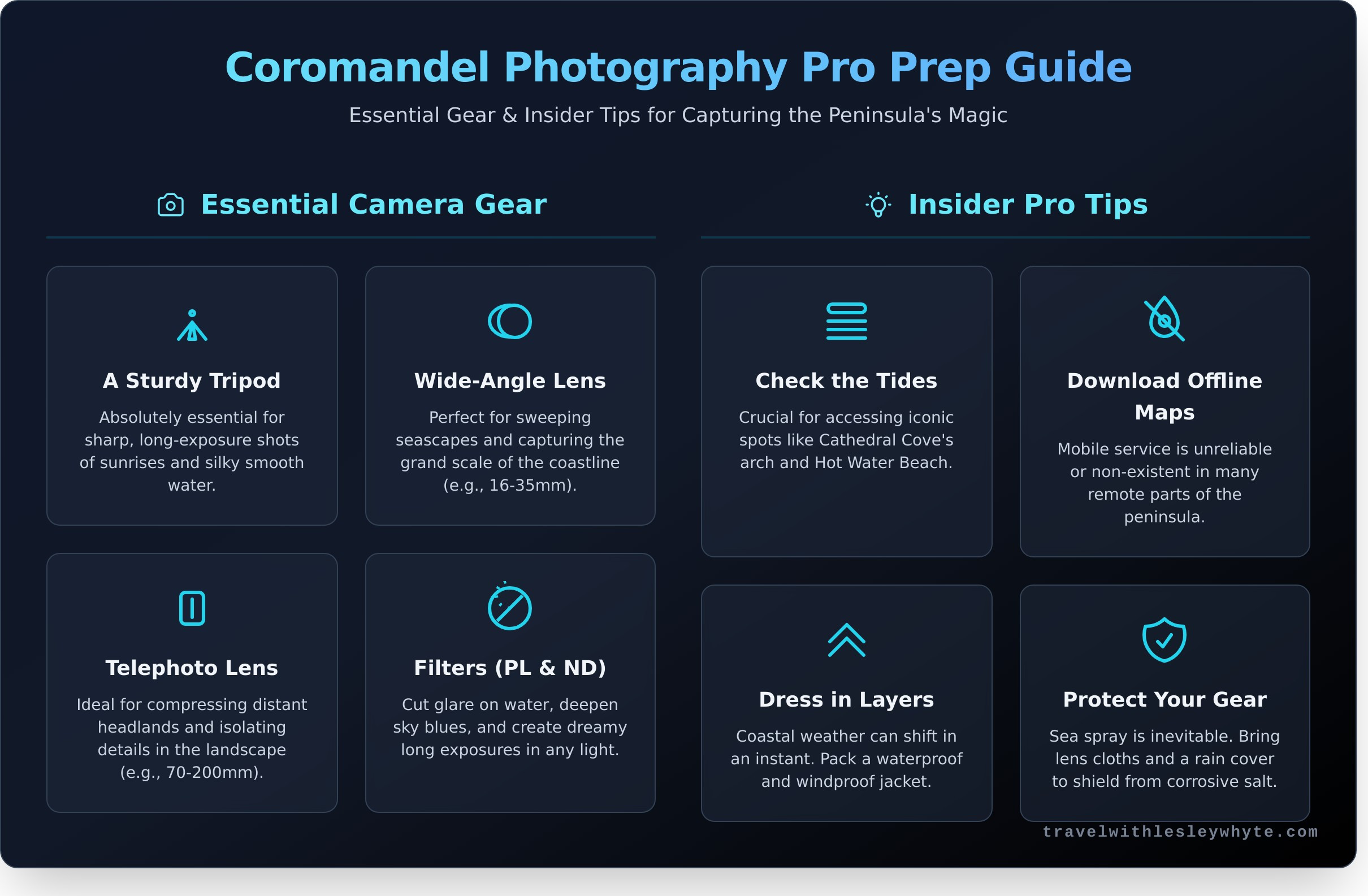
Packing the right equipment will ensure you’re ready for any scene the Coromandel presents. Here’s a checklist of non-negotiable items for your camera bag:
- A Sturdy Tripod: Absolutely essential for capturing sharp, long-exposure shots of sunrises, sunsets, and silky smooth water.
- Wide-Angle Lens (e.g., 16-35mm): Perfect for those sweeping seascapes and capturing the grand scale of the coastline.
- Telephoto Lens (e.g., 70-200mm): Ideal for compressing distant headlands, isolating details in the landscape, or capturing birdlife.
- Filters: A circular polarizer is a must-have to cut glare on the water and deepen the blue of the sky. ND (Neutral Density) filters will allow you to create dreamy long exposures, even in brighter conditions.
Insider Tips Before You Go
A little local knowledge goes a long way. These practical tips will help you navigate the peninsula with confidence and care:
- Check the Tides: Many iconic locations, including Cathedral Cove’s archway and Hot Water Beach, are only accessible at low tide. Always check the tide times before you set out.
- Download Offline Maps: Mobile phone service can be unreliable or non-existent in many parts of the peninsula. Download maps of the area to your phone or GPS device.
- Dress in Layers: Coastal weather can shift in an instant. Packing layers, including a waterproof and windproof jacket, will keep you comfortable.
- Protect Your Gear: Sea spray is inevitable. Bring plenty of microfiber lens cloths and a protective rain cover or bag for your camera to shield it from corrosive salt and moisture.
The Icons of the East Coast: Capturing Sunrise & Seascapes
There is something truly magical about witnessing the first light of day on the east coast of the Coromandel Peninsula. As the sun emerges from the Pacific, it casts a warm, golden glow across the dramatic coastline, illuminating the intricate details of sea stacks, white cliffs, and pristine beaches. This daily spectacle offers an unforgettable opportunity for photographers and travellers alike to capture the region’s raw beauty. The most iconic locations can become bustling hubs of activity, so we always recommend a very early start. Preparing your gear the night before ensures a seamless morning adventure, allowing you to arrive in the pre-dawn quiet and find the perfect spot.
Cathedral Cove (Te Whanganui-A-Hei)
Arguably New Zealand’s most famous coastal vista, Cathedral Cove is a photographer’s dream. For the most compelling images, plan your visit for sunrise during a low to mid-tide, which reveals shimmering reflections on the wet sand. The classic composition is to shoot through the magnificent rock arch towards the Te Hoho Rock sea stack. To manage the high contrast between the bright sky and dark shadows of the arch, use a sturdy tripod and bracket your exposures. Remember to factor in the 45-minute walk to the cove; it’s a beautiful journey in itself and part of this immersive coromandel experience.
Hot Water Beach
A short drive from Hahei, Hot Water Beach offers a unique photographic subject: natural steam rising from the sand as it meets the cool ocean waves. The best time to experience this geothermal wonder is within two hours on either side of low tide. While the wider scene is captivating, don’t forget to look down. Capturing close-up details of the hot water bubbling through the sand can create wonderfully abstract images. Your safety is paramount, so always be mindful of the incoming tide and be cautious of strong ocean currents.
Hahei Beach & Offshore Islands
While many flock to Cathedral Cove, the sweeping curve of Hahei Beach itself provides a stunning and often quieter alternative for sunrise. The soft morning light beautifully accentuates the beach’s elegant arc and the pink-tinged sand. This is an excellent location to use a longer lens to compress the perspective and bring the nearby offshore islands into focus, creating a layered and compelling seascape. During the summer months (December-January), look for flowering pohutukawa trees along the foreshore to use as a natural frame for your shots. Before you head out, it’s always wise to check the latest local conditions and access information from official sources like the Coromandel conservation areas website.
West Coast Wonders: Golden Sunsets & Rugged Coastlines
While the east coast is famed for its white-sand beaches, the west coast of the Coromandel offers a completely different, yet equally captivating, adventure. Here, the waters of the Firth of Thames are calmer, the coastline feels more rugged, and the sunsets are simply unforgettable. This is a journey back in time, winding past historic gold mining towns that lend a unique character to the landscape. For photographers, this side of the peninsula is a dream, coming alive in the soft, warm light of the afternoon and golden hour.
The Thames Coast Road
Prepare for one of New Zealand’s most scenic drives. The Thames Coast Road is a target-rich environment for photographers, with countless safe pull-offs offering breathtaking views. Keep your camera ready for the iconic, gnarled pohutukawa trees that cling tenaciously to the cliffs, their crimson flowers a stunning contrast against the blue sea in summer. The best light is almost always in the last two hours before sunset, when the sky ignites in hues of gold and orange.
- Photography Tip: Use a slow shutter speed (and a tripod!) to transform the gentle waves into a soft, misty canvas, adding a touch of magic and serenity to your coastal images.
Coromandel Town & The Driving Creek Railway
Nestled on the coast, Coromandel Town is brimming with charm, its streets lined with beautifully preserved historic buildings and quirky art galleries. It’s a wonderful place to explore on foot, but for a truly unique perspective, a trip on the Driving Creek Railway is an immersive experience. This narrow-gauge mountain railway climbs through regenerating native forest, offering incredible vantage points you can’t get anywhere else. For more details on attractions in the area, the Official guide to The Coromandel is an excellent resource. The journey is dotted with colourful and whimsical art installations, making it a fantastic photographic adventure, even on a cloudy day when the soft light enriches the vibrant greens of the forest.
Beyond the Beaches: Hidden Gems & Inland Beauty
While the golden sands are captivating, the true heart of the Coromandel beats within its lush, green interior. To truly connect with this region is to venture inland, where ancient forests, cascading waterfalls, and breathtaking lookouts offer a different kind of magic. This is where you’ll find unforgettable adventures far from the summer crowds, creating memories that are both personal and profound.
The 309 Road Kauri Grove
The winding 309 Road is an adventure in itself, leading you to a place of quiet reverence: the Kauri Grove. Standing beneath these forest giants is a humbling experience. Remember to meticulously clean your footwear at the designated hygiene stations; protecting these taonga (treasures) from kauri dieback is our shared responsibility. For photographers, an overcast day provides soft, even light, perfect for using a wide-angle lens to capture the immense scale of the trees and the rich textures of the forest floor.
Waiau Falls & The Waterworks
Just a short walk from the road, Waiau Falls is a picture-perfect cascade tumbling into a serene pool. It’s an easily accessible spot for a moment of peace and a classic photo opportunity-use a tripod and ND filter to create that beautiful, silky effect on the moving water. For a complete change of pace, the nearby Waterworks is a celebration of Kiwi ingenuity. This quirky theme park, powered entirely by water, is filled with whimsical contraptions and vibrant colour, making it a fantastic and fun-filled stop for all ages.
Castle Rock Lookout
For those with a spirit of adventure and a good pair of hiking boots, the climb to Castle Rock is an absolute must. This challenging trek rewards you with one of the most spectacular 360-degree panoramic views in the Coromandel. You can see from coast to coast, a breathtaking tapestry of forest, farmland, and sea. The golden light of late afternoon is magical here, though a sunrise mission is truly unforgettable. A telephoto lens is perfect for isolating distant islands and coastline details from the summit.
Exploring these inland gems reveals a richer, more diverse narrative of this beloved region. It’s about finding those quiet moments and grand vistas that make a journey truly meaningful. If you’re inspired to discover the hidden corners of New Zealand with a group of like-minded adventurers, explore the personally escorted journeys at travelwithlesleywhyte.com.
Putting It All Together: A 3-Day Coromandel Photography Itinerary
The Coromandel Peninsula is a photographer’s dream, but its winding roads and tidal attractions require thoughtful planning to truly capture its magic. To help you visualise the possibilities, we’ve crafted a sample 3-day itinerary that balances iconic locations with hidden gems. Think of this as a starting point for your own unforgettable adventure-a way to connect the dots and make the most of every moment behind the lens.
Day 1: West Coast Sunsets
Your journey begins as you arrive via Thames, the historic gateway to the peninsula. We suggest taking the afternoon to drive the breathtaking western coast road. The light here is spectacular as the sun begins to lower, casting a warm, golden glow across the pōhutukawa-lined shores and tranquil bays. Find a perfect spot to capture the sunset before settling in for the night in charming Coromandel Town or a nearby coastal hideaway.
Day 2: Inland Exploration & East Coast Arrival
Dedicate your morning to discovering the creative spirit of Coromandel Town and the quirky character of the 309 Road, with its resident pigs and lush native forest. In the afternoon, traverse the peninsula to the east coast. After checking into your accommodation in a place like Hahei or Whitianga, use the evening to scout your sunrise location. Understanding the tides and compositions ahead of time is the key to a seamless and successful morning shoot.
Day 3: Classic East Coast Sunrise
An early start is rewarded with the day’s main event: sunrise at the world-famous Cathedral Cove. Capturing the first light filtering through the majestic rock arch is a quintessential New Zealand photographic experience. Afterwards, as the day-trippers begin to arrive, you can relax on the golden sands of Hahei Beach or dig your own natural spa at Hot Water Beach (tide permitting), reflecting on a picture-perfect morning.
A well-planned trip like this ensures you’re in the right place at the right time, turning a good holiday into a truly meaningful photographic journey. If you’d prefer to focus entirely on your creativity while every detail is thoughtfully planned for you, why not join a personally escorted tour? Explore our photography tours!
Your Unforgettable Coromandel Story Starts Here
The Coromandel Peninsula truly is a photographer’s paradise, a landscape rich with creative potential at every turn. From the iconic dawn light painting the arches of Cathedral Cove to the dramatic, golden sunsets that set the western coastline ablaze, its beauty is boundless. We’ve explored the must-have shots and the hidden gems, but the real secret is to simply immerse yourself in the journey. With its diverse scenery, the Coromandel offers an unforgettable canvas for every photographer ready to tell a visual story.
Feeling inspired? If you’re ready to elevate your craft and capture this breathtaking scenery without the stress of logistics, we warmly invite you to join a seamless, fully-escorted photography adventure with us! Imagine being personally escorted by an award-winning photographer, learning and growing in a supportive, small-group setting that allows for personalised tuition. Every detail is thoughtfully planned and all logistics are handled, freeing you to focus completely on your creative vision. Your next great shot is waiting.
Frequently Asked Questions
When is the best time of year to photograph the Coromandel?
For the best photographic light, we recommend the shoulder seasons of autumn (March-May) and spring (September-November). During these months, the light is softer, the crowds are smaller, and you can capture beautiful sunrises and sunsets without harsh midday glare. While summer offers vibrant pohutukawa blooms, winter provides an opportunity for dramatic, moody seascapes for those seeking a more atmospheric and deeply moving shot. Every season offers a unique, unforgettable perspective.
Do I need a 4WD vehicle to access these photo spots?
For the most popular and iconic photography locations like Hahei, Hot Water Beach, and the main roads to Whitianga, a standard 2WD vehicle is perfectly sufficient. The main highways are sealed and well-maintained, ensuring a seamless journey. A 4WD might offer more confidence on some of the peninsula’s gravel backroads if you plan a deeper adventure, but it is certainly not a requirement for a rewarding photography trip to the main sights.
How much walking is required for places like Cathedral Cove?
The main walking track to Cathedral Cove from the visitor car park in Hahei is a beautiful but hilly 2.5km journey that takes approximately 45 minutes each way. The path is well-formed and includes sections of boardwalk and stairs, with stunning coastal views along the way. We recommend wearing comfortable shoes and carrying water. The effort is a wonderful part of the experience, culminating in the unforgettable view that awaits you at the cove.
Are drones allowed for photography in the Coromandel?
Drone usage in the Coromandel is restricted, particularly in protected areas. Most of the iconic coastline, including Cathedral Cove, is managed by the Department of Conservation (DOC), where flying a drone requires a specific permit. We strongly advise checking the official DOC website and local council bylaws before your trip. Flying without permission can result in significant fines, so it’s essential to plan ahead to ensure you respect these precious conservation areas.
What are some tips for dealing with sea spray on my camera gear?
A lens hood is your first line of defence and helps block a surprising amount of spray. Always keep a high-quality, clean microfiber cloth in an easily accessible pocket to gently wipe your lens. For added peace of mind, a clear UV filter can protect your lens’s front element. After your shoot, it’s wise to wipe down your entire camera and lens body with a cloth lightly dampened with fresh water to remove corrosive salt residue.
Is it safe to leave camera gear in the car at trailheads?
We strongly advise against leaving any camera gear visible in your car. To ensure a worry-free adventure, your best and safest option is to carry your gear with you in a comfortable camera backpack. If you must leave something behind, ensure it is completely hidden from view in the boot or glove compartment *before* you arrive at the car park. Never let anyone see you stowing your valuables, as this can draw unwanted attention.